
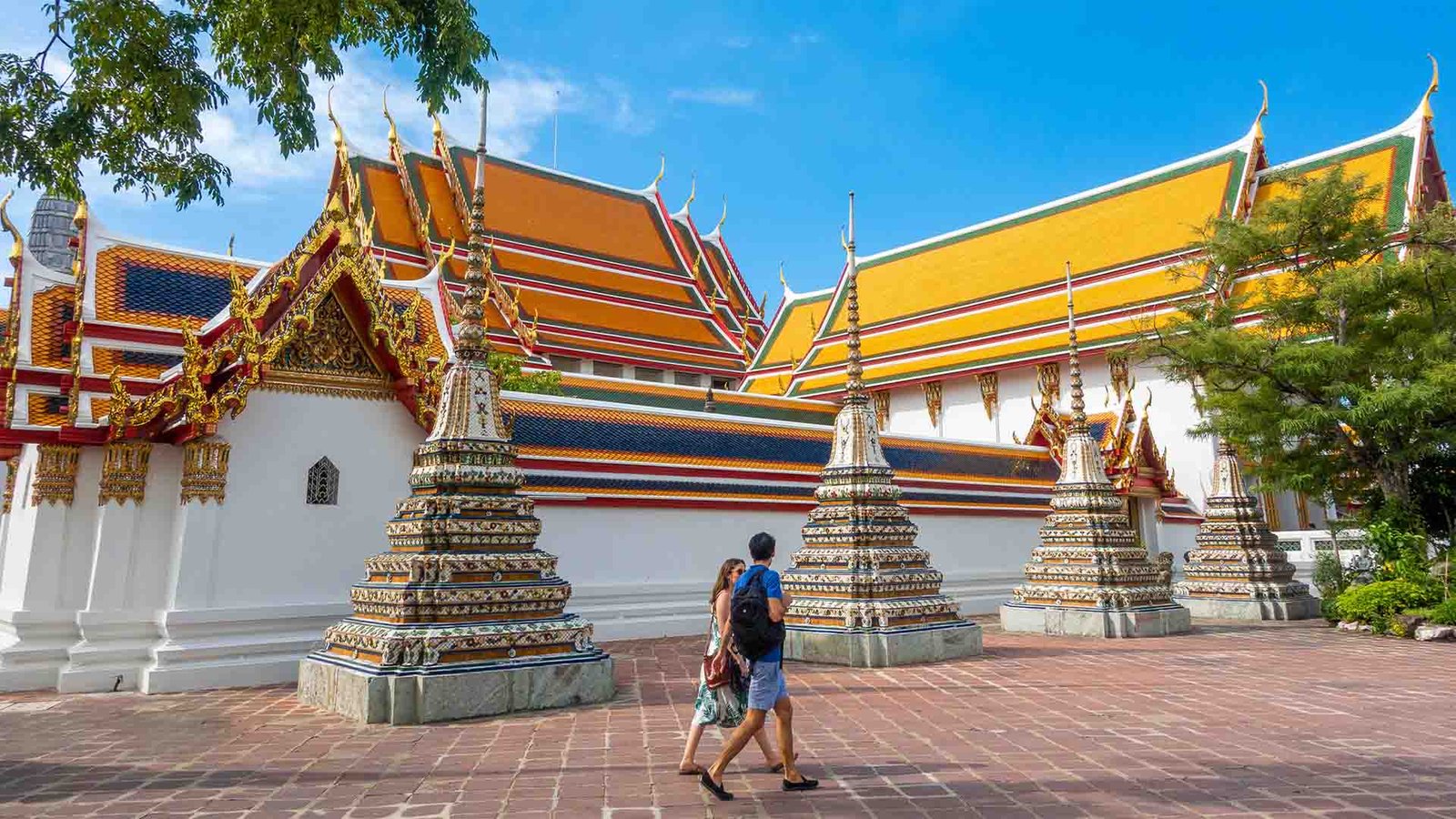
Rising quietly beside the Grand Palace complex, Wat Pho Temple is far more than a historic temple. It is a living archive of Thai spirituality, medicine, and philosophy. Known globally as the home of the Reclining Buddha and the birthplace of traditional Thai massage, Wat Pho Temple in Bangkok offers visitors a deeply immersive experience where religion, healing, and education converge.
Unlike temples designed purely for spectacle, Wat Pho reveals its importance gradually. Every courtyard, stone inscription, and Buddha image contributes to a narrative that spans centuries—one rooted in knowledge-sharing, mindfulness, and holistic well-being.
Historical Background — The Foundation of Thai Knowledge
Wat Pho Temple predates Bangkok itself. Originally established in the Ayutthaya period, the temple was later expanded and elevated to national importance during the reign of King Rama I, who made Bangkok the new capital of Siam. Subsequent kings—particularly Rama III—transformed Wat Pho into Thailand’s first public center of education.
At a time when books were rare and literacy limited, Wat Pho served as an open university. Knowledge was carved directly into stone and marble so it could never be lost. These inscriptions covered subjects such as:
- Traditional medicine
- Anatomy and pressure points
- Astronomy and cosmology
- Buddhist philosophy and ethics
This visionary approach positioned Wat Pho Temple as the intellectual heart of early Bangkok.
The Reclining Buddha — A Sacred Moment of Enlightenment
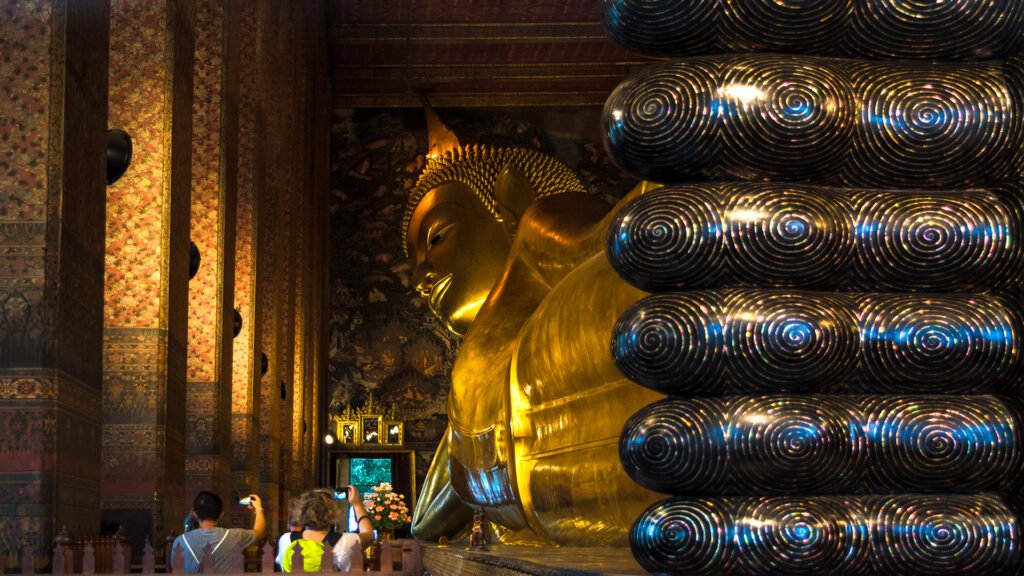
The most iconic feature of Wat Pho Temple is the Reclining Buddha, one of the largest Buddha statues in Thailand. Measuring 46 meters in length and 15 meters in height, the statue depicts the Buddha at the moment of entering Parinirvana—the final release from the cycle of rebirth.
What makes this sculpture exceptional is its symbolism:
- The serene facial expression represents inner peace and detachment
- The body posture reflects awareness rather than death
- The feet are inlaid with 108 mother-of-pearl symbols, each representing auspicious qualities and cosmic principles in Buddhism
Visitors often describe the atmosphere inside the Reclining Buddha hall as contemplative and grounding, reinforcing Wat Pho’s role as a place of reflection rather than spectacle.
Birthplace of Thai Massage – Where Healing Becomes Heritage
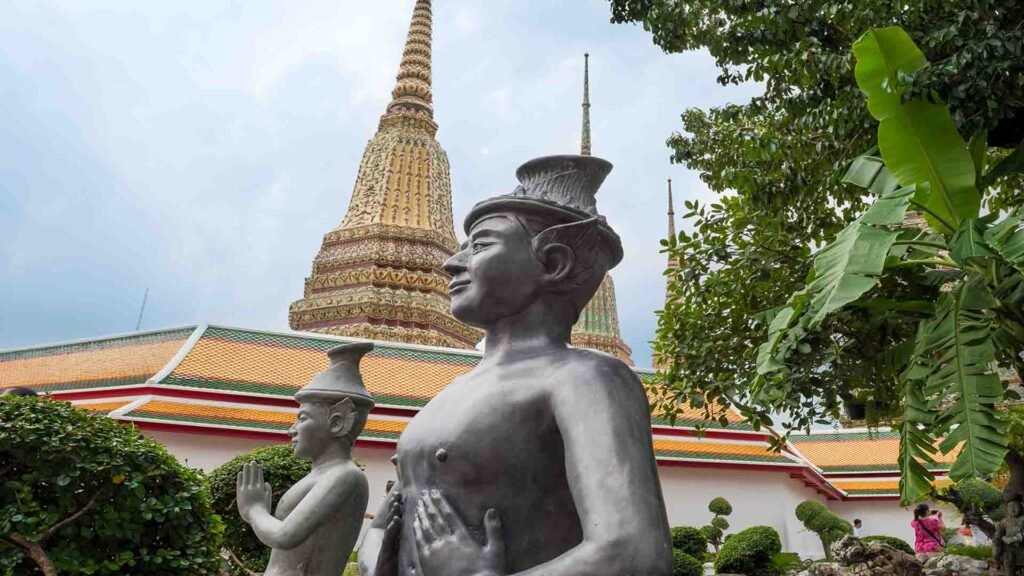
Wat Pho Temple is internationally recognized as the birthplace of traditional Thai massage. This reputation is not symbolic—it is academic and historical. The temple houses the Wat Pho Thai Traditional Medical and Massage School, considered the most authoritative institution for Thai massage education.
Throughout the temple grounds, visitors encounter:
- Stone statues demonstrating massage postures
- Engravings showing energy lines known as Sen
- Herbal treatment diagrams and healing formulas
Thai massage at Wat Pho is not a spa trend but a medical discipline rooted in Buddhist compassion and balance between body and mind. Receiving a massage here is considered both a cultural and therapeutic experience.
Architectural Design — A Temple of Balance and Harmony
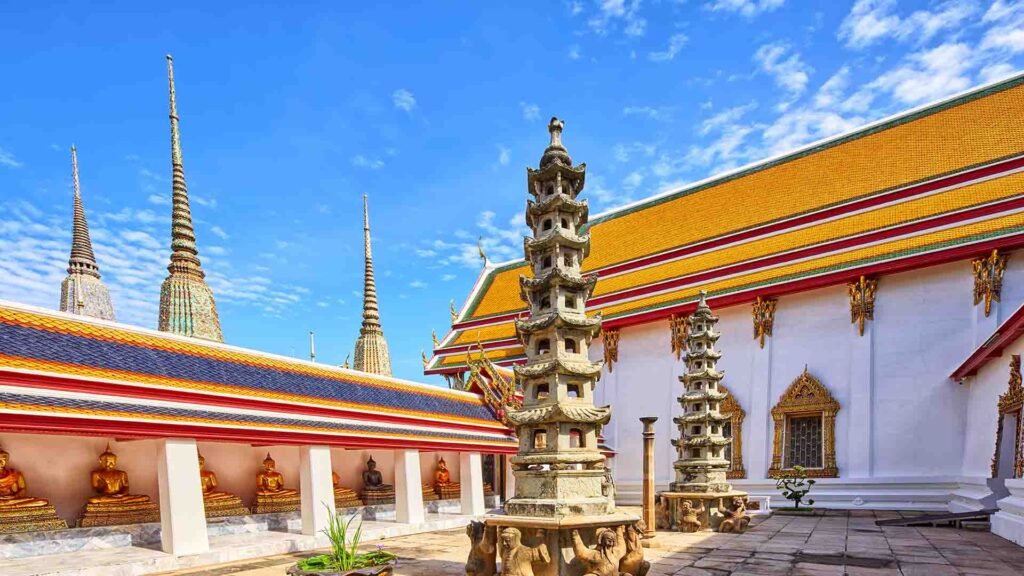
Wat Pho Temple is one of the largest temple complexes in Bangkok, covering more than 80,000 square meters. Its design emphasizes harmony rather than grandeur.
Key architectural highlights include:
- Over 1,000 Buddha images, more than any other temple in Thailand
- Four massive chedis dedicated to the first four Chakri kings
- Courtyards paved with imported Chinese marble
- Subtle Chinese influences reflecting early trade relations
Compared to the royal opulence of nearby temples, Wat Pho’s architecture conveys calm, order, and intellectual depth—qualities aligned with its educational mission.
Wat Pho as Thailand’s First Public University
One of the most unique aspects of Wat Pho Temple is its role as Thailand’s earliest center of public learning. Inscriptions throughout the complex were intended to teach ordinary citizens practical knowledge.
These engraved panels include:
- Medical theory and massage techniques
- Moral teachings and life guidance
- Poetry and classical literature
- Maps of the cosmos and astrology
Today, these inscriptions are recognized by UNESCO as part of the Memory of the World program, underscoring Wat Pho’s global cultural significance.
What Visitors Will Experience Inside Wat Pho Temple
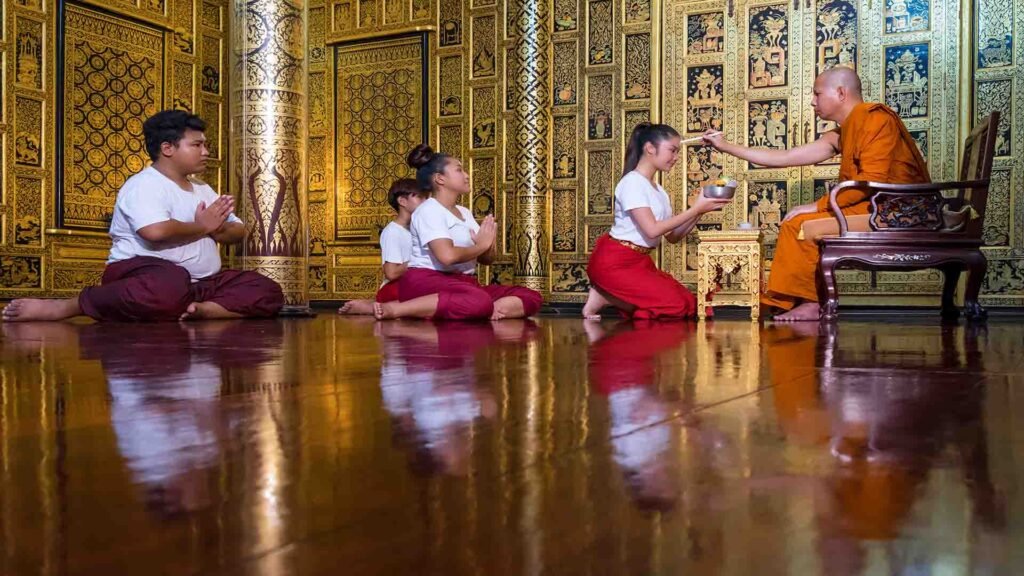
A visit to Wat Pho offers far more than a collection of visual landmarks. Unlike many major temples in Bangkok, Wat Pho Temple invites visitors into a calmer and more reflective environment, where the experience unfolds gradually through atmosphere, movement, and observation. Those who take time to slow down and engage with the space discover a deeper layer of meaning beyond architectural beauty.
Visitors experience:
- A slower, more meditative rhythm than other major temples
- Spaces designed for contemplation and learning
- A rare combination of religion and medical science
- A sense of continuity between ancient wisdom and modern practice
Wat Pho rewards visitors who take time to observe details rather than rushing between highlights.
Visitor Etiquette & Dress Code at Wat Pho Temple
As an active Buddhist monastery, Wat Pho requires respectful behavior from all visitors. Beyond its historical significance, the temple remains a place of daily worship, and observing basic etiquette helps preserve its calm and sacred atmosphere.
To deepen your experience:
- Wear clothing that covers shoulders and knees
- Remove shoes before entering sacred halls
- Avoid touching Buddha images
- Keep voices low and movements mindful
Respecting these guidelines enhances both personal experience and cultural understanding.
How to Visit Wat Pho Temple Meaningfully
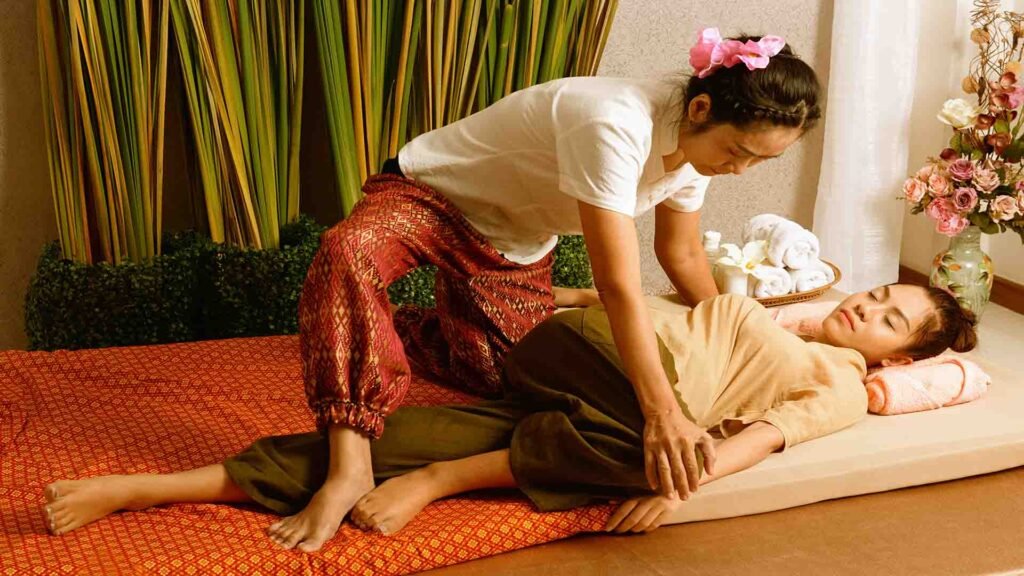
Visiting Wat Pho meaningfully begins with slowing down and giving the temple the time it deserves. Rather than rushing through, a calm and attentive approach allows the atmosphere of Wat Pho Temple Bangkok to be felt more clearly.
By walking mindfully, observing details, and pausing in the courtyards, the visit becomes less about sightseeing and more about learning, balance, and quiet reflection.
- Allow 1.5 to 2 hours to explore the Reclining Buddha, chedis, and inner courtyards.
- Read the stone inscriptions to understand Wat Pho’s learning heritage
- Observe the quiet courtyards and their historical layout
- Walk mindfully through the complex at a calm pace
- Focus on the atmosphere, not photography alone
- Note that entry is ticketed, with massage priced separately
- Try a traditional Thai massage on site, taught in Wat Pho’s medical school
- Eat at nearby cafés or restaurants, as dining options inside are limited
Planning ahead ensures a smoother and more immersive visit, allowing travelers to focus on exploration rather than logistics.
Connection to Other Historical Attractions
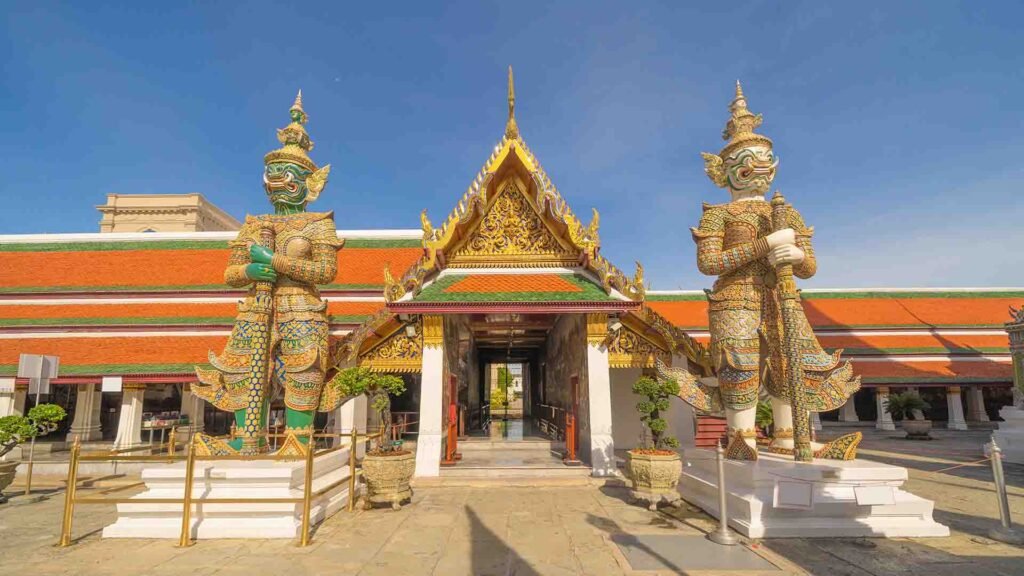
Wat Pho was designed as part of a broader sacred network, not as an independent temple. From Bangkok’s founding as the capital, it stood alongside other major temples and royal institutions as a center of learning and healing.
Closely connected to neighboring temples and historic sites, Wat Pho forms part of an interconnected system that reflects the city’s deliberate and symbolic planning.
Wat Pho is directly connected to the following historical attractions:
- The Grand Palace, as the political and ceremonial heart of the kingdom
- Wat Phra Kaew, representing royal authority and national spiritual identity
- Wat Arun, symbolizing protection, transition, and Bangkok’s early river-based identity.
- Rattanakosin Old Town, the original urban framework of the capital
Together, these sites form a unified historical landscape. Within it, Wat Pho defines Bangkok’s identity through knowledge, healing, and continuity.
Why Wat Pho Temple Is Essential in Bangkok
Wat Pho Temple represents the soul of Bangkok beyond its skyline and street life. It is where spiritual practice meets medical knowledge, where silence teaches as much as sermons, and where Thai identity is preserved through wisdom rather than power.
For travelers seeking more than surface-level experiences, Wat Pho Temple, Bangkok stands as one of Southeast Asia’s most meaningful cultural landmarks—a temple not just to see, but to understand.
For official travel guidance, opening hours, and cultural tips, visitors can consult the Tourism Authority of Thailand. which provides up-to-date information for travelers visiting Bangkok’s historic temples.
Read Next :
Wat Phra Kaew Temple: 👉 Thailand’s royal temple and national symbol.
Wat Arun Temple: 👉 Thailand’s iconic Temple of Dawn and a symbol of renewal