
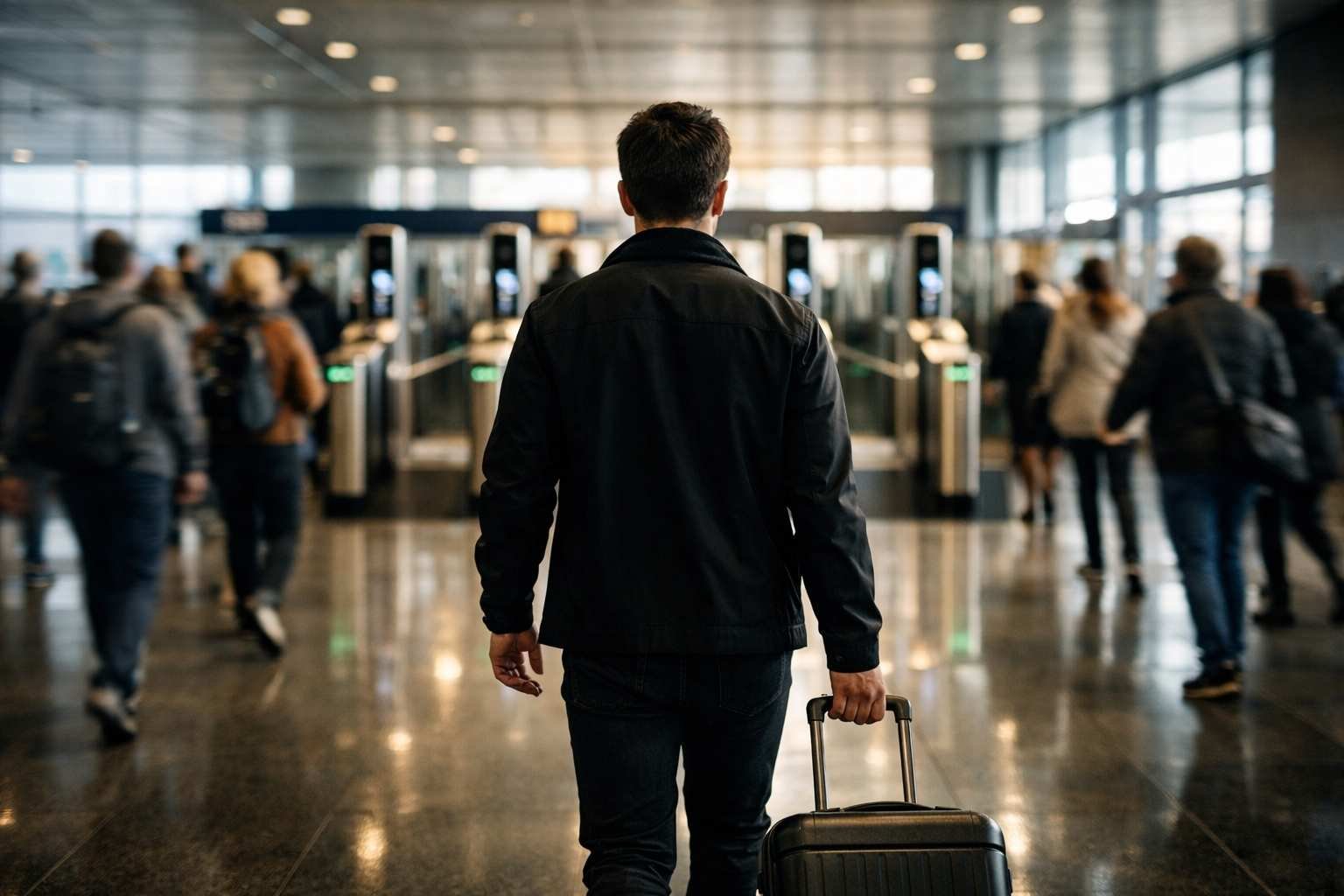
You land in the UK.
The runway is quiet. The journey feels complete. But inside the terminal — a different reality begins.
Hundreds of passengers move toward the same point. Lines form quickly, and what looks calm can change in minutes.
This is where UK airport queues begin to shape your entire arrival experience.
One moment, you walk straight through.
Another, you’re standing still — waiting.
In 2026, this isn’t random.
These queues follow clear patterns — daily, weekly, and seasonal.
And if you understand them, you can save 30–90 minutes without changing anything else.
⚡ Quick Answer: Best Times to Avoid UK Airport Queues
If your goal is to move through passport control with minimal waiting, this is what actually works:
- ✅ Golden Hours (Best): 11:00 AM – 1:00 PM & after 8:00 PM
- ⚠️ Transition Window: 1:00 PM – 4:00 PM (queues begin rebuilding)
- ❌ The Red Zone (Worst): 6:00 AM – 9:00 AM & 5:00 PM – 8:00 PM
- 📅 Best Days: Tuesday & Wednesday
- 🚀 Fastest Route: Use eGates (10–20 seconds per passenger)
🎯 The Smart Traveler Move
Land Tuesday around 11:30 AM and go straight to an eGate.
🚨 2026 Reality Check: Why UK Airport Queues Are Longer Right Now
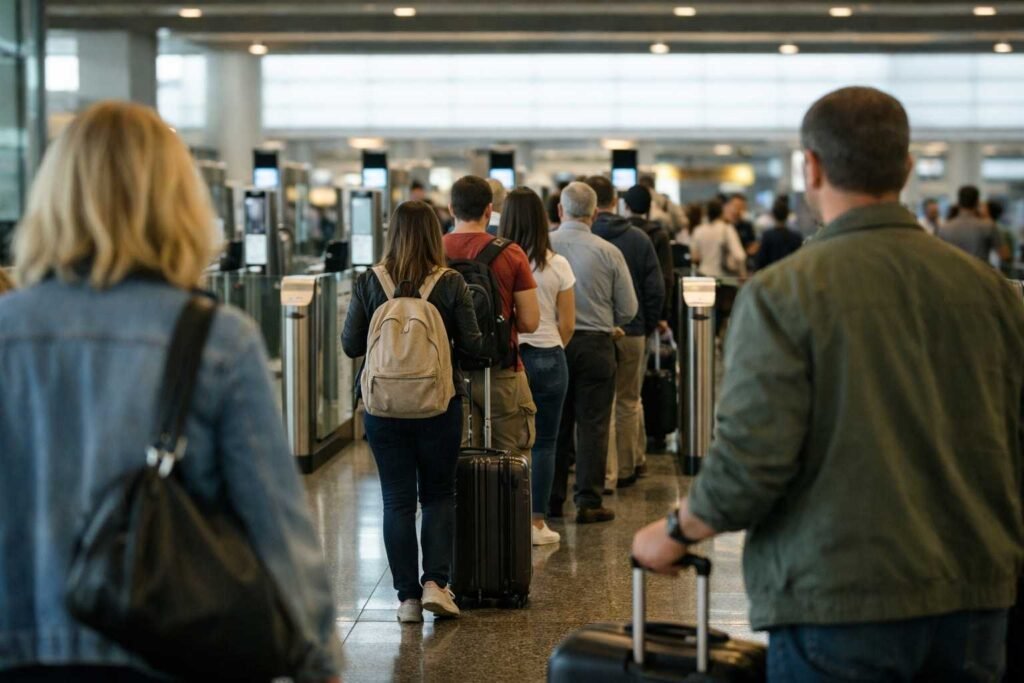
Right now, UK airport queues are under more pressure than usual.
As of 2026:
- ✈️ Post-holiday travel waves continue across Europe
- 📈 UK airport queues are ~15–20% longer on average
- 🏗️ Ongoing terminal adjustments → uneven passenger distribution
- ⚙️ New security and border systems → temporary slowdowns
What this means:
Even “good” arrival times can feel busy.
Not because the system is broken — but because demand is unevenly distributed.
💡 Smart insight:
Avoid relying only on “quiet hours” — understand queue patterns, not just time.
📊 The Morning Rush: The Most Critical Queue Window
🔴 06:00 – 09:00 = The Red Zone
This is when UK airport queues explode.
Why?
- Long-haul flights (USA & Asia) land together
- Wide-body aircraft unload hundreds at once
- Passenger flow hits passport control simultaneously
This creates a compressed wave of demand, where too many passengers arrive at the same time.
Even fast systems can slow down under this pressure.
💡 Reality:
- Land just 20 minutes earlier → walk straight through
- Land 20 minutes later → wait 60+ minutes
In UK airport queues, timing isn’t a detail — it’s the difference between moving and waiting.
📊 UK Airport Queue Comparison (2026)
| Airport | Queue Risk | Peak Congestion | Insider Insight |
|---|---|---|---|
| Heathrow | 🔴 High | Very High | Heavy long-haul clustering |
| Gatwick | 🟡 Medium | High | Tourist waves midday |
| Manchester | 🟡 Variable | Medium | Depends on flight timing |
Heathrow has the highest pressure — but timing still matters more than airport choice
💡 Additional insight:
Stansted and Luton often experience sharper peaks, driven by low-cost airline schedules — especially in the early morning hours.
04:00–06:00 can also be a peak period for this reason.
🥇 The “Golden Hours” to Skip UK Airport Queues
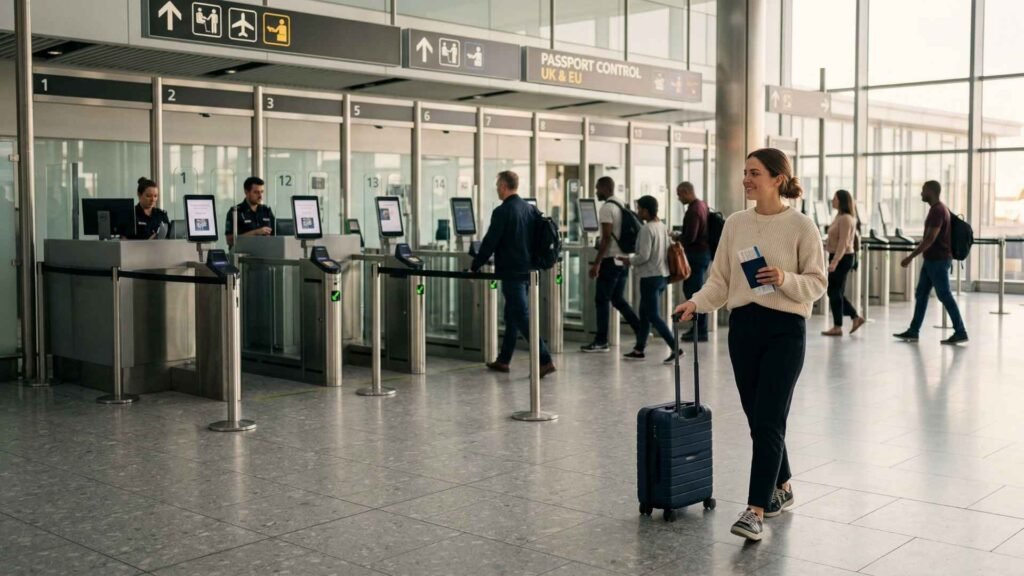
These are the most efficient times for navigating UK airport queues.
⭐ 11:00 AM – 1:00 PM
✔ Balanced passenger flow
✔ Fewer overlapping arrivals
✔ Predictable processing
Not empty — but efficient
🌙 After 8:00 PM
✔ Lower traffic
✔ Faster movement
One of the smoothest experiences for UK airport queues
📅 Weekly Advantage
- 🟢 Tuesday & Wednesday → lowest congestion
- 🔴 Friday & Sunday → highest pressure
Same airport, different day → completely different experience
📊 Real UK Airport Queue Scenarios (2026)
Here’s what you can realistically expect from UK airport queues:
- 🟢 Early morning + eGate → 5–15 minutes
- 🟡 Midday + eGate → 15–30 minutes
- 🔴 Peak hours + manual → 30–75+ minutes
👉 Worst-case scenarios: 90+ minutes
💡 Key insight:
UK airport queues depend more on timing than airport size.
🚶 Where UK Airport Queues Actually Begin
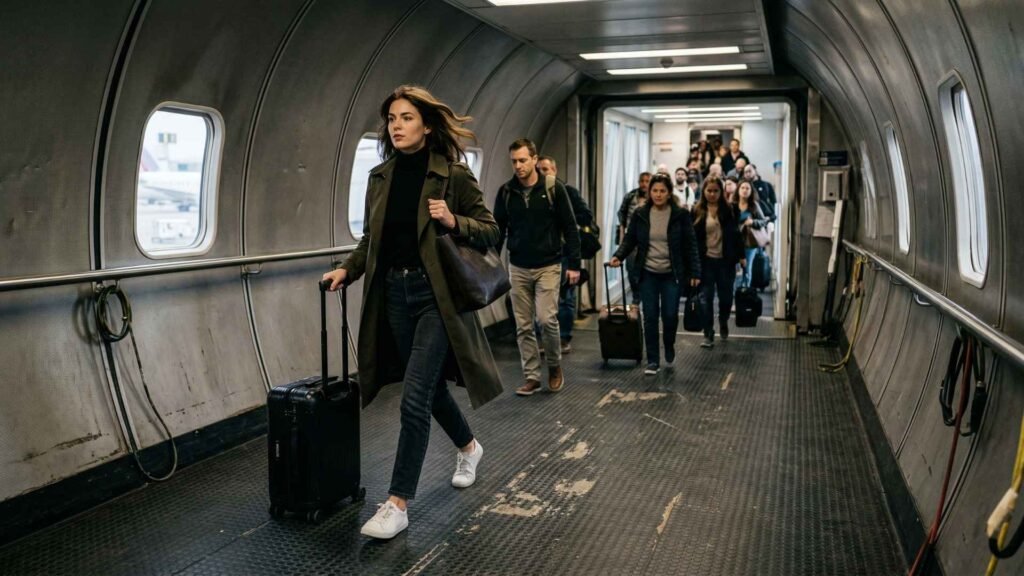
Most travelers think queues start at passport control.
They don’t.
They begin much earlier — often the moment your aircraft reaches the gate.
From that point on, your position is already being shaped by small but critical factors:
- ✈️ How quickly you exit the plane
- 🚌 Whether you’re transferred by bus
- 🚶 How fast you move through the terminal
What feels like a small delay doesn’t stay small.
A 5–10 minute difference at this stage can easily turn into a 20–30 minute wait later.
💡 By the time you reach passport control, your place in the queue has already been decided.
🧠 Why Some UK Airport Queues Move Faster
Not all lines move at the same speed.
And what looks shorter isn’t always faster.
Behind the scenes, small factors can slow an entire lane down:
- Short lines may pause due to additional checks
- Families or document issues can delay everyone behind them
- Automated lanes tend to move more consistently
What matters isn’t the length of the line — it’s how smoothly it moves.
Take a moment to observe before choosing, because the line that keeps moving will almost always get you through faster.
🤖 How eGates Change Everything (2026 Advantage)
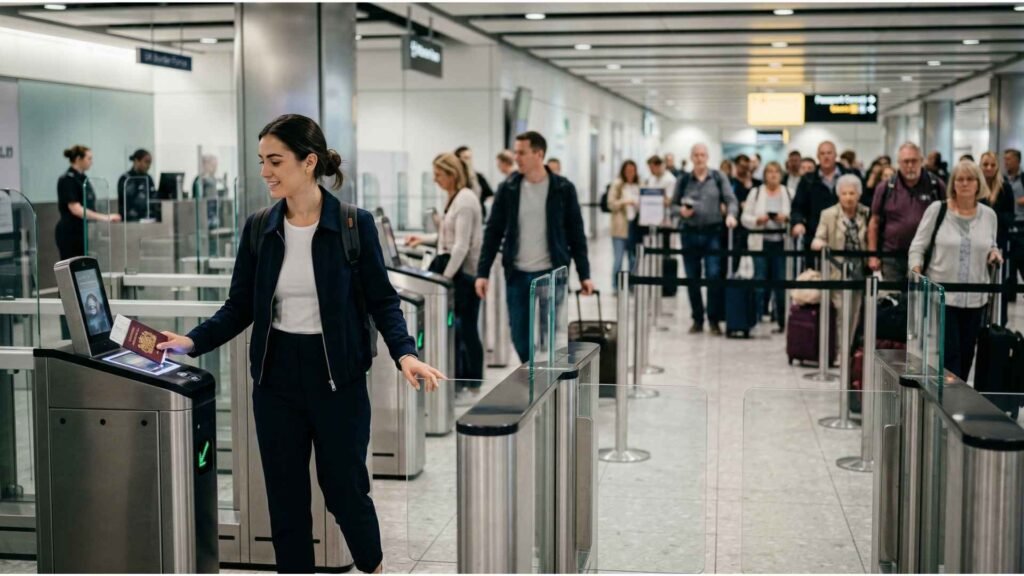
In 2026, eGates are the biggest advantage against UK airport queues.
✔ Processing time: 10–20 seconds
✔ No officer interaction
✔ Consistent speed
You don’t skip queues — you skip the slowest ones
📊 2026 trend:
~70% of eligible travelers now use eGates
✔ Who Can Use eGates?
- EU / EEA
- USA
- Canada
- Australia
- Japan
- South Korea
- Singapore
- New Zealand
👨👩👧 Family Tip
Children under 10 cannot use eGates.
Families must use manual queues
→ often slower
❌ Common Mistakes That Make UK Airport Queues Worse
Most delays aren’t caused by the system — they’re caused by small decisions that add up quickly.
- Arriving during peak hours without realizing it
- Sitting at the back of the plane → exiting late
- Not using eGates when eligible
- Not having your passport ready
- Choosing the wrong queue based on length, not speed
Each mistake may seem minor — but together, they can easily turn a 15-minute process into a 60+ minute wait
🛫 Best Strategy to Avoid UK Airport Queues
Avoiding queues isn’t about one trick — it’s about making a few smart decisions that add up.
- Exit the plane quickly → your position is decided early
- Choose your arrival time carefully → the biggest factor
- Avoid 06:00–09:00 → highest congestion
- Aim for 11:00–13:00 → more balanced flow
- Travel midweek if possible → Tuesday & Wednesday are usually calmer
- Use eGates when eligible → fastest option
The difference isn’t luck — it’s positioning yourself ahead of the crowd, not inside it
✈️ Departure Note (Often Overlooked)
Queues don’t end when you arrive — they often return when you leave.
Security lines for departures can build quickly, especially during peak travel windows. These spikes are usually tied to flight schedules, not constant traffic.
Most common pressure times:
- Early morning departures
- Evening flight waves
💡 At major airports like Heathrow and Gatwick, security wait times can reach 20–40 minutes during these periods.
Why does this happen?
Passenger flow isn’t constant — it comes in waves:
✔ Flights cluster together → queues build quickly
✔ Gaps between departures → lines move smoothly
💡 If you’re short on time, some airports and airlines offer Fast Track Security as a paid option — a practical way to reduce waiting during peak hours.
👉 Learn how it works: UK Fast Track Guide (2026)
📡 Can You Check UK Airport Queues Live?
Yes — but with limitations.
There are tools that can give you a rough idea of current conditions, especially before you land:
- Heathrow official website → occasional live updates
- Flight tracking apps → reveal arrival clustering in real time
- Airport apps → basic status and flow indicators
These tools help you see what’s happening — but not what’s about to happen
Because queues don’t build gradually — they spike suddenly when multiple flights arrive together.
🚨 Important 2026 Update: ETA & Travel Rules

In 2026, your journey doesn’t start at passport control — it starts before you board the plane.
ETA is now mandatory for visa-free travelers entering the UK
✔ Digitally linked to your passport — no paper required
❌ No valid ETA = no boarding (airlines check before departure)
This means most issues happen before you even arrive at the airport.
💡 What this means for you:
If your ETA is approved and correctly linked, your arrival is smooth.
If not, your journey can stop before it even begins.
ETA doesn’t make queues faster — it ensures you reach them without problems.
👉 Check official UK ETA requirements:
Go Deeper: UK Entry Strategy Guides
Want to move through UK airports even faster — and avoid surprises at every step?
Continue with these essential guides:
- UK eGates Guide (2026) → how to pass passport control in seconds
- UK ETA Visa Guide (2026) → who needs it and how to avoid boarding issues
- UK Passport Control 2026: → How to Pass Faster with eGates & Avoid Delays
Read these together, and you’ll understand not just how queues work — but how to move through the entire system smoothly
❓ FAQs: UK Airport Queues (2026)
How long do UK airport queues usually take in 2026?
10–45 minutes on average; 60–90+ minutes during peak hours.
Queue time mainly depends on when your flight lands, not which airport you use.
What is the fastest way to get through UK passport control?
Use eGates (if eligible).
They process passengers in 10–20 seconds and move more consistently than manual lines.
Which day is best to arrive in the UK to avoid long waits?
Tuesday and Wednesday.
Midweek arrivals have lower passenger volume and fewer overlapping flights.
What is the worst time to arrive at UK airports?
06:00 – 09:00 (Morning Rush).
This is when long-haul flights land together and queues build the fastest.
Do eGates completely eliminate waiting times?
No — but they are significantly faster.
You may still queue briefly, but movement is quicker and more predictable.
Does your seat on the plane affect queue time?
Yes — it can save 20–30 minutes.
Passengers seated at the front exit earlier and reach passport control ahead of the crowd.
🧠 Final Insight
UK airport queues are not random — they follow patterns.
If you land at the wrong time, waiting is almost guaranteed.
But if you land at the right moment, you can move through the airport faster than expected.
The difference isn’t luck.
understanding how the system actually works — and using that knowledge to stay ahead of the crowd.