

Morning light slips through the narrow streets of Barcelona.
A laptop opens. Coffee arrives. Work begins — without an office, without borders.
This isn’t travel anymore.
It’s a system — a new way of building a life.
The Spain Digital Nomad Visa 2026 has become one of the most practical and strategic residency options in Europe for remote professionals.
New income thresholds. Updated tax realities. Faster approval systems.
For those who use it strategically, it offers a strong balance of lifestyle and tax efficiency.
Spain Digital Nomad Visa — Quick Overview
The Spain Digital Nomad Visa 2026 requires a minimum income of €2,849/month, offers up to 3 years of residency when applying from Spain, and can be processed in as little as ~20 working days under the UGE-CE system.
It also provides access to a 24% flat tax regime under specific conditions.
💡 With a stable income and proper structure, it allows you to combine legal residency, lifestyle quality, and tax efficiency in one system.
Now let’s break down how it works — and whether it’s the right fit for you.
What Is the Spain Digital Nomad Visa?
The Spain Digital Nomad Visa is a residency permit for non-EU remote professionals who want to live in Spain while working for companies or clients abroad.
Introduced under Spain’s Startup Law, it is designed for individuals who earn remotely without relying on the local job market.
It allows you to:
- Live legally in Spain
- Work remotely for foreign companies
- Run freelance or online businesses
- Access healthcare
- Travel within the Schengen Area
More importantly, it offers something most visas don’t: stability.
You’re not moving as a tourist — you’re building a legal base.
It’s not just a visa — it’s a long-term relocation strategy.
Spain Digital Nomad Visa 2026 Requirements (Full Breakdown)

To qualify for the Spain Digital Nomad Visa, you must meet a combination of legal, financial, and professional criteria.
This is not just a checklist — it’s a credibility test.
1. Remote Work Eligibility
- Work for a non-Spanish company
- OR freelance with international clients
Your work must be clearly location-independent, with most of your income coming from outside Spain.
2. Income Requirement (2026)
Based on Spain’s minimum wage (€1,221):
- Single → €2,849/month
- Couple → €3,918/month
- Child → +€357
Focus on consistency:
- Stable income (last 6–12 months)
- Ongoing contracts or long-term clients
💡 Authorities prioritize predictable income over short-term spikes.
👉 This is where most applicants underestimate the process.
3. Work Experience
- 3+ years of professional experience
- OR a recognized university degree
Your experience should clearly support your current remote work.
4. Health Insurance
- Full private coverage
- No co-pay
- Valid in Spain
Public or travel insurance is not accepted.
5. Proof of Work
- Employment contract OR
- Freelance agreements / client contracts
- Invoices or portfolio (if applicable)
Your work must be clearly documented and verifiable.
💡 Freelancers should show ongoing work — not one-time or irregular income.
6. Criminal Record
- Clean criminal record
- Apostilled document
Authorities review your legal background as part of the final evaluation.
💡 You may need to provide records not only from your home country, but also from countries where you have lived in recent years.
Missing this detail is a common reason for delays or rejection.
💡 Key Insight:
Most rejections don’t happen because applicants don’t qualify — they happen because the application is unclear or inconsistent.
📄 Required Documents (At a Glance)
To support your application, you will need a complete and consistent set of documents:
- Valid passport
- Proof of income (bank statements + contracts)
- Criminal record certificate (apostilled)
- Private health insurance (full coverage, no co-pay)
- CV or professional profile
- Proof of remote work (contracts, invoices, or client agreements)
- NIE (if applying from within Spain)
💡 All documents must be officially translated into Spanish and aligned across all submissions.
Spain Digital Nomad Visa Taxes (Beckham Law Explained)

Flat Tax Regime
Under the special regime (similar to the Beckham Law), eligible applicants may benefit from:
- 24% flat tax rate
- Applied up to €600,000 annual income
- Valid for up to 5 years
Compared to Spain’s standard system (up to ~47%), this can offer a significant advantage.
💡 Eligibility depends on individual circumstances and approval.
👉 Check the official Beckham Law tax framework in Spain
Freelancer Rule
If you are a freelancer:
- You can work with Spanish clients
- But they must not exceed 20% of your total income
Exceeding this limit may result in losing the special tax regime.
Spain Tax Comparison: Standard vs Digital Nomad Regime
To understand the real advantage of the Spain Digital Nomad Visa, compare it to the standard tax system:
Standard System → Up to 47%
Digital Nomad Regime → 24%
What This Means
Under the standard system, taxes increase as your income grows.
The more you earn, the more you pay.
Under the digital nomad regime, your tax is:
- Predictable
- Fixed
- More efficient
💡 For higher-income remote professionals, this difference can significantly improve net income.
How to Apply for the Spain Digital Nomad Visa (Step-by-Step)
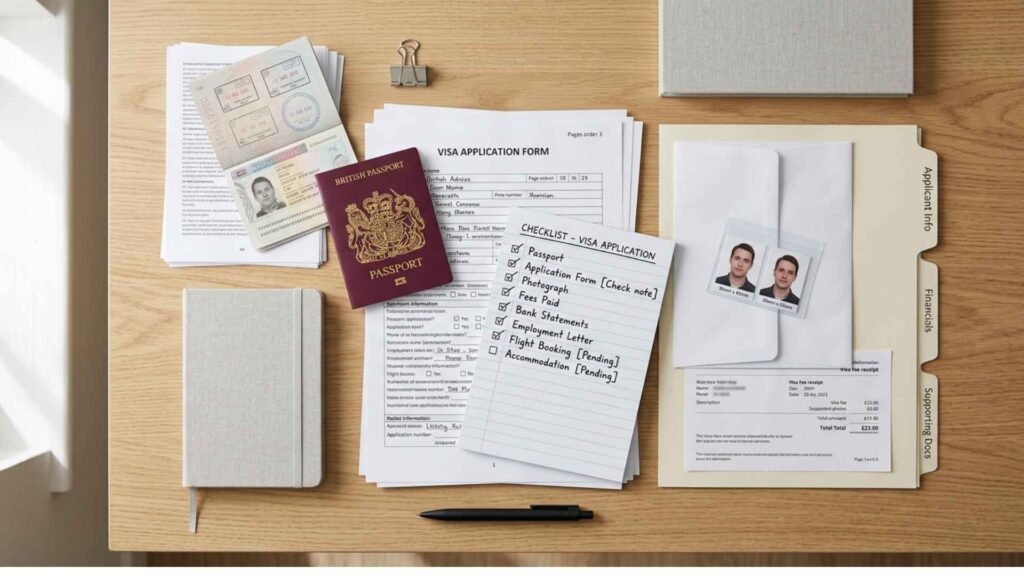
The application process for the Spain Digital Nomad Visa is straightforward — but success depends on preparation.
Step 1: Prepare Your Documents
- Income proof
- Contracts or client agreements
- Criminal record (apostilled)
- Health insurance
- Professional documents
💡 Most delays happen at this stage.
Step 2: Choose Where to Apply
- From your home country (consulate)
- From Spain (recommended)
Applying from Spain is usually faster and offers a longer initial permit.
Step 3: Submit Your Application
- Apply online or via a legal representative
- Pay the required fees
- Ensure all documents are complete
👉 Access the official Spain UGE application platform
At this stage, clarity and completeness are critical — even small inconsistencies can cause delays.
Step 4: Wait for Approval
- Spain → 15–30 days
- Consulate → longer
Processing times may vary depending on workload and documentation quality.
Step 5: Get Your TIE Card
- Register your address
- Complete biometrics
- Receive your residence card
👉 Check the official Spain TIE (residency card) process
💡 What matters most:
- Clear income
- Clear documentation
- Clear structure
Why Applying from Spain Is the Smartest Strategy
One of the key decisions in the Spain Digital Nomad Visa process is where you apply from.
While both options seem similar, they offer different outcomes.
Advantages of Applying from Spain
- Up to 3-year residence permit (vs 1 year via consulate)
- Faster processing (often 15–30 days)
- Simpler and more flexible process
Why It Matters
Applying from your home country often means:
- Shorter initial approval
- More paperwork later
- An extra renewal step
💡 Strategic Insight:
Applying from Spain helps you:
- Save time
- Reduce bureaucracy
- Start with a longer residency period
It’s not just about getting approved — it’s about getting the best setup.
Spain Digital Nomad Visa Duration: 1 to 5-Year Residency Path
The Spain Digital Nomad Visa is not just a short-term permit — it’s designed as a step-by-step path to long-term residency.
Initial Duration
Your first approval depends on where you apply:
- 1 year → if you apply through a consulate
- Up to 3 years → if you apply from within Spain
This is why applying from Spain is often the preferred strategy.
Renewal Path
After your initial period:
- You can renew your residence
- Extend your stay up to a total of 5 years
What Happens After 5 Years?
You become eligible for:
- Permanent residency in Spain
- Greater stability and fewer renewal requirements
💡 Big Picture:
This visa isn’t just about moving to Spain.
It’s about building a long-term legal base in Europe — step by step, year by year.
Who Is the Spain Digital Nomad Visa Best For?
The Spain Digital Nomad Visa is not designed for everyone.
It’s built for professionals who already have a stable system in place.
Ideal For
- Remote employees earning €3,000+
- Freelancers with consistent international clients
- Online business owners
- Professionals seeking EU residency + tax optimization
Not Ideal For
- Unstable freelancers
- Applicants below the income threshold
- Spain-focused local business models
Why This Matters
This visa is not about potential — it’s about proof.
Authorities want to see that your income and work structure are already stable and sustainable.
💡 Final Insight
The Spain Digital Nomad Visa rewards clarity and consistency — not experimentation.
Real Monthly Budget for Digital Nomads in Spain
Understanding your monthly costs is essential before moving to Spain.
It’s not just about qualifying for the visa — it’s about sustaining your lifestyle.
Barcelona (Example Budget)
- Rent → €900–€1,800
- Food → €300–€600
- Coworking → €150–€300
- Transport → €50–€100
- Lifestyle → €300–€800
Total: €1,800 – €3,500/month
💡 Your lifestyle determines where you fall within this range.
Madrid
Similar to Barcelona, with slight variations depending on the neighborhood.
Valencia
€1,200 – €2,000/month
- Lower rent
- More relaxed lifestyle
- Growing remote work community
💡 Final Insight
Spain offers a rare balance:
- High quality of life
- Strong infrastructure
- Reasonable living costs
This balance is what makes it one of the most attractive countries for digital nomads.
Setting Up in Spain: NIE & Bank Account Essentials
Once your visa is approved, one of the first things you’ll need is your NIE number.
This is essential — not optional.
What Is NIE?
The NIE (Número de Identidad de Extranjero) is your official identification number in Spain.
It is required for most administrative and financial processes.
Why It Matters
You will need your NIE to:
- Open a bank account
- Sign a rental contract
- Pay taxes
- Receive salary or freelance income
- Set up utilities
In practice, nothing moves without it.
Opening a Bank Account
After obtaining your NIE, you can open an account through:
- Traditional Spanish banks
- Digital banks (faster and more flexible)
💡 Some banks may require proof of address or residency.
Practical Insight
Many newcomers underestimate this step.
Without a bank account and NIE, daily life and financial operations become difficult.
💡 Setting this up early turns your visa approval into a fully functional system.
Remote Work Setup in Spain: Internet & Work Environment

Spain is one of the most remote-work-friendly countries in Europe — both in infrastructure and daily lifestyle.
Internet
- 100–600 Mbps speeds
- Stable connections
- Strong fiber coverage
Work Environment
- Strong coworking culture
- Remote-friendly cafés
- International communities
💡 Spain supports not just remote work — but a sustainable remote lifestyle.
Best Cities for Digital Nomads in Spain
Choosing the right city is just as important as getting the visa.
Each city offers a different balance of lifestyle, cost, and work environment.
Barcelona — Lifestyle + Energy
- International community
- Strong startup ecosystem
- Beach + city balance
Ideal for freelancers and creatives who want both work and lifestyle.
Madrid — Business & Structure
- Professional environment
- Strong networking opportunities
- Year-round activity
Best for remote employees seeking a more structured, career-focused setting.
Valencia — Balance & Affordability
- Lower cost of living
- Relaxed pace
- Growing nomad scene
A strong choice for those who want stability and quality of life.
Malaga — Lifestyle + Growth
- Expanding tech scene
- Excellent climate
- Growing expat community
Ideal for a slower pace with long-term potential.
💡 Final Insight
There’s no single “best” city.
The right choice depends on your priorities:
- Energy → Barcelona
- Career → Madrid
- Balance → Valencia
- Lifestyle → Malaga
Spain’s advantage is flexibility — you choose the lifestyle that fits you best.
Spain vs Portugal vs Dubai: Which Is Better for Digital Nomads?

Choosing the right country is not just about getting a visa — it’s about choosing the system you want to live in.
Each option offers a different balance of ease, taxes, and lifestyle.
Portugal — Easier Entry
- Simpler application process
- Lower entry barriers
- Popular with first-time digital nomads
But:
- Slower bureaucracy in some cases
- Less structured tax advantages
Dubai — Tax-Free Environment
- 0% income tax
- Fast, business-friendly setup
- Strong global connectivity
But:
- Higher cost of living
- Limited long-term residency path compared to EU
Spain — Best Overall Balance
- EU residency
- 24% tax advantage
- High quality of life
- Clear path to long-term residency
Combines lifestyle, stability, and financial efficiency.
💡 Final Insight
- Portugal → easiest entry
- Dubai → zero tax
- Spain → long-term balance
For many remote professionals, Spain offers the most complete system.
Why Spain Digital Nomad Visa Applications Get Rejected (2026)
This is one of the most important sections — and often overlooked.
Rejections don’t happen at the income level.
They happen at the credibility level.
Common Rejection Reasons
- Inconsistent income history
- Freelance income without formal contracts
- Missing or incorrect apostille documents
- Incorrect or missing Spanish translations
- Employer not clearly allowing remote work
What Authorities Look For
Authorities are not just reviewing documents — they’re evaluating your overall profile.
They want to see:
- Stable, predictable income
- Ongoing professional activity
- Clear and consistent documentation
💡 Key Insight
Approval is not based on income alone.
It depends on:
- Credibility
- Consistency
- Documentation quality
💡 Final Thought
You don’t get approved just because you qualify.
You get approved because your application makes sense.
Is Spain Good for Digital Nomads in 2026?

Yes — Spain offers one of the most balanced combinations of lifestyle, infrastructure, and tax efficiency in Europe.
But what truly sets it apart is not a single advantage.
It’s the balance.
You get:
- A high quality of life
- Reliable digital infrastructure
- A clear legal residency pathway
- Access to a favorable tax structure
All in one place.
Pros & Cons
✅ Pros
- EU residency
- 24% tax advantage
- High quality of life
❌ Cons
- Bureaucracy
- Documentation requirements
💡 Final Insight:
For remote professionals with a stable setup,
Spain offers a strong and sustainable long-term base.
💡 Maya Lin’s Insight (2026):
UGE-CE now processes many applications in around 20 working days.
However, most delays happen before submission — especially with apostille and document preparation.
Start preparing your documents at least 2–3 months in advance.
FAQ — Spain Digital Nomad Visa 2026
1. What is the minimum income requirement for the Spain Digital Nomad Visa in 2026?
€2,849/month for a single applicant.
Couples require €3,918, plus €357 per child. Income must be stable and consistent.
2. Should I apply from my home country or from within Spain?
Applying from Spain is recommended.
You can get up to a 3-year residence permit and faster processing (around 15–30 days).
3. Can freelancers benefit from the 24% flat tax regime?
Yes, but only if Spanish income stays below 20%.
Exceeding this limit may remove access to the tax benefit.
4. Can I work for a Spanish company with this visa?
Yes, but limited to 20% of your total income.
The majority must come from international sources.
5. How long does it take to get Permanent Residency?
After 5 years of legal residence, you can apply for permanent residency in Spain.
Go Deeper: Spain Business & Lifestyle Guides
Thinking about building a life in Spain goes far beyond visas.
It’s about understanding how the system works — from setting up your business to choosing where you live and how much you actually spend.
Explore these in-depth guides to move forward with clarity:
👉 Starting a Business in Barcelona: How to Set Up as a Foreigner (Coming Soon)
Learn the exact steps to legally start a business in Spain — from registration to banking and local requirements.
👉 Taxes in Spain for Foreigners: What You Really Pay (Coming Soon)
A clear breakdown of income tax, social security, and what expats actually pay in real scenarios.
👉 Best Areas to Live in Barcelona: Where Expats Actually Stay (Coming Soon)
Discover the neighborhoods locals and expats choose — based on lifestyle, budget, and daily life.
💡 These guides will be linked here as they are published.
Final Perspective
Spain is not the easiest option.
But for remote professionals with a stable system, it’s one of the most practical.
If your income is consistent and your work is location-independent, Spain offers a rare combination:
Live well — and earn efficiently.
Disclaimer:
This article is for informational purposes only and does not constitute legal, tax, or immigration advice. Tax treatment and visa eligibility may vary based on individual circumstances. Always consult a qualified professional before making decisions.