
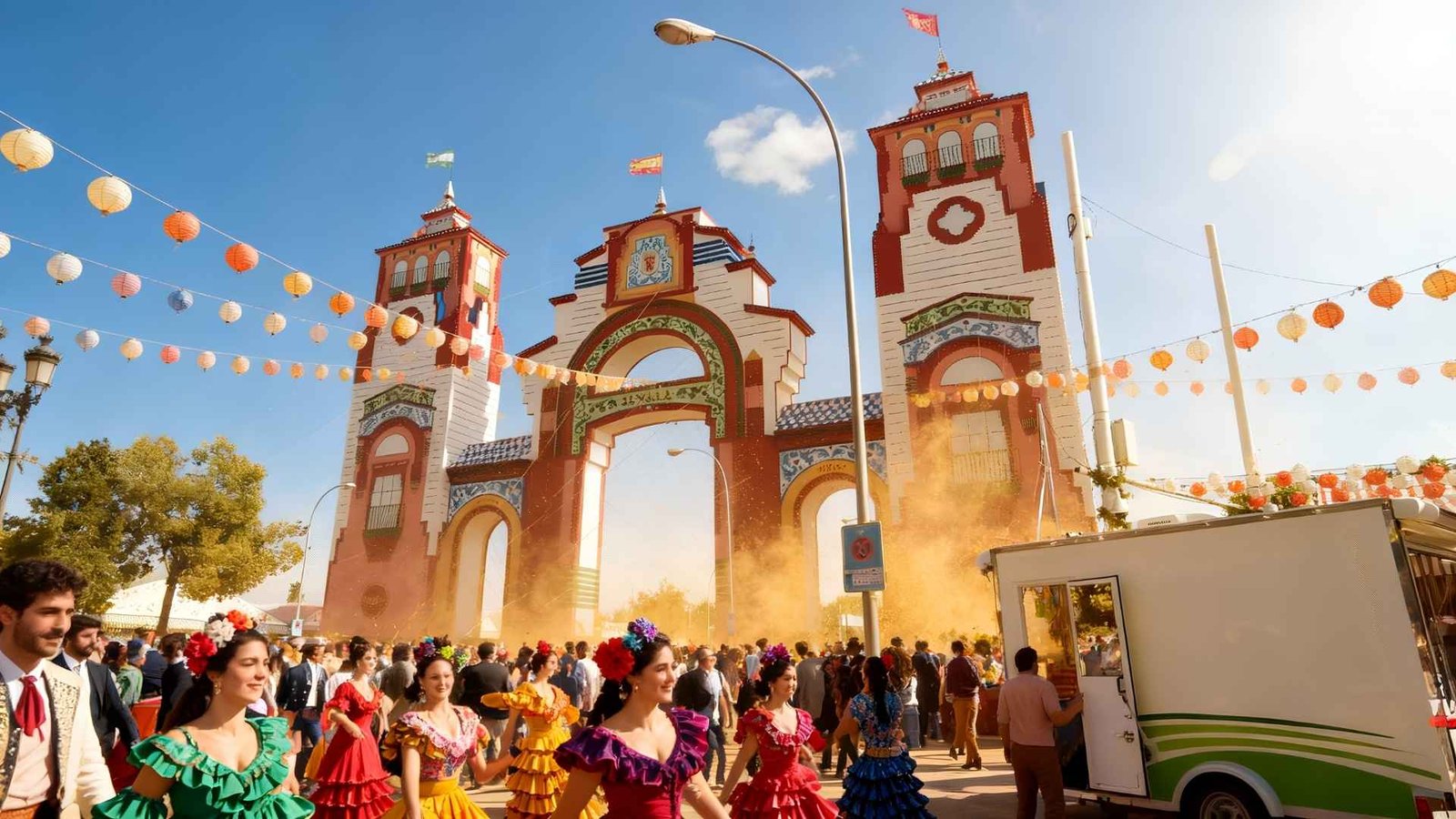
In Seville, every season has a rhythm and every street a melody.
This is not a city that merely observes tradition — it lives within it. From the deep silence of Semana Santa, where the air carries incense and candle wax, to the dazzling color of Feria de Abril, where laughter and music fill the night sky until sunrise, Seville celebrates everything that makes life beautiful: faith, art, and joy.
And then, there is flamenco — not a festival, but an eternal heartbeat echoing through Triana’s narrow streets and late-night taverns. These three worlds — devotion, celebration, and passion — intertwine to create the soul of Seville: a city that dances with emotion, faith, and timeless grace.
Semana Santa (Holy Week) — The Soul of Seville
When: Late March or Early April (the week before Easter)
Where: Historic Center, Cathedral District
For one sacred week, Seville becomes a stage for emotion.
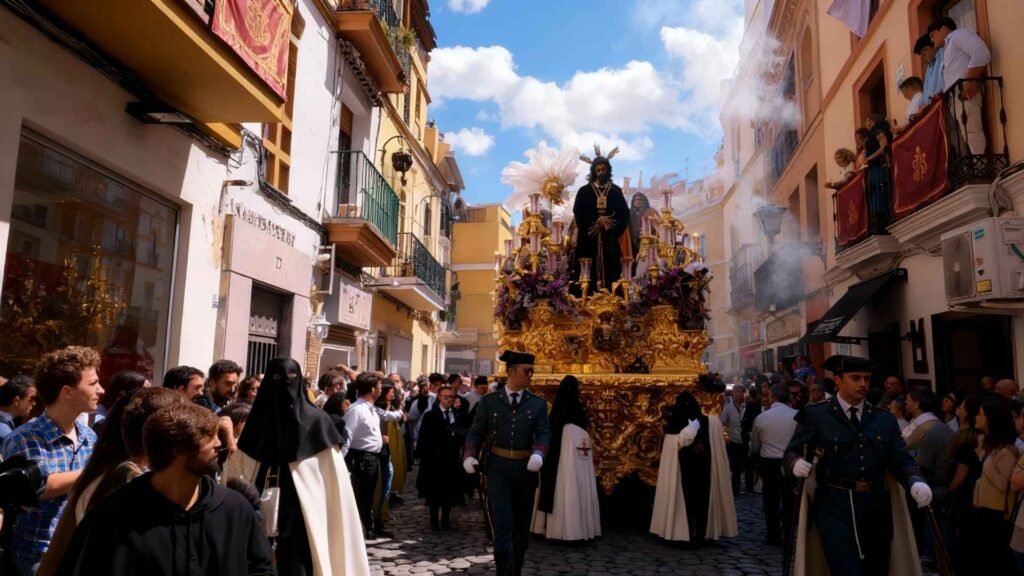
Semana Santa, or Holy Week, transforms the city into an open-air cathedral — where art, music, and faith intertwine.
Thousands of people take part in processions organized by brotherhoods (cofradías) dating back centuries.
Each procession carries magnificent floats (pasos), some weighing over a ton, adorned with gold, silver, and carved wooden figures depicting the Passion of Christ.
Carried on the shoulders of the costaleros, these floats sway rhythmically through the cobblestone streets to the solemn sound of drums and brass bands.
As night falls, Seville glows under candlelight. The scent of orange blossoms and incense drifts through the air, and balconies are draped in velvet and lace.
In moments of silence, time seems suspended — it’s not just faith, but feeling itself that moves the city.
💡 Traveler Tip:
- The most intense procession is La Madrugá, from midnight to dawn on Good Friday.
- Arrive early along Calle Sierpes or La Campana to witness the processions up close.
- Dress respectfully; locals often wear black as a sign of reverence.
📸 Photographer’s Note:
Shoot during dusk for candlelit contrasts and silhouettes against the Cathedral’s Gothic façade.
🎵 Cultural Insight:
Many of the hymns (saetas) sung from balconies are spontaneous — flamenco-style prayers whispered to heaven.
Feria de Abril — Andalusia’s Festival of Life
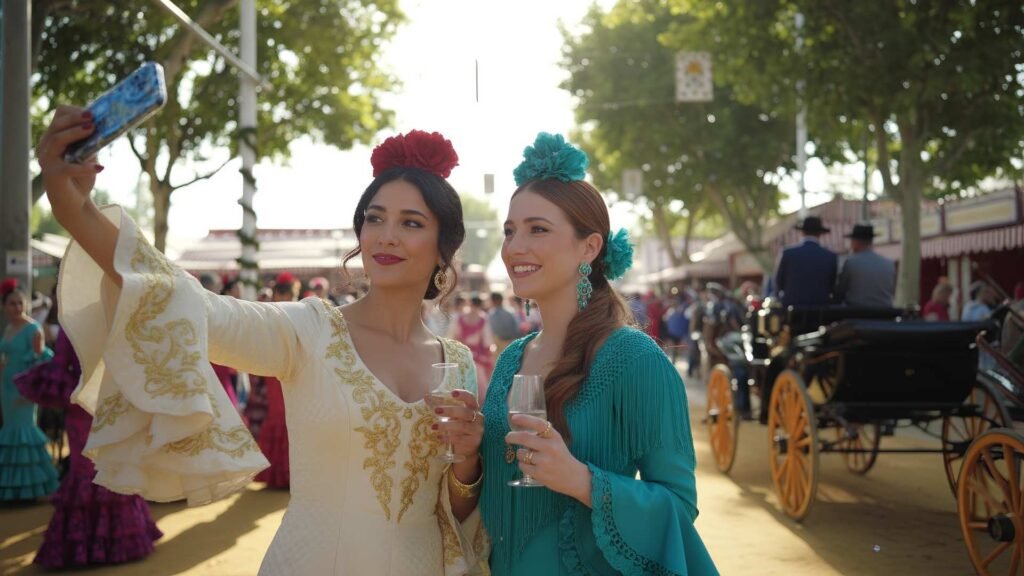
When: Two weeks after Easter
Where: Real de la Feria, Los Remedios District
If Semana Santa is Seville’s soul, Feria de Abril is its heart — vibrant, passionate, and overflowing with joy.
For six days, the city transforms into a festival of light and music.
At the fairgrounds (Real de la Feria), over 1,000 colorful tents (casetas) form a temporary city filled with music, laughter, and tradition.
Women wear flamenco dresses (traje de gitana), their hair adorned with flowers; men arrive on horseback in classic Andalusian suits.
The air fills with the rhythm of sevillanas — a local dance performed in pairs, accompanied by guitar, clapping, and cheerful singing.
During the day, horse-drawn carriages parade proudly through the streets, and at night, the fair comes alive under thousands of glowing lanterns (farolillos).
Every caseta offers food, wine, and music — from jamón ibérico to rebujito (a refreshing mix of sherry and soda).
It’s not a spectacle for tourists — it’s Seville at its most authentic. A celebration of friendship, family, and being alive.
💡 Traveler Tip:
- The fair begins with the Alumbrao, the official lighting of the grand gate (Portada).
- Public casetas welcome all visitors — try the Caseta Municipal or Distrito Casetas.
- The best photo spot? The illuminated main gate at sunset, when lanterns begin to glow.
🎵 Don’t Miss:
The final night’s fireworks (fuegos artificiales), marking the end of the Feria — a breathtaking farewell to Seville’s spring.
Flamenco in Triana — Where Fire Meets Soul
Where: Triana District, Across the Guadalquivir River
To understand Seville, you must cross the river to Triana — the birthplace of flamenco.
This neighborhood, once home to gypsy artisans and sailors, is where flamenco was born — an art form born of love, pain, and pride.
Flamenco is not a performance; it’s an expression of life.
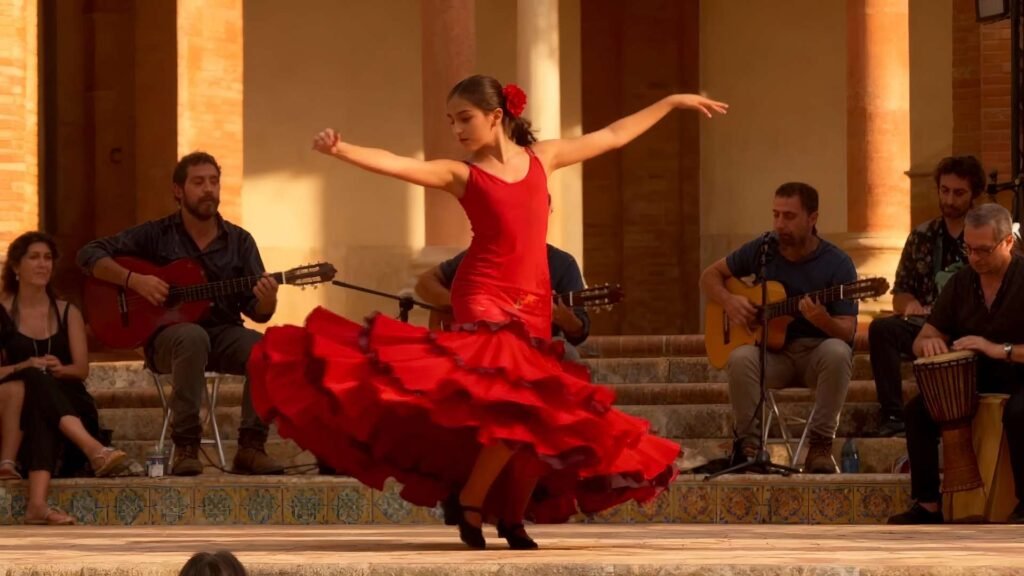
In a dimly lit tablao, when the guitarist’s first chord strikes and the dancer’s heel hits the floor, the world disappears.
You don’t just watch — you feel.
Every performance is different:
- The cante (song) tells stories of heartbreak and hope.
- The toque (guitar) answers with melody.
- The baile (dance) becomes the physical expression of passion and defiance.
💡 Where to Experience It:
- Casa Anselma (Triana): Legendary venue with local performers and spontaneous energy.
- Teatro Flamenco Triana: Elegant, immersive, perfect for newcomers.
- La Carbonería: Historic, bohemian, raw — a favorite among artists.
🎶 Cultural Note:
Flamenco is recognized by UNESCO as an Intangible Cultural Heritage of Humanity.
Triana remains its beating heart — where every clap, every step, every note feels like a prayer.
📸 Photographer’s Tip:
Shoot in low light with warm tones — focus on expressive hands, flowing dresses, and emotional faces illuminated by spotlights.
🌟 The Eternal Celebration
What makes Seville unforgettable isn’t just its history — it’s the way it celebrates life through every note, candle, and dance.
Its festivals are a continuum of emotion: sacred and sensual, quiet and explosive, ancient and alive.
In one season, Seville mourns and rejoices.
It cries through saetas, laughs through sevillanas, and tells its story through the art of flamenco — the heartbeat of Andalusia itself.
Explore Seville’s timeless heritage. 👉 Explore historical landmarks →
Discover authentic Andalusian crafts. 👉 Explore Seville’s traditional crafts →
Continue exploring the world with Clara. 👉 Go to Seville Travel Guide →