
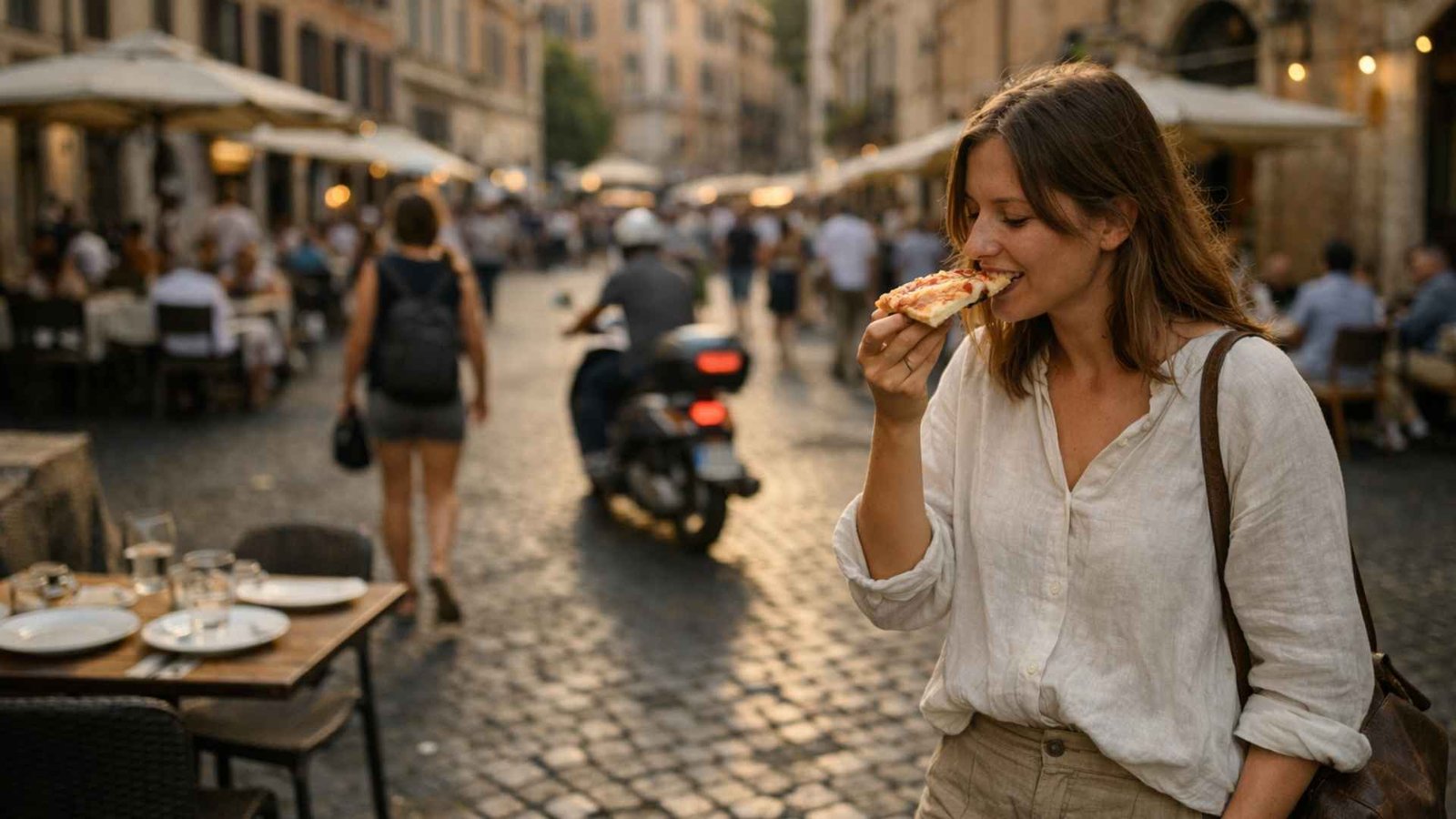
Rome is not just a city you visit — it’s a city you taste.
Between ancient ruins and lively piazzas, some of the most unforgettable meals aren’t served at a table, but eaten standing, with your hands, in the middle of a busy street. This is where Rome feels alive — fast, flavorful, and unapologetically real.
This Roman street food guide shows you exactly what to eat in Rome on the go — from crispy classics to local favorites you might otherwise miss.
What Is Roman Street Food?
Roman street food is built on simplicity and tradition — but behind that simplicity lies centuries of culinary identity.
Rooted in the philosophy of cucina povera — where simple ingredients are transformed into bold, satisfying flavors — it reflects a way of cooking that values resourcefulness, quality, and authenticity.
It’s not designed to impress with presentation, but to deliver flavor instantly, in its most honest form.
It’s about:
- bold, satisfying flavors
- fresh, high-quality ingredients
- fast, efficient preparation
👉 Designed for movement — yet never sacrificing taste or authenticity.
💡 Local Insight: In Rome, even the quickest bite reflects tradition — street food is not a shortcut, it’s a continuation of the culture.
10 Best Roman Street Foods You Must Try
Roman street food is not just about quick bites — it’s about experiencing the city in its most authentic and immediate form.
From crispy classics to simple local favorites, these are the must-try Roman street foods you’ll find across the city — each one designed to be eaten quickly, but remembered long after.
1. Supplì (Crispy Fried Rice Ball)
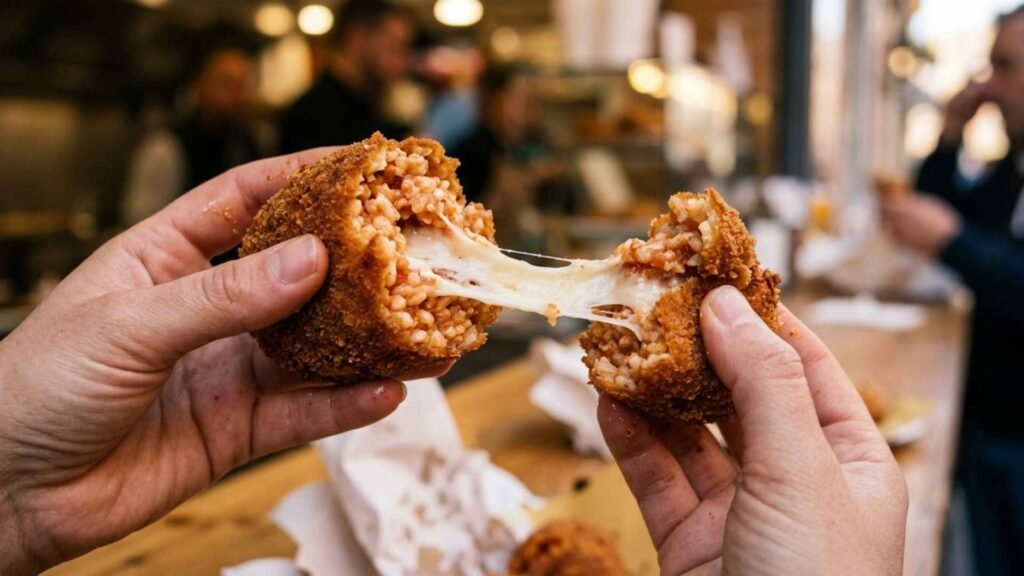
One of the most iconic Roman street foods — simple, nostalgic, and deeply satisfying.
Often compared to Sicily’s arancini, supplì is Rome’s answer, but with a slimmer shape and a signature mozzarella center that stretches when opened — known locally as “al telefono.”
A golden, crispy shell filled with tomato-infused rice and melted mozzarella.
✔ crunchy on the outside
✔ creamy and rich on the inside
✔ comforting and intensely flavorful
💡 Eat it hot — this is when supplì is at its absolute best.
2. Pizza al Taglio (Pizza by the Slice)
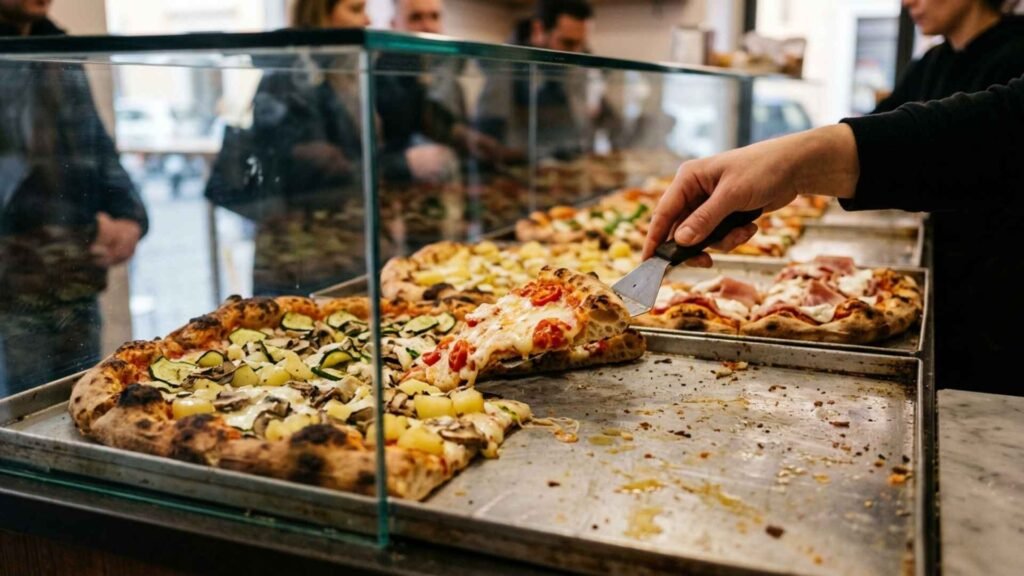
Rome’s most popular street food — practical, versatile, and endlessly satisfying.
Baked in large rectangular trays, this style of pizza is cut with scissors and sold by weight, allowing you to try multiple flavors in one stop.
✔ light and airy dough
✔ perfectly crispy base
✔ endlessly customizable toppings
👉 Ideal for eating on the go — or standing at the counter like a local.
3. Trapizzino (Modern Roman Street Food)
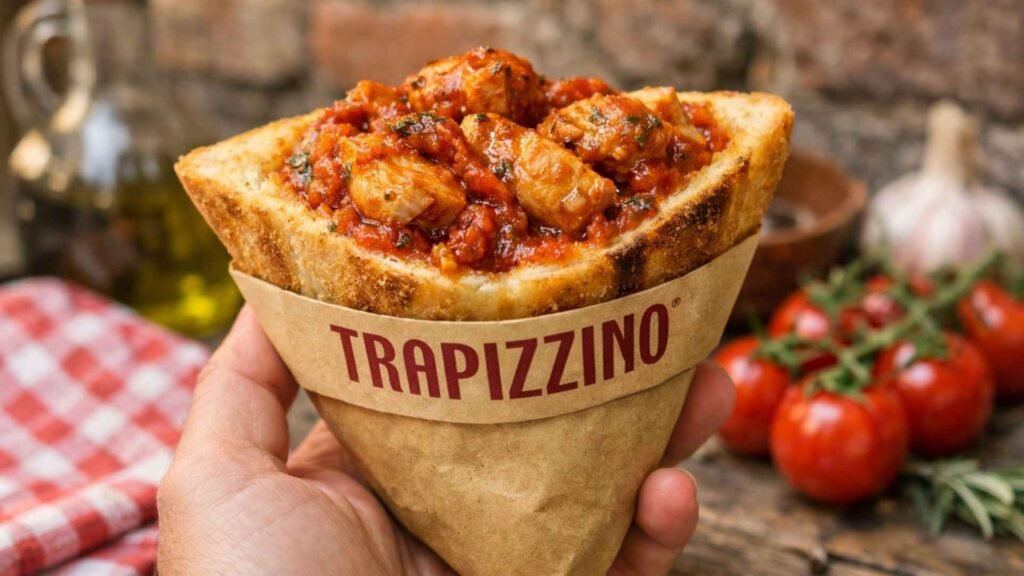
A unique hybrid of pizza and sandwich — and one of the most innovative takes on Roman street food.
Made from soft, airy pizza dough shaped into a triangular pocket, trapizzino is filled with slow-cooked Roman classics like:
- chicken cacciatore
- meatballs in rich tomato sauce
- eggplant parmigiana
👉 Traditional recipes, reimagined for the street — rich, comforting, and easy to eat on the go.
4. Filetti di Baccalà (Fried Cod Fillet)
A classic Roman street food with deep roots in the city’s culinary tradition — especially in the historic Jewish Ghetto.
Thick pieces of salted cod are coated in a light batter and deep-fried until golden.
✔ crispy, airy coating on the outside
✔ tender and flaky inside
✔ rich, slightly salty flavor
👉 Simple, bold, and best enjoyed fresh, straight from the fryer.
5. Porchetta Sandwich
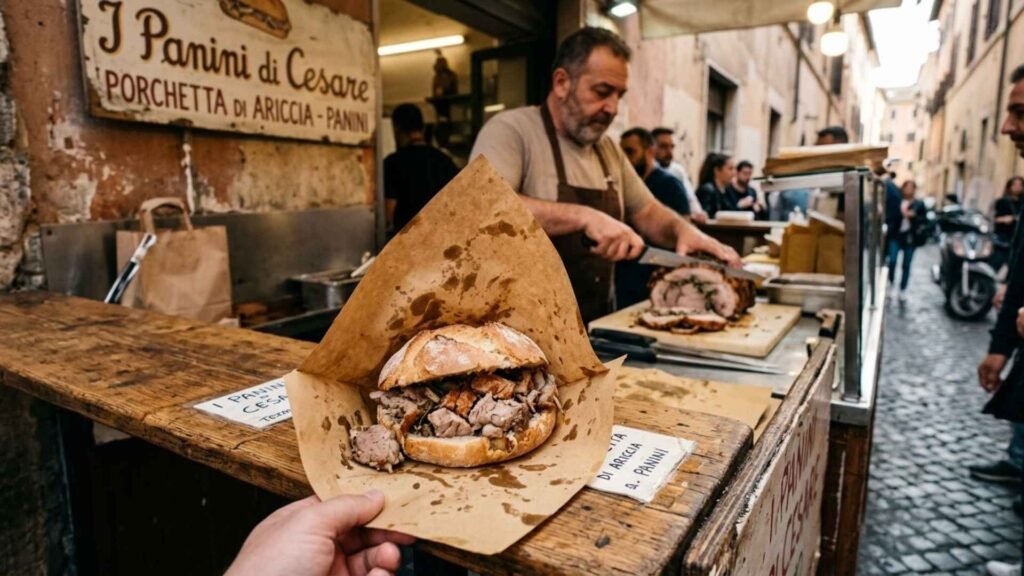
Juicy, slow-roasted pork seasoned with garlic, rosemary, and aromatic herbs, sliced thick and served in fresh bread (the best versions often come from nearby Ariccia).
✔ deeply savory and flavorful
✔ tender inside with a slightly crispy outer layer
✔ rich, satisfying, and filling
👉 More than a snack — this is a true Roman street food experience.
6. Fiori di Zucca (Stuffed Zucchini Flowers)
A delicate Roman specialty that perfectly captures the city’s love for simple yet refined flavors.
Zucchini flowers are gently filled with mozzarella and anchovy, then lightly fried until golden.
✔ crisp and airy on the outside
✔ soft and creamy inside
✔ balanced with a subtle, savory saltiness
💡 Tip: If you’re vegetarian, ask for a version without anchovies.
👉 Light, elegant, and unexpectedly flavorful — a true Roman classic.
7. Pizza Bianca
A simple yet essential Roman street food — understated, but deeply rooted in everyday life.
This light, airy flatbread is brushed with olive oil and sprinkled with salt, creating a crisp exterior and a soft, chewy interior.
✔ light and airy texture
✔ subtly rich with olive oil
✔ often used as the base for filled versions known as pizza ripiena
💡 Pro Tip: Locals often enjoy it as “pizza e mortazza” — filled with freshly sliced mortadella, creating one of Rome’s most iconic street food combinations.
👉 Simplicity at its finest — and a true staple of Roman daily eating.
8. Maritozzo (Sweet Roman Street Food)

A beloved Roman sweet that brings a softer, more indulgent side to street food culture.
A light, fluffy bun generously filled with fresh whipped cream — simple, but impossible to forget.
✔ soft and airy texture
✔ rich and creamy filling
✔ sweet, indulgent, and comforting
👉 Often enjoyed as a quick breakfast or an afternoon treat on the go.
9. Tramezzino (Italian Sandwich)
A beloved Italian café staple, found in nearly every bar across Rome.
Made with soft, crustless white bread, tramezzini are generously filled with simple ingredients like:
- tuna
- mozzarella
- fresh vegetables
✔ soft and light texture
✔ fresh, balanced flavors
✔ quick, convenient, and easy to find
👉 Ideal for a fast lunch or a light snack between exploring the city.
💡 Local Tip: A true Roman institution for tramezzini is Bar San Calisto in Trastevere, known for its simple, authentic atmosphere.
10. Gelato (Street-Style Dessert)
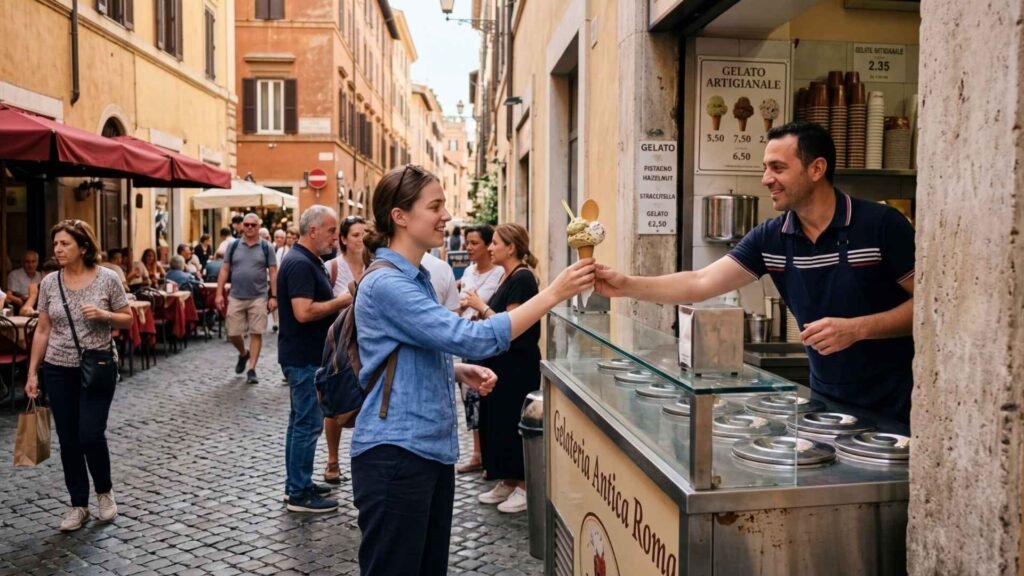
No Roman food experience is complete without gelato — the perfect sweet pause between exploring the city.
Made with fresh ingredients and churned for a smooth, dense texture, authentic Italian gelato is rich in flavor without being overly heavy.
✔ refreshing and smooth
✔ intensely flavorful
✔ perfect to enjoy while walking through Rome
💡 Local Tip: Choose gelato with natural, muted colors — bright, artificial tones often signal lower quality.
How Much Does Street Food Cost in Rome?
Street food is one of the most affordable and accessible ways to eat in Rome — without compromising on quality or flavor.
Typical prices (2026):
- Supplì → €2.50–€4
- Pizza al taglio → €4–€7 (depending on weight)
- Trapizzino → €5–€8
- Porchetta sandwich → €6–€9
👉 Compared to restaurants, Roman street food still offers excellent value for money.
💡 Local Tip: Prices are often based on weight — always check before ordering, especially in busy tourist areas.
Best Street Food Spots in Rome (Local Favorites)
If you want to skip trial and error, these street food spots are consistently trusted by locals for their quality and flavor.
- Trapizzino → a modern take on Roman street food
- Pizzarium Bonci (Near the Vatican) → top-tier pizza al taglio worth the short detour
- Supplizio → elevated, high-quality supplì
- Antico Forno Roscioli → one of the best places in Rome for authentic pizza bianca
👉 These places focus on craftsmanship and flavor — not tourist crowds.
Best Areas for Street Food in Rome
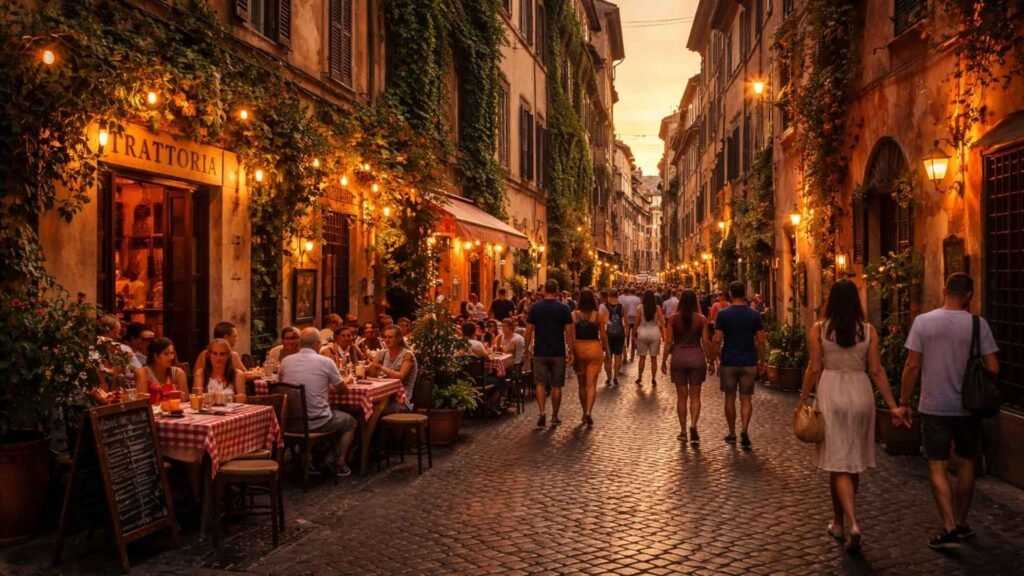
Street food in Rome is often defined by location — some neighborhoods offer a more authentic and rewarding experience than others.
Trastevere
- lively atmosphere
- authentic local vibe
- ideal for evening street food
Testaccio
- true local food district
- deeply traditional flavors
- fewer tourists, more authenticity
Campo de’ Fiori
- central and convenient
- wide variety of options
- quality can vary
💡 Local Tip: The best street food spots are rarely advertised — follow the locals, not the signs.
How to Eat Street Food Like a Local
Eating street food in Rome is not just about what you choose — it’s about how you experience it.
✔ eat standing at the counter or nearby
✔ choose places with a constant flow of locals
✔ keep it simple and trust traditional options
✔ avoid overly tourist-heavy spots
👉 If locals are there, you’re in the right place.
Is Street Food Safe in Rome?
Yes — and in many cases, it’s even fresher than restaurant food.
Most street food in Rome is prepared daily and served quickly, which helps maintain both quality and safety.
✔ high turnover ensures freshness
✔ simple recipes reduce risk
✔ food is often made throughout the day
👉 The real concern is not hygiene — it’s avoiding tourist traps.
Avoid:
- empty or unpopular places
- food that has been sitting too long
- unclear or missing pricing
💡 Local Tip: If a spot is busy with locals, it’s usually a safe and reliable choice.
Vegetarian Street Food in Rome
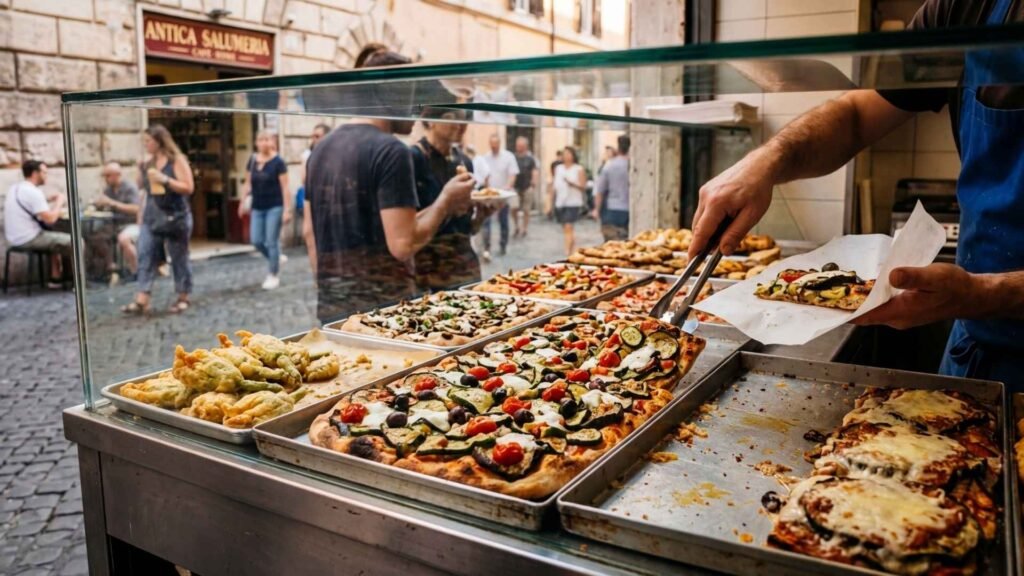
While Roman cuisine is often associated with meat, the reality on the streets tells a different story. Step up to almost any local counter, and you’ll find trays filled with colorful, vegetable-based options that are just as satisfying as their meat counterparts.
Behind the glass, rows of pizza al taglio are topped with zucchini, eggplant, cherry tomatoes, and mushrooms — simple ingredients, yet full of flavor. Next to them, golden fiori di zucca sit freshly fried, light and crispy, while rustic eggplant dishes, often prepared in parmigiana-style layers, offer something richer and more comforting.
Nothing feels complicated. Nothing feels limited.
Instead, the experience is effortless — you point, they serve, and within seconds, you’re holding a warm slice of something freshly made.
✔ simple and flavorful
✔ widely available across the city
✔ easy to customize at almost any counter
👉 With just a little awareness, eating vegetarian in Rome isn’t restrictive — it’s surprisingly abundant, delicious, and deeply local.
What to Avoid (Tourist Traps)
Even when it comes to street food, not every spot in Rome offers the same quality.
❌ overpriced food near major landmarks
❌ menus with photos and overly broad options
❌ aggressive staff trying to pull you in
👉 These are often signs of places targeting tourists rather than focusing on quality.
💡 Local Tip: If it feels too convenient or overly advertised, it’s usually worth walking a few minutes further.
Best Time to Try Roman Street Food
In Rome, street food follows the rhythm of the day — each moment offering a slightly different experience.
- Morning → maritozzo or a light, sweet start
- Afternoon → pizza al taglio and supplì for a quick, satisfying bite
- Evening → a fuller street food experience with more variety
👉 No matter the time, Rome is always ready to feed you.
Street Food vs Restaurants in Rome
In Rome, choosing between street food and restaurants isn’t about better or worse — it’s about the kind of experience you’re looking for.
Street food:
✔ fast and convenient
✔ affordable and accessible
✔ ideal for exploring on the go
Restaurants:
✔ more relaxed and immersive
✔ wider variety of dishes
✔ better for longer, sit-down meals
👉 The best way to experience Rome is to combine both — quick bites during the day, and a slower, more traditional meal in the evening.
Internal Link Strategy
Still deciding what to eat in Rome beyond street food? Start with our complete guide to local flavors:
What to Eat in Rome: 👉 A Local Food Guide to the Eternal City
Final Thoughts
The best food in Rome isn’t always found in restaurants.
Sometimes, it’s something simple — eaten quickly, standing in a crowded street, surrounded by the rhythm of the city.
That’s where Rome becomes unforgettable.
👉 Which of these Roman street foods would you try first? Are you team Supplì or team Pizza al Taglio?