

Understanding entry rules is an essential part of planning a trip to France. Although Paris is one of the world’s most visited cities, there is no separate “Paris visa.” Entry to Paris is governed by France’s national immigration regulations and the wider Schengen framework.
This guide explains Paris visa requirements for 2026 in a clear, realistic, and traveler-focused way. All information reflects current regulations and planned border system updates, covering visa rules, passport validity, border procedures, and new digital systems such as EES and ETIAS — so you know exactly what to expect before traveling to Paris.
Is a Visa Required to Visit Paris?
Whether you need a visa to visit Paris depends on your nationality, passport type, length of stay, and purpose of travel. Understanding Paris visa requirements begins with determining whether your passport allows visa-free entry or requires a Schengen visa in advance.
France follows the Schengen entry system, which allows short-term visitors to move freely between member countries once legally admitted. However, Paris visa requirements are enforced at the French border regardless of whether a traveler is visa-free or visa-required.
Travelers generally fall into two categories:
- Visa-free travelers, who may enter Paris for short stays without applying for a visa
- Visa-required travelers, who must obtain a visa before arrival
Visa-free entry does not guarantee automatic admission. Border police may still refuse entry if documentation or conditions are not met.
Visa-Free Entry to Paris (Up to 90 Days)
Many travelers can enter Paris without a visa for short-term, non-commercial visits. Visa-free entry allows stays of up to 90 days within any rolling 180-day period, calculated across the entire Schengen Area.
Visa-free entry typically applies to citizens of:
- The United States, Canada, and the United Kingdom
- Australia and New Zealand
- Japan, South Korea, Singapore, and several Latin American countries
Even visa-free travelers must still comply with Paris visa requirements, including proof of accommodation, sufficient financial means, return or onward travel tickets, and travel insurance.
Schengen Visa for Paris (Short-Stay Visa – Type C)
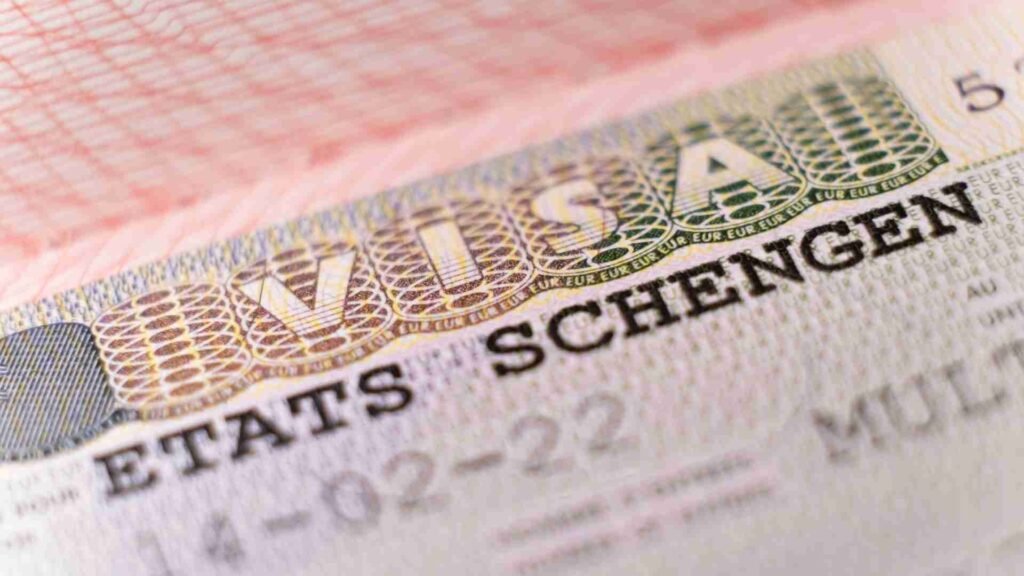
Travelers who are not eligible for visa-free entry must apply for a Schengen short-stay visa (Type C) before traveling to Paris.
Meeting all Paris visa requirements accurately—particularly those related to financial documentation, travel intent, and supporting documents—is essential for Schengen visa approval and a smooth entry process.
This visa allows:
- Tourism, short business trips, or visiting friends and family
- Stays of up to 90 days within a 180-day period
- Travel across all Schengen countries during the same trip
Applications are submitted through French embassies, consulates, or authorized visa centers. Carefully meeting Paris visa requirements, especially financial credibility and travel intent, significantly improves approval chances.
Passport Validity & Blank Page Requirements
All travelers entering Paris must meet strict passport rules, as passport validity is a core part of Paris visa requirements and is checked both by airlines and border authorities before entry.
Your passport must:
- Be valid for at least three months beyond your planned departure from the Schengen Area
- Have been issued within the last ten years
- Contain at least two blank pages
Critical 2026 Travel Tip
While these are the legal minimums, many airlines and transit countries apply stricter internal policies—especially during the 2026 digital border transition. Travelers are strongly advised to carry a passport with:
- At least six months of remaining validity
- Three to four blank pages, particularly if transiting through other countries
These precautions help avoid denied boarding, transit complications, or last-minute travel disruptions.
Proof of Funds: How Much Money Do You Need to Enter Paris?
French border authorities may request proof of sufficient financial means. Official reference minimums used by France are:
- €32.50 per day if staying with a host and holding an approved Attestation d’accueil
- €65 per day if staying in a hotel
- €120 per day if no accommodation proof is provided
If only part of the stay is booked, France applies €65 per booked night and €120 for remaining days.
Bank Statements (Very Important)
For visa-required travelers, authorities typically expect bank statements covering the last 3–6 months, showing regular, genuine account activity. A single high balance without transaction history may be considered insufficient.
2026 Reality Check
These figures represent minimum legal thresholds only. Given Paris’s high cost of living, travelers should demonstrate additional funds covering accommodation, flights, and realistic daily expenses. Insufficient or weakly documented funds remain one of the most common reasons for visa refusal or entry denial.
Staying With Friends or Family: Attestation d’accueil Rules
Travelers staying with friends or relatives in France must present an official Attestation d’accueil.
Key requirements:
- Issued and approved by the host’s local Mairie (town hall)
- The original document must be carried by the traveler
- Copies, scans, or informal invitation letters are often not accepted
Without this document, travelers may be refused entry even if all other Paris visa requirements are met.
Airport Transit Through Paris (ATV Requirement)
Some nationalities require an Airport Transit Visa (ATV) even if they do not leave the international transit zone at Paris Charles de Gaulle Airport.
This commonly affects travelers from:
- India
- Pakistan
- Bangladesh
- Certain African countries
Transit visa requirements are nationality-specific and apply even for short layovers. Airlines may deny boarding if an ATV is required but not held.
Visa Processing Time & When to Apply
Visa processing times vary by country, season, and individual circumstances, and understanding Paris visa requirements also means planning application timing carefully to avoid unnecessary delays.
In general:
- Standard processing takes up to 15 calendar days
- Peak travel periods may extend timelines
- Requests for additional documents can cause delays
To avoid complications, travelers are advised to apply at least 3–6 weeks before travel, and earlier when planning trips during summer or major holiday periods.
ETIAS Authorization for Visa-Free Travelers (2026 Update)

ETIAS (European Travel Information and Authorization System) will apply to travelers who currently enter Paris without a visa.
Key points:
- Applies only to visa-free nationalities
- Completed online before travel
- Valid for multiple trips over several years
ETIAS Fee
The ETIAS application fee is expected to be around €20, following planned increases from the earlier €7 fee. Final confirmation will be issued closer to full implementation.
Soft Launch & Information Period (Important Note)
When ETIAS is introduced, an initial information and transition period (approximately six months) is expected. During this phase, travelers without ETIAS may not be immediately refused entry, but they are likely to receive a formal warning and be required to obtain ETIAS before their next trip.
Travelers planning journeys from mid-2026 onward should actively monitor ETIAS requirements before departure.
For a detailed breakdown of eligibility, application steps, and validity periods, see our complete ETIAS travel authorization guide. For the most accurate and up-to-date implementation details, travelers should also consult the official European Union website.
EU Entry/Exit System (EES): What Will Change at the Border
The EU Entry/Exit System (EES) replaces passport stamping with digital border registration.
Under EES:
- Non-EU travelers provide biometric data (fingerprints and facial image)
- Entry and exit dates are recorded electronically
- Physical passport stamps are phased out
By April 2026, EES is expected to be fully operational at major French entry points such as Paris Charles de Gaulle and Orly.
Arrival Time Warning
During first-time entry under EES, travelers may experience extended waiting times of up to 1–2 hours, particularly at busy airports, due to biometric enrollment.
Once biometric data has been registered and remains valid, subsequent entries are expected to be faster, with the gradual introduction of self-service kiosks and automated border lanes.
Digital Schengen Visas & Online Applications (2026 Vision)

2026 also marks a turning point in how visas are issued and managed across Europe. As part of this transition, travelers heading to Paris may notice expanded use of online-only visa applications, digital tracking of application status, and the gradual shift from physical visa stickers to digital visa records or QR-based verification systems.
Travelers may notice:
- Expanded use of online-only visa applications
- Digital tracking of application status
- Gradual transition from physical visa stickers to digital visa records or QR-based verification
While not all countries or applicant categories will switch simultaneously, this digital transformation represents a major modernization of Paris visa requirements.
Where available, applicants may also track their visa process through official platforms such as France-Visas, including mobile applications, reflecting France’s broader move toward fully digital visa management.
Travel Insurance Requirements for Paris
Travel insurance is a mandatory element of Paris visa requirements for Schengen visa applicants and is strongly recommended for all travelers entering Paris, including those who qualify for visa-free entry.
Insurance policies must:
- Provide minimum coverage of €30,000
- Cover inpatient medical treatment
- Include emergency medical evacuation
- Cover repatriation of remains
- Ideally be issued without deductibles (zero excess)
Policies that do not clearly include these elements may be rejected by consulates during the visa process or questioned by border authorities upon arrival.
Required Documents at Paris Border Control
Travelers arriving in Paris may be asked to present the following documents at border control:
- A valid passport
- Proof of accommodation (hotel booking or invitation letter)
- Return or onward travel tickets
- Proof of sufficient financial means
- Travel insurance documentation
These checks form a key part of how Paris visa requirements are enforced at the border, even for travelers who are otherwise eligible for visa-free entry.
Pro Travel Tip
Carry printed copies of all key documents in addition to digital versions. During the EES transition period, technical issues may occur, and border officers are not required to accept documents shown only on a mobile device.
How Long Can You Stay in Paris?
How long you are allowed to stay in Paris depends on your visa status, and length-of-stay limits form a key part of Paris visa requirements for both visa-free travelers and Schengen visa holders.
Most short-term visitors are subject to the 90/180-day rule, which applies across the entire Schengen Area:
- You may stay for up to 90 days
- Within any rolling 180-day period
This rule applies regardless of whether you enter Paris without a visa or with a short-stay Schengen visa. Exceeding the permitted stay can result in fines, entry bans, or complications with future travel to France and other Schengen countries.
Long-Stay Visas for Paris (Stays Over 90 Days)

Travelers planning to stay longer than 90 days must apply for a long-stay visa (Type D) before arrival.
Common categories include:
- Student visas
- Work visas
- Family reunification visas
- Long-term visitor visas
OFII Registration & Residence Tax
Holders of long-stay visas must complete online OFII registration after arrival and pay the required digital residence tax stamp (timbre fiscal) as part of their legal stay in France.
Can You Work in Paris with a Tourist Visa?
Tourist and Schengen visas do not permit employment in France.
France does not currently offer a short-term digital nomad visa. Any form of work—including remote work for a foreign employer—is technically prohibited, even if enforcement may be limited in practice.
Minors Traveling to Paris: Strict Entry Rules
France applies strict rules for children entering or leaving the country, and compliance with these rules forms an important part of Paris visa requirements when minors are involved in international travel.
If a minor is traveling alone or with only one parent, border authorities may request:
- Notarized parental consent from the non-traveling parent
- French or English translation of the consent document
- A copy of the child’s birth certificate to verify parental relationship
- In some cases, the Autorisation de sortie du territoire (Cerfa No. 15646) form, particularly for children with legal or residency ties to France
Failure to present the required documentation may result in delays, additional questioning, or refusal of entry at border control.
Common Visa & Entry Mistakes to Avoid
Many entry issues arise not from complex regulations, but from small oversights. Avoiding these common mistakes is an essential part of meeting Paris visa requirements and ensuring a smooth arrival process.
- Assuming visa-free entry guarantees automatic admission
- Presenting weak, incomplete, or inconsistent bank documentation
- Ignoring airport transit visa requirements when connecting through Paris
- Traveling with insufficient passport validity or too few blank pages
- Relying only on digital documents at border control without printed copies
Being aware of these frequent pitfalls helps travelers reduce the risk of delays, additional questioning, or refusal of entry at the French border.
Why Paris Visa Requirements Matter
Understanding Paris visa requirements for 2026 helps travelers avoid unnecessary risks, entry problems, and last-minute surprises at the French border. Visa rules, passport validity standards, and documentation checks are applied consistently, regardless of nationality or travel purpose.
Being informed in advance allows travelers to focus on enjoying Paris rather than dealing with delays or complications. As entry procedures continue to evolve, clear preparation remains the key to smooth and stress-free travel.
✅ 2026 Paris Travel Checklist (Quick Airport Reference)
Before your trip and when presenting documents to French border authorities at the airport, make sure the following items are fully prepared.
🛂 Passport & Entry Authorization
- Passport Validity:
Valid for at least 6 months beyond your return date
(Legal minimum is 3 months, but 6 months is strongly recommended) - Blank Pages:
At least 3–4 blank pages in your passport - ETIAS Approval (for visa-free travelers):
Mandatory from mid-2026. Keep a digital and offline copy accessible on your phone. - Schengen Visa (for visa-required travelers):
Visa sticker in passport or confirmed digital visa record
💶 Financial Proof & Accommodation
- Accommodation Proof:
Hotel reservation printout or officially approved Attestation d’accueil
(Original document must be carried) - Financial Evidence:
Bank statements from the last 3–6 months showing regular activity
(Preferably in English or French) - Cash / Card Access:
Proof of access to approximately €65–€120 per person per day via cash or credit card
🛡️ Health Insurance & Transportation
- Travel Insurance:
Minimum €30,000 coverage, valid across the Schengen Area,
covering inpatient treatment, emergency medical evacuation, and repatriation of remains,
zero deductible (no excess) recommended - Transportation Proof:
Confirmed return ticket or onward travel booking
🖨️ Printed Document Copies (Highly Recommended)
- Paper Copies:
Printed copies of passport ID page, visa or ETIAS approval, accommodation proof, return ticket, and travel insurance
(Especially useful during the EES transition period in case of technical issues)
📱 Digital Readiness
- Phone Battery:
At least 50% battery upon arrival at the airport - Offline Access:
Downloaded (offline-accessible) versions of ETIAS approval, flight tickets, and reservations
🗣️ Clear Travel Purpose
- Entry Reason:
Ability to clearly and consistently explain your purpose of travel
(Tourism, visiting family/friends, or short business)
👨👩👧👦 Special Situations (If Applicable)
- Minors (Under 18):
Notarized parental consent letter (if traveling without both parents) and a copy of the birth certificate - Transit Travelers:
Airport Transit Visa (ATV), if required based on nationality
✈️ Airline & Transit Check (Recommended)
- Airline Policies:
Verification of passport and visa rules for any transit countries on your route
💡 2026 Pro Tip
- EES Registration:
First-time entry into Paris (CDG / Orly) requires biometric enrollment
(fingerprints and facial scan).
Allow at least one extra hour at the airport for this process.
🟢 Final Note
This checklist reflects real border control practices, airline checks, and the evolving ETIAS and EES systems for 2026. Having these items prepared significantly reduces the risk of delays or entry issues when traveling to Paris.
Paris Airport Fast Track Guide: 👉 When it’s worth it and how to book.
Paris Charles de Gaulle Airport Guide: Easy Transfers, Digital Tickets & Smart Arrival Tips