

The moment your plane touches down in Paris carries a quiet thrill. As the aircraft slows on the runway, images begin to surface—the soft morning light along the Seine, the first coffee at a sidewalk café, the rhythm of the city waking up. Yet before any of that unfolds, every journey begins at one place: Charles de Gaulle Airport.
This Charles de Gaulle Airport Guide is designed to remove uncertainty from that first moment. Whether you are arriving in Paris for the first time or returning after years away, this guide walks you calmly through terminals, arrival procedures, transport options, digital ticketing, and practical tips—so your Paris experience begins with clarity and confidence.
What Is Charles de Gaulle Airport?
Paris Charles de Gaulle Airport (CDG) is France’s primary international airport and the main gateway for long-haul and intercontinental flights into Paris. Serving millions of travelers each year, CDG functions as one of Europe’s most important aviation hubs, connecting Paris to cities across Europe, the Americas, Asia, and the Middle East. For official maps, terminal updates, and live airport information, visit the Paris Aéroport website.
What often unsettles travelers is not the airport itself, but its scale and layered structure. With multiple terminals, sub-terminals, and transport systems, CDG can feel overwhelming without preparation. With the right information, however, Charles de Gaulle Airport becomes structured, predictable, and far easier to navigate.
CDG Terminals Explained: Navigating the Complex
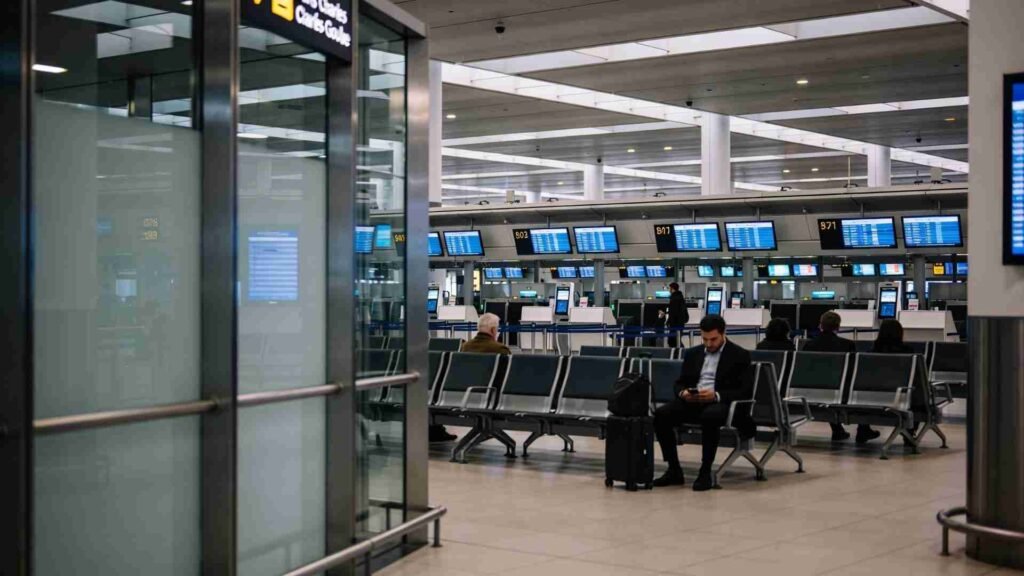
Charles de Gaulle Airport is composed of three main terminals, but the numbering can be misleading—Terminal 2 is not a single building, but a massive complex of interconnected (and sometimes separate) terminals. Understanding this layout in advance is one of the most important steps to a smooth arrival or connection at CDG.
Terminal 1: The Classic Circle
Terminal 1 is CDG’s original terminal, instantly recognizable by its circular design and central core.
- Best for: Star Alliance airlines (such as Lufthansa and United) and select international flights
- Layout: Long tunnel-style walkways and a unique vertical design
- Important tip:
- The RER B train station is not located in Terminal 1. To reach trains or other terminals, you must take the free CDGVAL shuttle train
This terminal is iconic, but first-time visitors should allow extra time for walking and orientation.
Terminal 2 (2A–2G): The Giant Hub
Terminal 2 is the heart of Charles de Gaulle Airport—and also the source of most confusion. It is best understood as a series of terminals placed side by side, not a single structure.
The Layout You Must Understand
- 2A – 2D:
Generally used for European flights and some international routes - 2E:
The most critical terminal for long-haul travel- Main hub for Air France and major intercontinental airlines
- Most arrivals from the United States, Asia, and other non-Schengen countries land here
- Divided internally into Gates K, L, and M
- Gates L and M require a short automated shuttle train ride after passport control
- Gates L and M require a short automated shuttle train ride after passport control
- 2F:
Primarily serves European and Schengen-area flights- Located directly opposite Terminal 2E
- Located directly opposite Terminal 2E
- 2G:
A special case- Located in a separate building
- Accessible only via the N2 shuttle bus from the main Terminal 2 area
📌 Time warning: Walking between sub-terminals inside Terminal 2 can take 15–20 minutes. Reaching Terminal 2G can take 30 minutes or more, even for fast walkers.
Where to Catch the Train: RER B & SNCF Station
If you are heading into Paris by train, this detail is crucial.
- The main Gare SNCF / RER B station is located between Terminals 2C/2D and 2E/2F
- Travelers arriving at Terminal 1 or Terminal 3 must first take the CDGVAL shuttle to reach this station
Knowing this in advance can save significant time and confusion, especially after long-haul flights.
Terminal 3: Low-Cost Central
Terminal 3 is smaller and more basic compared to the other terminals.
- Best for: Low-cost carriers and charter flights
- Layout: Simple and functional, with limited services
- Connection note:
Reaching main transport links requires a short walk followed by the CDGVAL shuttle
This terminal is straightforward, but it is physically separated from the main Terminal 2 complex.
📌 Pro Tip: If your ticket or boarding pass says “Terminal 2”, check the letter immediately.
Moving from 2A to 2G is not a minor transfer—it can easily take 30 minutes, even with good mobility and no delays.
Airport Logistics: Mastering the CDG Connection
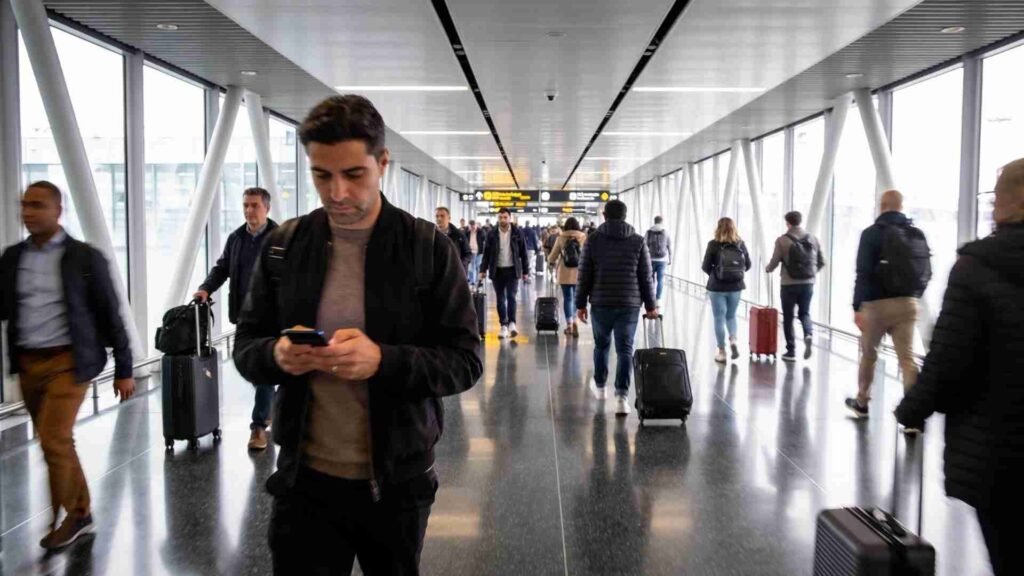
Navigating between terminals at Charles de Gaulle Airport is not a matter of walking—it’s a matter of logistics. CDG is vast, segmented, and highly structured. Understanding how terminal connections work is essential, especially for international and Schengen transfers.
CDGVAL – Free Automatic Train Between Terminals
You cannot walk between the main terminal buildings at Charles de Gaulle Airport.
All transfers between Terminal 1, Terminal 2, and Terminal 3 are handled exclusively by CDGVAL, a free, fully automated light rail system.
What you need to know about CDGVAL:
- What it is: Free, driverless airport shuttle train
- Frequency: Approximately every 4 minutes (slightly less frequent late at night)
- Operating hours: 24/7
- Key stops include:
- Terminal 1
- Terminal 3 / Roissypole (RER B station)
- Terminal 2 (TGV + RER B station)
🚫 Important: Do not attempt to walk along airport roads between terminals.
✅ Follow the clearly marked blue “CDGVAL” signs inside terminals.
CDGVAL connects not only terminals, but also parking areas and the main train stations, making it the backbone of airport movement.
Terminal 2E vs. Terminal 2F: The Schengen Factor
This is the most critical internal transfer at CDG and the point where many travelers lose time.
Understanding the Schengen border logic is key.
- Terminal 2E (Non-Schengen):
Used for long-haul international flights- USA, Canada, UK, Asia, Middle East
- Always involves passport control
- Terminal 2F (Schengen):
Used for European and domestic flights- Germany, Italy, Spain, France, and other Schengen countries
- No passport control once inside the Schengen zone
What Happens When You Transfer Between 2E and 2F?
⚠️ This is where many connections fail if time is underestimated.
- Moving between 2E and 2F usually takes 15–20 minutes via a covered internal walkway
- However, if you are arriving from a non-Schengen country (e.g. the US) and connecting to a European flight, you must pass through passport control at the Schengen border point
This immigration checkpoint is the main source of delay.
📌 Minimum Connection Time Tip:
For a 2E → 2F transfer, always allow at least 90 minutes to account for:
- Passport control queues
- Walking distances
- Potential shuttle or gate changes
Anything shorter is risky, especially during peak arrival hours.
Step-by-Step: The Arrival Process at Charles de Gaulle Airport
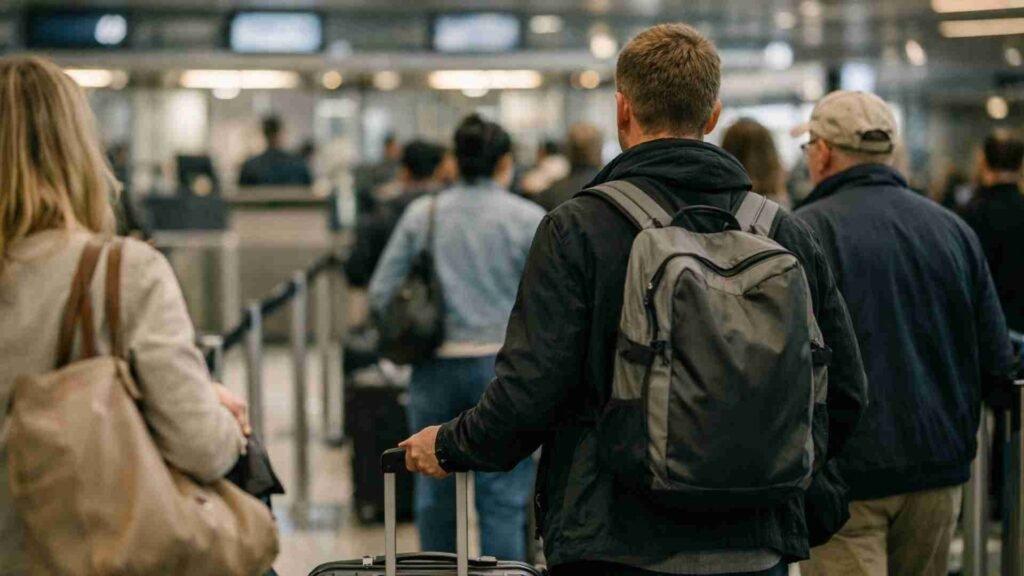
Once your aircraft reaches the gate at Charles de Gaulle Airport, the transition from plane to city follows a clear but structured sequence. Knowing what comes next—and where delays usually happen—helps you move through the airport calmly and efficiently.
1. Passport Control (Immigration)
Passport control is your first stop after disembarking. CDG operates multiple lanes depending on nationality and passport type.
- EU / EEA / Swiss Citizens:
Usually the fastest option. Travelers with biometric passports can use PARAFE automated gates, which significantly reduce waiting time. - All Passports (Non-EU):
Visitors from the USA, Canada, UK, Asia, and other non-Schengen countries must queue at staffed counters. Waiting times vary greatly depending on arrival waves.
📌 Pro tip:
Have your passport ready and open. While accommodation details or onward tickets are rarely requested, being prepared speeds things up—confidence matters here.
2. Baggage Claim
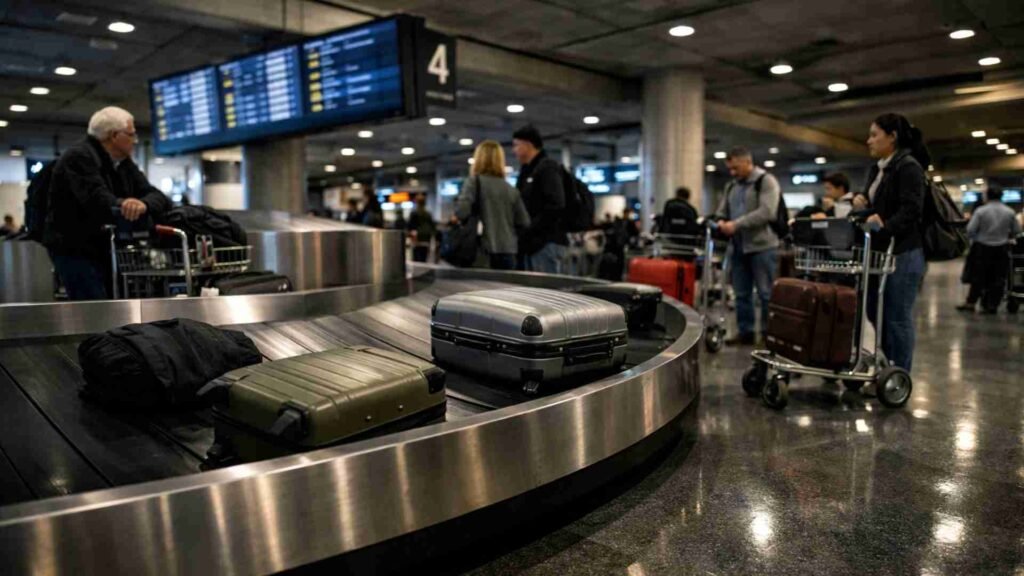
After immigration, follow the “Bagages” signs to the baggage reclaim area.
- Wait times:
For long-haul intercontinental flights, baggage delivery typically takes 20–40 minutes, sometimes longer during peak hours. - Luggage carts:
Baggage trolleys are available throughout the claim area and are generally free of charge inside the terminal. - Screens matter:
Always check the information monitors—carousel numbers can change at the last minute.
3. Customs Control (Douane)
Customs is the final checkpoint before entering the public area of the airport.
- Green Channel – Nothing to Declare:
Used by most travelers. Simply walk through if you are within duty-free allowances. - Red Channel – Goods to Declare:
Required if you are carrying restricted items or exceeding tax-free limits.
This process is usually quick and straightforward for tourists.
4. The Arrivals Hall (Public Area)
Once you pass through the sliding doors, you enter the Arrivals Hall—often busy, noisy, and crowded.
- Meeting Points:
If someone is picking you up or you’ve booked a private transfer, head toward the clearly marked “Meeting Point” signs. Drivers typically wait there or just outside the customs exit with name boards. - Essential services:
This is where you’ll find ATMs, SIM/eSIM kiosks (often at Relay shops), official information desks, and car rental counters. - The golden rule:
❌ Do not accept transport offers from anyone approaching you inside the hall.
✅ Follow signs to the official taxi rank, train station, or designated ride-hailing pick-up zones.
How Long Does It Take to Exit CDG? (A Reality Check)
This is perhaps the most critical question when planning your first day in Paris. At Charles de Gaulle Airport, the time it takes from “wheels down” to stepping outside the terminal varies widely depending on your passport, terminal, and arrival time.
Average Exit Times
- EU Passport Holders:~30–60 minutes
- Advantage: Access to faster automated PARAFE gates significantly reduces waiting time.
- Non-EU Passport Holders:~45–90 minutes
- Reality check: This window can expand during peak arrival waves, especially when multiple long-haul flights land at once.
Peak Hours (The “Rush” Periods)
Expect longer waits during:
- 06:00 – 09:00: Morning arrivals from North America and Asia
- 12:00 – 16:00: Afternoon international arrival wave
Outside these windows, processing is usually calmer and more predictable.
Factors That Speed Up—or Slow Down—Your Exit
Several often-overlooked details can add or save valuable time:
- Terminal Location:
If you land at Terminal 2E (Gates L or M), you must take an automated internal shuttle train before reaching passport control.
⏱️ This alone can add 10–15 minutes. - Checked Luggage:
Travelers with carry-on only can save at least 20 minutes by bypassing baggage claim entirely. - PARAFE Automated Gates:
Even some non-EU travelers may be eligible. Citizens of countries such as the USA, Canada, and the UK with biometric passports are often allowed to use PARAFE gates.
👉 Always look for “PARAFE” signs—you might skip long manual queues.
📌 The Buffer Rule (Highly Recommended):
If you are booking a private transfer, train ticket, or time-sensitive activity, schedule your pickup at least 90 minutes after your scheduled landing time. This buffer absorbs delays from immigration, shuttles, and baggage—keeping your arrival calm and stress-free.
Best Time to Arrive at CDG: Peak Hours & What to Expect
Passenger volume at Charles de Gaulle Airport fluctuates noticeably throughout the day. While you may not always control your flight’s arrival time, understanding the airport’s daily rhythm helps you choose the right transport option and avoid unnecessary stress.
06:00 – 09:00 | The Morning Rush
This is the busiest window at CDG. A large wave of European commuter flights combines with overnight arrivals from North America.
- The challenge:
Long immigration queues and heavy road traffic toward Paris, especially on the A1 motorway. - Best move:
Take the RER B train to bypass morning traffic jams and reach the city more predictably.
12:00 – 16:00 | The International Wave
This period sees the arrival of large intercontinental aircraft from Asia, the Middle East, and parts of Africa.
- The challenge:
Baggage claim areas can become crowded, and luggage delivery may slow down. - Best move:
For couples or groups, an official fixed-rate taxi is convenient here, as midday traffic is usually manageable and less chaotic than the morning rush.
Late Night (After 22:00) | The Quiet Window
After 22:00, terminals become noticeably calmer, offering a more relaxed walk through passport control and arrivals.
- The challenge:
Public transport—especially RER B—runs less frequently and may feel less comfortable for first-time visitors late at night. - Best move:
Use an official taxi or a ride-hailing app (such as Uber or Bolt) for a safe, door-to-door arrival at your hotel.
📌 The Sweet Spot (Summary):
For the smoothest experience with the shortest lines and balanced transport options, international flights landing in the late morning (10:00–11:30) or early evening (18:00–19:30) are often ideal.
These windows avoid peak congestion while still offering frequent and reliable transport into Paris.
Digital Ticketing & Transport Systems (2026 Update)
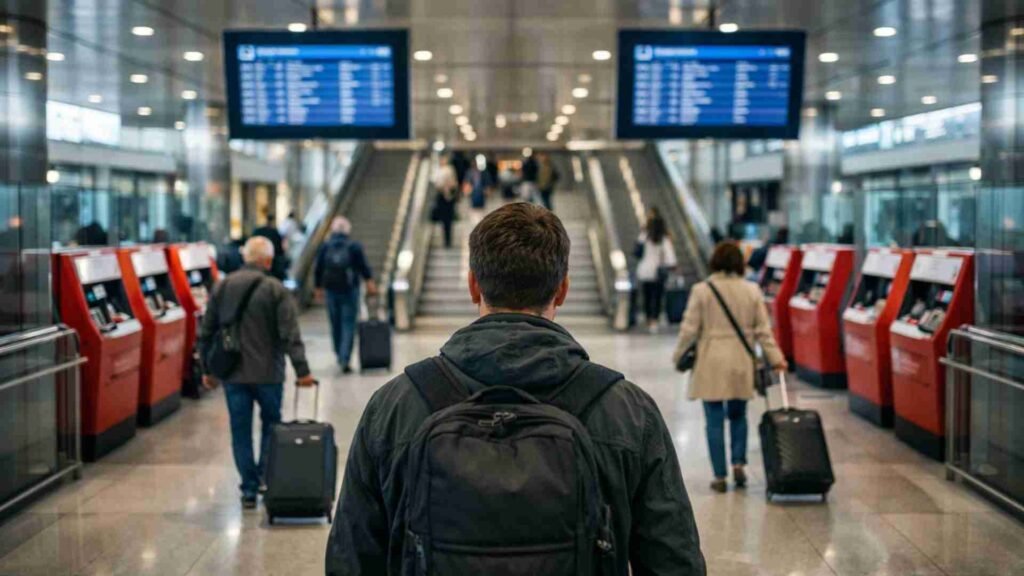
Paris has officially entered the paperless transport era. The iconic small cardboard tickets (Ticket t+) have been fully phased out, replaced by a 100% digital ecosystem.
If you are arriving at Charles de Gaulle Airport, being ticket-ready before reaching the platforms will save time, confusion, and unnecessary fines.
Below are the two best and safest options for visitors in 2026.
Option 1: The Navigo Easy Card (Best for Most Travelers)
If you prefer not to rely on your phone’s battery, internet connection, or app compatibility, Navigo Easy is the most reliable choice.
- What it is:
A reusable, physical contactless transport card for Paris and the Île-de-France region. - Where to get it:
At any Billetterie (Ticket Office) or automated ticket machine at CDG train stations
(Terminal 2 – RER/TGV station or Terminal 3 – Roissypole). - Cost:
- Card fee: €2.00 (one-time)
- Reloadable with single trips or day passes
- Why choose it:
- Works instantly on RER trains, metro, buses, and trams
- No phone, no battery anxiety
- Ideal for airport transfers and short stays
For first-time visitors, Navigo Easy is the lowest-risk, highest-clarity option.
Option 2: The Île-de-France Mobilités App (Best for Tech-Savvy Travelers)
If you prefer a fully digital setup, you can turn your smartphone into your ticket.
- How it works:
Download the Île-de-France Mobilités app, go to the Purchase section, and buy your tickets directly. - Important requirement:
Your phone must be NFC-enabled. - How to validate:
Simply tap your phone on the purple reader at turnstiles or onboard validators
(the app does not need to be open).
This option is convenient, but relies entirely on phone compatibility and battery level.
The “Tap-and-Go” Reality Check (2026)
While contactless credit cards and smartphones are now accepted across much of Paris transport, airport arrivals deserve special attention.
- RER B caution:
Direct credit-card tapping on the airport line is available, but it often charges the maximum daily fare, even for a single trip. - Risk factor:
Validation errors or incomplete taps can result in significant fines during ticket inspections.
📌 The recommendation:
For airport transfers, the gold standard remains:
- Buying a dedicated “Airport → Paris” ticket
- Loaded onto Navigo Easy or purchased digitally via the app
This ensures correct pricing, proper validation, and zero disputes.
Bottom Line (What to Do When You Land)
- Want simplicity and reliability → Buy Navigo Easy
- Comfortable with tech and NFC → Use the Île-de-France Mobilités app
- Avoid relying solely on credit-card tap-and-go for airport trips
Being ticket-ready before boarding the RER B will make your first journey into Paris smooth, legal, and stress-free.
How to Get from CDG to Paris City Center: A Detailed Comparison
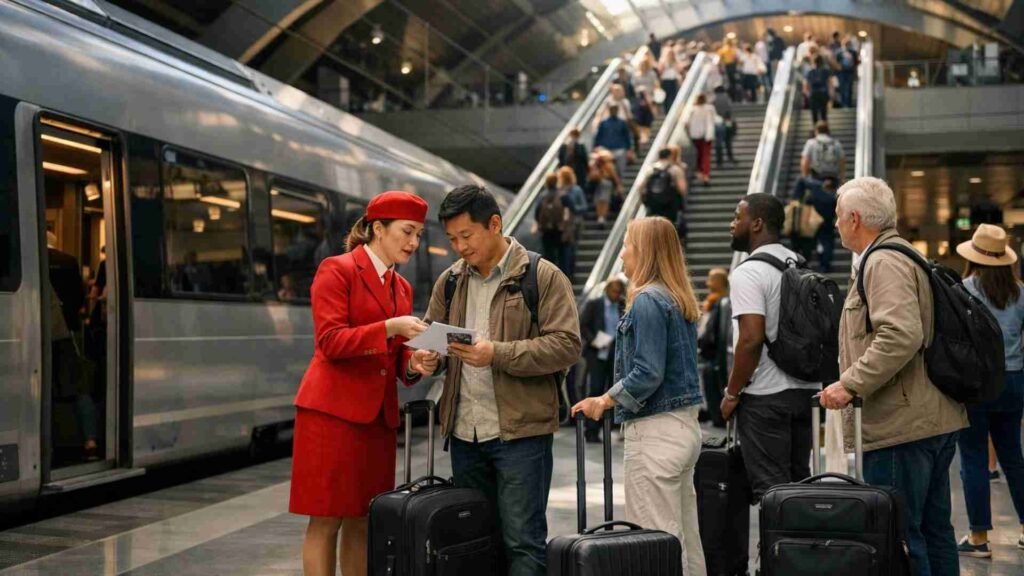
Getting from Charles de Gaulle Airport to the city center is straightforward—but the best option depends on your priority: speed, cost, or comfort. Below is a clear comparison to help you choose the right transport for your arrival.
1. RER B Train (The Speed Specialist)
Best for: Solo travelers, couples, and anyone wanting to avoid road traffic.
- Time: ~35–50 minutes to central stations such as Gare du Nord or Châtelet–Les Halles
- Price: ~€11.80–€12.00 (2026 pricing)
- Pros:
- Fast and frequent
- Immune to traffic jams
- Cons:
- Crowded during rush hours
- Not ideal with multiple large suitcases
- Some stations have stairs and limited elevators
⚠️ Pro tip:
When possible, board an express RER B that skips smaller suburban stops for a quicker and smoother ride.
2. Airport Shuttle & Bus (The Middle Ground)
Best for: Travelers with luggage who prefer a direct drop-off without navigating train stations.
- Main services:
- RoissyBus (CDG ↔ Opéra)
- Express 9517 (CDG ↔ Saint-Denis / Metro Line 14)
- Time: ~60–75 minutes (highly traffic-dependent)
- Price: ~€16.60
- Pros:
- Dedicated luggage racks
- Convenient arrival points on the Right Bank
- Cons:
- Traffic on the A1 motorway can be unpredictable, especially in the morning
3. Official Taxis (The Reliable Standard)
Best for: Families (3–4 people) and travelers with heavy luggage.
Official Paris taxis operate with fixed, government-regulated fares:
- CDG → Paris Right Bank (Rive Droite): €56
- CDG → Paris Left Bank (Rive Gauche): €65
These fixed fares are officially published by Paris Aéroport.
- Pros:
- Door-to-door convenience
- No luggage fees
- No negotiation required
🚫 Warning:
Only join the official taxi queue outside the terminal. Ignore anyone approaching you inside saying “Taxi?”—these are unlicensed and will overcharge.
4. Ride-Hailing Apps (VTC Services)
Best for: Travelers who prefer digital booking and real-time pricing.
Commonly used apps in Paris include Uber, Bolt, and FreeNow.
- Price: Varies based on demand (surge pricing possible)
- Pickup:
- Not curbside
- Follow “VTC” signs to designated parking-level pickup zones (e.g., Terminal 2E, Parking Level 2)
This option offers flexibility, but pickup points can be confusing for first-time visitors.
5. Private Transfer (The Stress-Free Luxury)
Best for: First-time visitors, large groups, or travelers arriving after long-haul flights.
- Pros:
- Meet & Greet service in the arrivals hall
- Pre-paid, fixed price
- No waiting, no navigation stress
A driver waits for you with a name sign, making this the calmest possible arrival option.
Ride-Hailing Apps (VTC Services): What to Expect at CDG
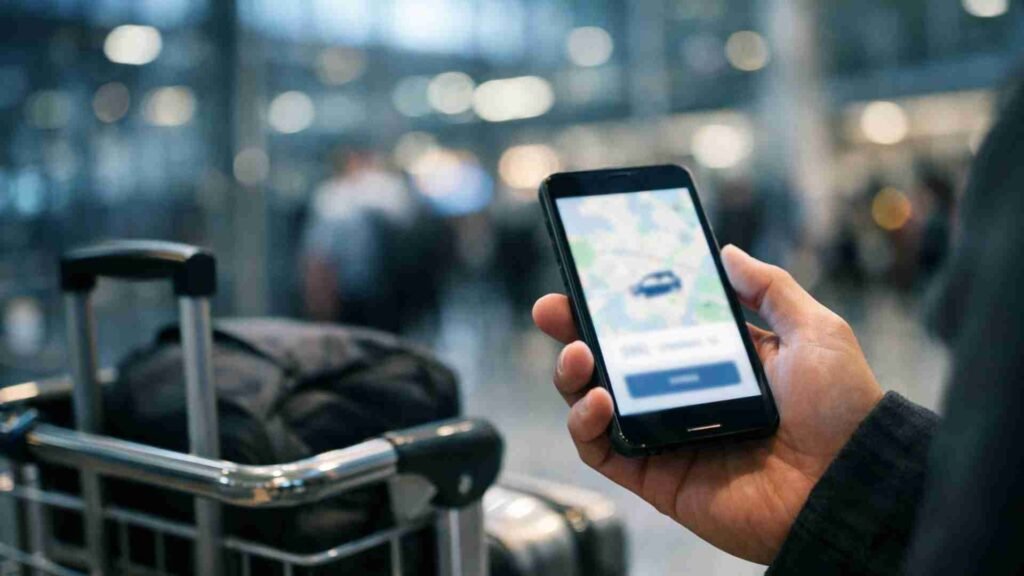
Ride-hailing services are widely used and reliable in Paris, including Uber, Bolt, and FreeNow.
However, at Charles de Gaulle Airport, these services operate under very different rules compared to official taxis—and knowing them in advance can save you significant time and frustration.
No Curbside Pickup (This Is Non-Negotiable)
Unlike official Paris taxis, VTC drivers are strictly prohibited from picking up passengers at the arrivals curb.
- You cannot exit the terminal and jump into an Uber like a taxi
- Drivers attempting curbside pickups risk heavy fines and are not allowed to stop
Where to Go: Designated VTC Pick-Up Zones
To use ride-hailing apps at CDG, you must follow airport signage for:
- “Transport by Appointment”
- or “VTC”
These pick-up points are located in specific parking garages, not directly outside the terminal.
- Example:
At Terminal 2E, VTC pick-up is typically located near Parking Exit 2 (exact location may vary slightly by sub-terminal)
📌 Always follow the in-app directions after confirming your terminal and exit.
The Ordering Process (Timing Matters)
A common mistake is ordering a ride too early.
- Do not request your ride until:
- You have cleared customs
- You have collected all luggage
- You are physically walking toward the VTC pickup zone
Why?
At CDG, VTC drivers are only allowed to wait a few minutes in designated areas. If you are late, the driver may be forced to leave or incur high parking fees—leading to cancellations or delays.
The “Wait” Factor at CDG
Even if the app shows “3 minutes away”, reality can differ.
- During peak hours, drivers often need 10–15 minutes to navigate:
- One-way airport road loops
- Congested parking access points
- Terminal-specific restrictions
This is normal at CDG and should be factored into your decision.
Quick Comparison: VTC vs. Official Taxi
| Feature | Ride-Hailing (VTC) | Official Paris Taxi |
|---|---|---|
| Price | Dynamic (surge pricing possible) | Fixed rate (€56 / €65) |
| Pickup Location | Designated parking levels | Immediate curbside |
| Wait Time | 5–15 minutes after ordering | Instant (queue-based) |
| Comfort | Modern, app-tracked | Professional, regulated |
📌 Pro Tip (Money Saver):
During heavy rain, strikes, or peak arrival waves, Uber/Bolt prices can surge to €80 or more.
In these situations, the official taxi queue—with its fixed €56 / €65 fare—is often faster, simpler, and significantly cheaper.
Connectivity: Wi-Fi, SIM & eSIM
Staying connected is often the first priority for international travelers. Whether you need to order a ride, message your hotel, or navigate Paris transport apps, here’s how to handle connectivity efficiently at Charles de Gaulle Airport.
1. Free Unlimited Wi-Fi
Charles de Gaulle Airport offers free, unlimited Wi-Fi across all terminals.
- Network name:
WIFI-AIRPORT - How to connect:
Select the network and a captive portal will appear. You’ll typically need to accept the terms or enter an email address to get online. - What it’s good for:
Messaging apps, maps, emails, ride-hailing, and activating eSIMs. - Speed tip:
The free Wi-Fi is reliable for basic use. If you need higher speeds (large uploads or video calls), look for the paid “Wi-Fi Faster” option or connect from a business lounge.
2. eSIM Options (The 2026 Standard)
By 2026, many travelers prefer not to swap physical SIM cards.
- Best move:
Buy an eSIM before you travel from providers such as Airalo, Holafly, or Orange Holiday. - Activation:
Use CDG’s free Wi-Fi to activate your eSIM as soon as you land—no shops, no queues. - Why this works well:
- Instant connectivity
- No physical card handling
- Ideal for short stays and frequent travelers
This is the fastest way to be online the moment your phone leaves airplane mode.
3. Physical SIM Cards & Vending Machines
If you prefer a local physical SIM card, CDG offers convenient options.
- Where to buy:
- Relay shops
- Dedicated SIM vending machines
Located just after baggage claim and in the arrivals hall
- Major providers:
Orange, SFR, and Bouygues Telecom - Typical tourist plans:
Around €40 for 14–30 days, including generous data and local/international calls
⚠️ Price note:
SIM cards sold inside the airport are often “Traveler Editions”—slightly more expensive than city-center shops, but ideal if you need immediate connectivity.
Bottom Line: What Should You Choose?
- Want instant, no-hassle internet → eSIM (pre-purchased)
- Want simplicity without tech setup → Physical SIM at CDG
- Need basic access right now → Free WIFI-AIRPORT
Being connected early makes everything else—from tickets to transport—much easier.
Luggage & Comfort Services: Refresh Before the City

If you arrive in Paris early or have a long layover at Charles de Gaulle Airport, there’s no need to drag your suitcases around or wait uncomfortably for hours. CDG offers several practical services to help you reset, rest, and start the city fresh.
1. Left Luggage / Bag Storage (Bagages du Monde)
Unlike many major airports, Charles de Gaulle Airport does not have luggage lockers in every terminal.
- Important to know:
There are no luggage storage facilities in Terminal 1 or Terminal 3. - The only official option:
Bagages du Monde - Location:
Terminal 2 — Gare TGV / RER Station (Level 4), directly opposite the Sheraton Hotel - Opening hours:
07:00 – 21:00, daily - Pricing (2026):
- Short-term storage (up to 3 hours): ~€7 per bag
- Full day (24 hours): ~€20 per bag
📌 Pro tip:
If you are staying at a hotel in central Paris, check whether they offer free luggage storage. Many hotels do—even before check-in—which can save you this airport fee.
2. Pay-Per-Use Lounges (Economy-Friendly Comfort)
You don’t need a Business Class ticket or elite status to enjoy a quiet, comfortable space at CDG.
- Extime Lounges:
Available in Terminal 1, 2B, 2D, and 2E- Access: Pay-per-use day passes
- Price range: Approximately €60–€95
- Includes: Buffet food, drinks, Wi-Fi, power outlets, and comfortable seating
- YOTELAIR (Terminal 2E – Gates L):
Particularly useful for transit passengers- Offers “Shower Only” packages (around €20)
- Ideal if you just want to freshen up after a long-haul flight without booking a room
These options are especially valuable after overnight flights or before long onward journeys.
3. Free Relaxation Areas (Budget-Friendly)
If you prefer not to spend extra money, CDG still offers free comfort zones.
- Espace Détente (Relaxation Areas):
Found in most terminals, often near boarding gates - What to expect:
- Reclining lounge chairs
- Charging stations for phones and laptops
- A quieter environment than main corridors
- Family tip:
In Terminal 2E and 2F, look for Gulli gaming areas and PlayStation zones—a great way to keep children entertained at no cost.
How to Choose What’s Right for You
- Arriving early with heavy luggage → Bagages du Monde
- Exhausted after a long-haul flight → Pay-per-use lounge or YOTELAIR shower
- On a budget but need to recharge → Espace Détente areas
Traveling with Family & Accessibility: Practical Ease
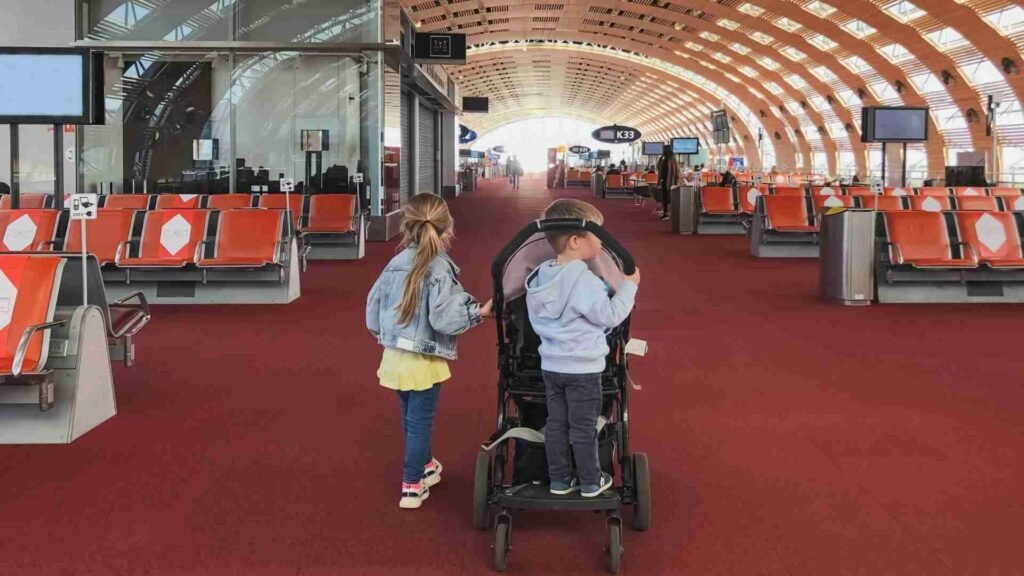
Charles de Gaulle Airport is officially certified as a Family Friendly airport. However, its sheer size means that families and travelers with reduced mobility benefit greatly from a bit of advance strategy. Knowing where priority lanes, assistance points, and family facilities are located can turn a potentially exhausting arrival into a smooth experience.
For Families & Kids
Traveling with children at CDG is manageable—especially if you know what to look for.
Accès Famille (Priority Lanes)
During peak holiday periods and in major terminals such as 2E and 2F, families with young children can use “Accès Famille” lanes.
- These are dedicated security and passport control lanes
- Clearly marked with Accès Famille signage
- Designed to reduce waiting time and stress for families
Availability depends on staffing and traffic levels, but they are a real advantage when open.
Strollers & Pushchairs
- If you gate-check your stroller, it will usually be returned either at the aircraft door or shortly after arrival.
- In addition, self-service airport strollers (often referred to as La Flâneuse) are available free of charge in boarding and transit areas of Terminal 1 and Terminal 2.
Pro tip:
For parents who want a guaranteed same-day rental of high-end strollers (such as Babyzen YOYO), check availability at the Bagages du Monde counter near the Terminal 2 train station.
Baby Rooms & Play Zones
- All terminals feature Baby Rooms equipped for changing and nursing.
- For older children, look for:
- Gulli play areas
- Disney-themed zones (mainly in Terminals 2E and 2F)
These spaces are ideal for letting kids release energy before or after long flights.
For Travelers with Reduced Mobility (PRM)
Charles de Gaulle Airport is fully equipped to assist passengers with reduced mobility—but preparation is essential.
Request Assistance in Advance (Golden Rule)
- Always inform your airline at least 48 hours before your flight
- This ensures assistance is ready upon arrival, including wheelchairs and escort services
Assistance Meeting Points
If assistance is not provided directly at the aircraft door:
- Look for orange “Mobility Assistance” (Assistance Mobilité) call points
- Located at:
- Terminal entrances
- Arrivals halls
- Key access points throughout the airport
Airport staff will respond and guide you through the next steps.
Step-Free Access & Transport
- All CDGVAL shuttles are fully accessible and equipped with elevators
- RER B stations at CDG also have elevator access
📌 Important city note:
While the airport itself is accessible, many older Paris Metro stations are not. For wheelchair users, RER B and buses are generally more reliable options for reaching the city center.
2026 Update: EES & Families
As of 2026, the EU Entry/Exit System (EES) introduces biometric registration for non-EU travelers.
- Adults will typically use biometric kiosks
- Children under 12 are exempt from certain biometric steps
- Families with young children are usually directed to manual booths
This may slightly alter queue flow, so follow staff instructions closely—especially during busy arrival waves.
Safety & Scam Awareness: Avoid the “Fake Taxi” Trap
Paris is generally a safe city, but Charles de Gaulle Airport is a prime location for targeted tourist scams—especially involving transportation.
In 2026, authorities have reported an increase in unofficial drivers approaching travelers inside the terminal, often immediately after customs.
Knowing one simple rule can save you money, stress, and potential confrontation.
The Gold Standard Rule: Official Taxis Never Recruit Inside
Real Paris taxis never approach passengers inside the arrivals hall.
- If someone walks up to you asking “Taxi? Paris?”, walk away immediately
- Legitimate drivers wait outside, in the official taxi queue
There are no exceptions to this rule.
The Fixed-Rate Rule (Non-Negotiable)
Official Paris taxis operate under government-regulated fixed fares from CDG to central Paris:
- Right Bank (Rive Droite): €56
- Left Bank (Rive Gauche): €65
📌 Critical warning:
If a driver insists on using a meter for these routes, you are not in an official taxi.
Official taxis:
- Do not negotiate
- Do not add luggage fees
- Do not surprise you with extra charges
The “VTC” Scam (Fake Uber/Bolt Drivers)
Some scammers claim to be Uber, Bolt, or FreeNow drivers and wait near the arrivals exit.
- Real ride-hailing drivers:
- Must be booked through the app
- Never wait at the arrivals gate
- Pick up passengers only at designated VTC parking zones
If someone claims “I am your Uber” without an active app booking—it’s a scam.
How to Find the Real Taxi Queue (Visual Guidance)
💡 Safety Tip:
Follow the official blue “Taxi” signs on the floor and walls. These lead you directly to the outdoor taxi rank, which is:
- Staffed by an airport attendant
- Clearly organized
- Lined with licensed vehicles displaying the Taxi Parisien sign on the roof
Once you reach this queue, you are 100% safe.
Common Mistakes to Avoid at CDG
Based on traveler feedback and on-the-ground observations in 2026, these are the most common mistakes that can quickly turn an arrival at Charles de Gaulle Airport into a stressful experience—and how to avoid them.
1. Ordering an Uber Too Early
One of the most frequent and costly mistakes.
- What goes wrong:
Travelers order an Uber or Bolt while still waiting at baggage claim. - Why it’s a problem:
Ride-hailing drivers are only allowed to wait a few minutes at the designated VTC pickup zones. If you’re not there in time, the ride may be canceled—or you may be charged.
✅ What to do instead:
Wait until you:
- Have collected all your luggage
- Have exited customs
- Are physically walking toward the “VTC / Transport by Appointment” parking exit
Then order your ride.
2. Boarding the Wrong RER B Train
Not all RER B trains from CDG are the same—and this mistake can easily add 20–30 minutes to your journey.
- What goes wrong:
Travelers board the first RER B train without checking the stopping pattern. - Why it matters:
Some trains stop at every suburban station, making the trip longer and less comfortable.
✅ What to do instead:
Check the departure screens and look for trains labeled “Direct Paris” or those skipping smaller suburban stops. These are:
- Faster
- Less crowded
- Generally more secure for travelers with luggage
3. The “Bonjour” Faux Pas
This one surprises many visitors—but it matters in France, where small courtesies set the tone for any interaction.
- What goes wrong:
Asking for help or information without greeting first. - Why it matters:
In French culture, starting an interaction without a greeting is considered impolite and can result in a noticeably less helpful response.
✅ What to do instead:
Always begin with a friendly “Bonjour”, even before asking a quick question.
This small gesture often leads to much better assistance from staff and ticket agents.
Bottom Line
- ❌ Don’t order ride-hailing until you’re at the pickup zone
- ❌ Don’t board an RER B train without checking the screen
- ❌ Don’t skip the greeting
- ✅ Time your decisions
- ✅ Read the signs
- ✅ Say “Bonjour”
Avoiding these three mistakes alone will make your arrival at CDG smoother, faster, and far less stressful.
Final Thoughts
Charles de Gaulle Airport may appear complex at first glance, but understanding its structure, digital systems, and transport options transforms the experience. With preparation and the right information, CDG becomes a calm, organized gateway into Paris.
This Charles de Gaulle Airport Guide is designed to give you clarity, confidence, and a smooth start to your Paris journey.
Paris Visa & Passport Requirements: 👉 The Easy Complete Guide Before You Travel
Paris Airport Fast Track Guide: 👉 When it’s worth it and how to book.