
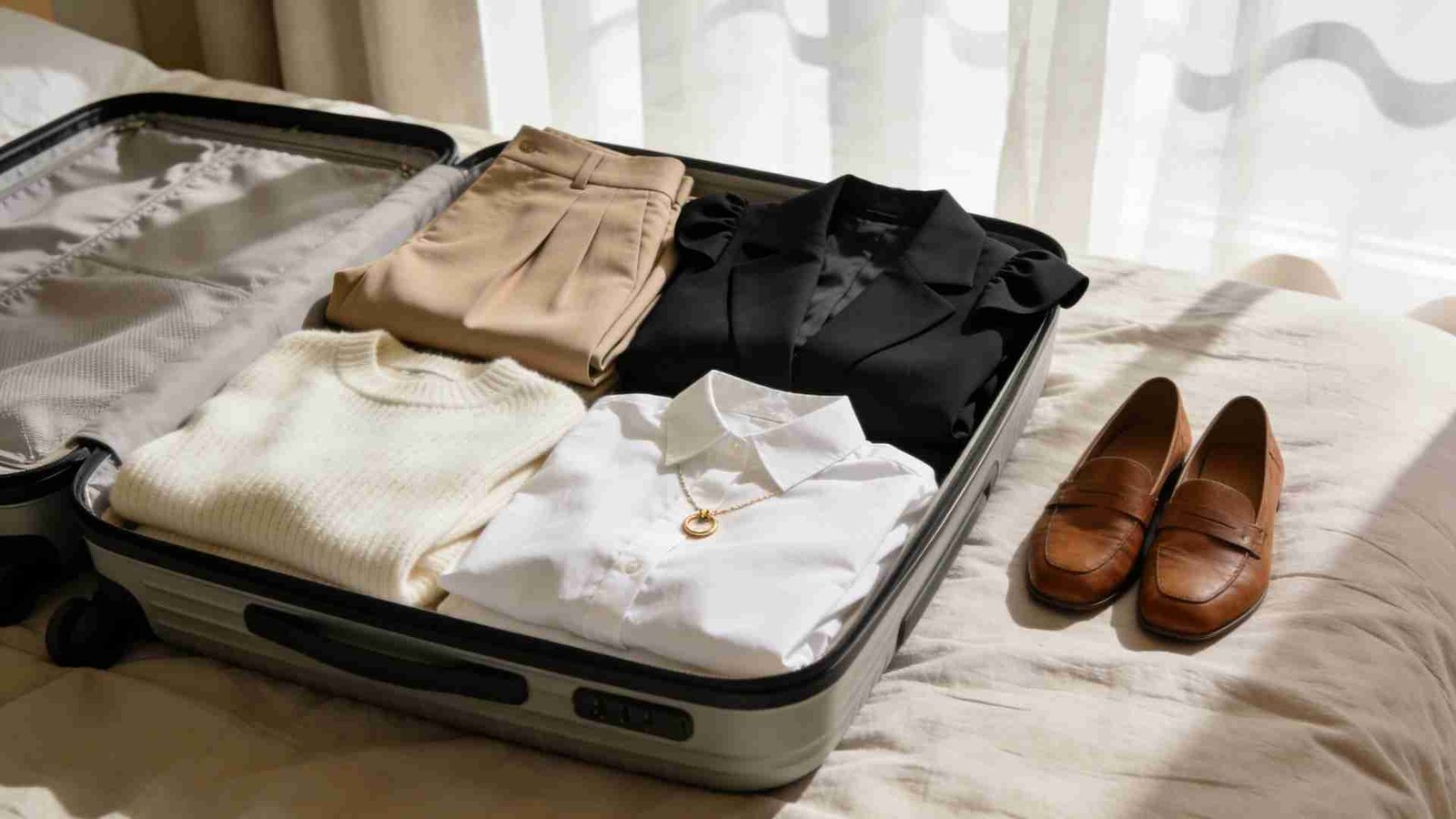
Travel should feel light.
Morning light touches the edge of an open suitcase. The bed slowly disappears under “just in case” options. A second pair of shoes. An extra layer. A dress that feels safer than necessary.
You tell yourself you’re building a travel capsule wardrobe — fewer pieces, smarter choices, effortless combinations.
But without intention, even a capsule becomes clutter. And clutter rarely feels chaotic at first.
Most capsule wardrobe mistakes don’t look dramatic. They feel logical. Reasonable. Smart. That’s what makes them easy to ignore.
Until the zipper barely closes.
Overpacking doesn’t begin in the suitcase.
It begins in the absence of a system — and in the small, unnoticed capsule wardrobe mistakes that quietly multiply.
Let’s rebuild it properly.
What Most Capsule Wardrobe Mistakes Reveal
Before correcting capsule wardrobe mistakes, we need clarity — not more rules, but better definitions.
A capsule wardrobe is not:
- Extreme minimalism
- A personality-free uniform
- A restriction of creativity
It is not about owning less for the sake of less.
And it is certainly not about shrinking your identity into beige safety.
A well-built travel capsule wardrobe is structure with freedom.
It allows repetition without boredom. Variation without excess.
Consistency without rigidity.
Most capsule wardrobe mistakes happen when we confuse limitation with intention — when we remove pieces randomly instead of designing a system.
When the structure is misunderstood, overpacking becomes inevitable.
The 8 Capsule Wardrobe Mistakes That Cause Overpacking
Mistake #1: Packing for Hypothetical Situations
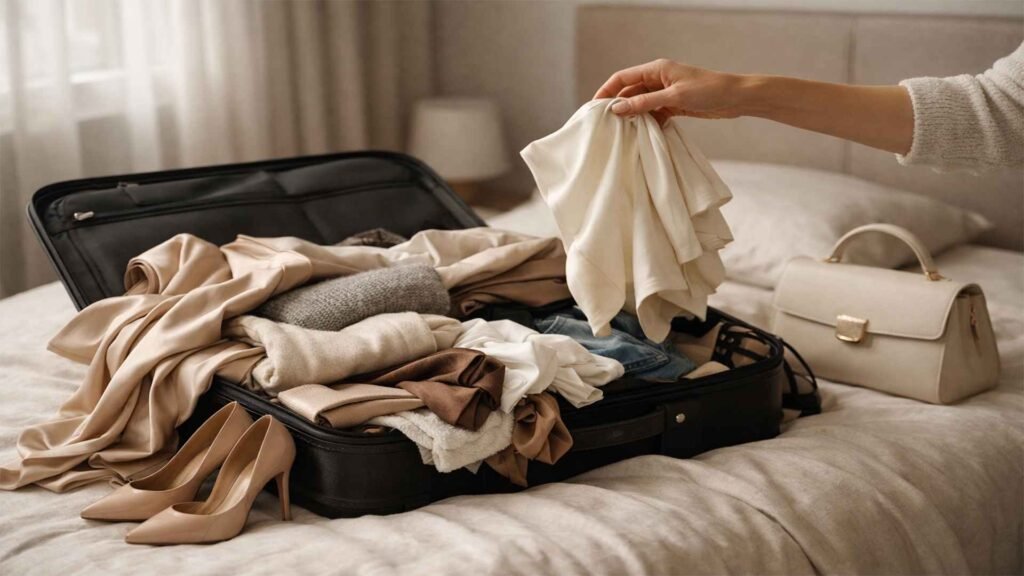
You don’t pack for your trip.
You pack for your anxiety.
“What if there’s a formal dinner?”
“What if the weather changes?”
“What if I don’t like my photos?”
This is how many capsule wardrobe mistakes begin — not with excess clothing, but with imagined scenarios.
Instead of building around confirmed plans, you build around possibilities.
And possibilities multiply.
This is one of the most common capsule wardrobe mistakes because it feels responsible. Prepared. Smart.
Until your suitcase reflects fear instead of intention.
The Fix:
Pack for confirmed plans only.
Not imagined dinners. Not hypothetical weather shifts. Not future insecurities.
Fear is not an itinerary.
And eliminating this pattern is often the first step in correcting recurring capsule wardrobe mistakes.
Mistake #2: Choosing Statement Pieces Without Anchors
Statement pieces without neutral foundations create dependency.
A bold skirt needs multiple tops.
Bright shoes demand balancing tones.
A patterned blazer asks for restraint elsewhere.
Individually, they feel exciting.
Collectively, they demand support.
And support requires more pieces.
Suddenly your 12-piece capsule becomes 20 — not because you packed more, but because you packed without structure.
This is one of the quieter capsule wardrobe mistakes. It feels creative. It feels expressive. But it builds reliance instead of flexibility.
The Fix:
For every statement item, include at least two anchor pieces.
No anchor → no packing.
Style should create freedom, not obligation.
Mistake #3: Ignoring Color Cohesion
Color chaos destroys integration.
When colors don’t connect, outfits don’t repeat.
And when outfits don’t repeat, your packing list expands.
If everything doesn’t mix, everything multiplies.
This is one of the most overlooked capsule wardrobe mistakes — because each piece looks beautiful on its own.
The Fix:
Choose:
- 2–3 base colors
- 1 intentional accent color
Every piece should connect.
If it doesn’t match at least three other items, it stays home.
Color discipline is not limitation.
It is multiplication through structure.
Mistake #4: Packing Emotionally
You pack memories.
You pack identities.
The dress from a past celebration.
The jacket that makes you feel braver.
The version of yourself you hope to become on this trip.
But emotional packing is one of the most silent capsule wardrobe mistakes — because it rarely feels excessive. It feels meaningful.
Sentiment disguises redundancy.
Symbolism disguises duplication.
And slowly, intention is replaced by attachment.
The Fix:
Ask: Is this functional — or symbolic?
Does it serve the trip, or the story you’re telling yourself?
Travel is not a costume change.
It’s continuity.
Pack the version of yourself you already are — not the one you’re trying to rehearse.
Mistake #5: Duplicating Silhouettes
Three similar shirts feel minimal.
They are not.
Duplication increases weight without increasing styling potential.
When pieces share the same cut, the same drape, the same proportion, they compete — not collaborate.
You think you’re building options.
You’re repeating shapes.
This is one of the more subtle capsule wardrobe mistakes. It looks streamlined. It feels safe. But it reduces visual contrast — and contrast is what creates versatility.
The Fix:
Each piece must serve a different silhouette role:
- Relaxed
- Structured
- Layering
Variation in shape creates multiplication in styling.
If two items solve the same problem, remove one.
Mistake #6: Forgetting Fabric Function
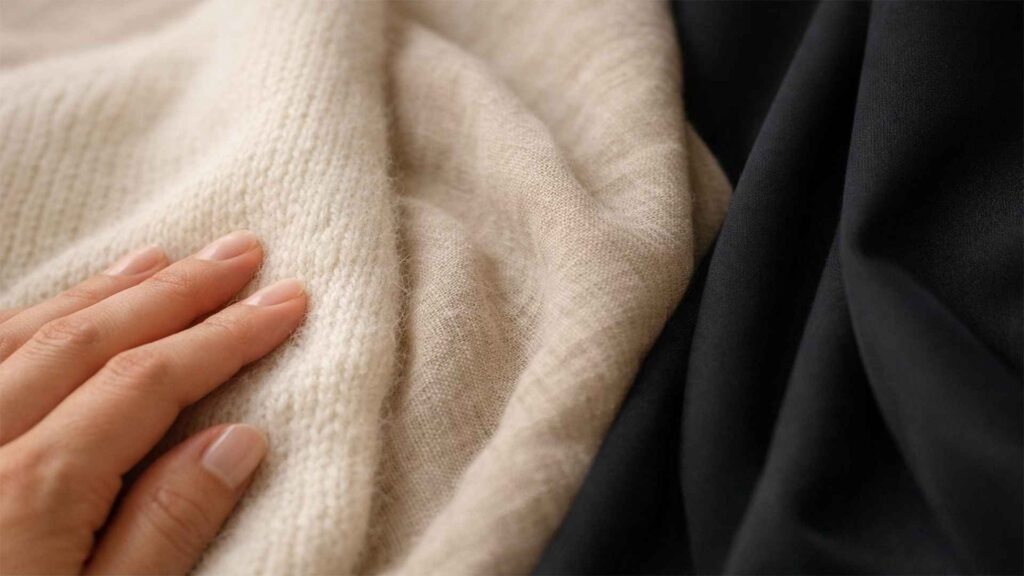
A travel capsule wardrobe must perform in real life.
Long walking days. Sudden weather shifts. Airport seats. City stairs.
If a piece cannot move with you, it becomes baggage.
Why Fabric Matters More Than Quantity
Not all fabrics are equal in a travel capsule wardrobe.
- Linen (Keten) breathes beautifully but wrinkles easily.
- Cotton is comfortable but retains moisture and needs frequent washing.
- Merino wool regulates temperature, resists odor, and rarely wrinkles.
- Technical performance fabrics are lightweight, fast-drying, and travel-efficient.
For example:
A wrinkle-resistant merino wool T-shirt can replace three basic cotton T-shirts in a travel capsule wardrobe.
That’s how smart fabric selection prevents overpacking.
The Fix:
Choose adaptable fabrics that:
- Regulate temperature
- Resist wrinkles
- Layer easily
- Dry quickly
In a capsule wardrobe, fabric intelligence matters more than piece count.
Mistake #7: Separating Day and Night Outfits

This doubles your packing instantly.
Instead of building two wardrobes, build adaptable outfits.
The Fix:
Neutral base + structure + accessories.
One foundation. Two moods.
Mistake #8: Overpacking Shoes
Shoes are the heaviest capsule wardrobe mistake.
They consume space. Add weight. Demand outfit adjustments.
The 3-Shoe Rule
- 1 comfortable walking shoe
- 1 elevated option (dinner-ready)
- 1 versatile backup or climate option
More than three pairs?
Your capsule wardrobe is no longer a capsule.
The Accessory Advantage
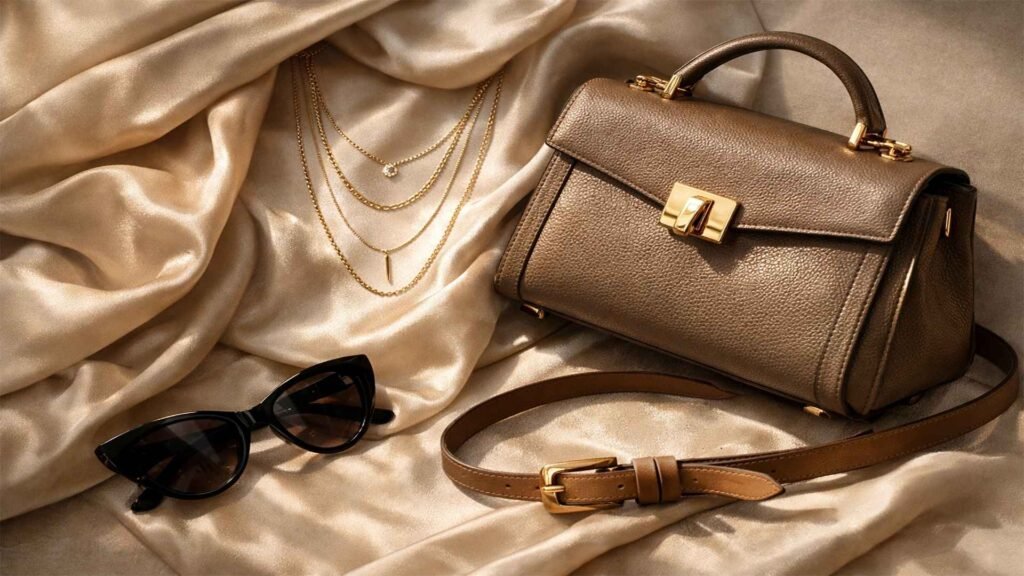
If you want variation without volume, accessories are your strategy.
A silk scarf changes tone.
Layered jewelry shifts mood.
A belt restructures silhouette.
Accessories create visual diversity without physical weight.
This is how a travel capsule wardrobe stays elegant — and light.
Why We Overpack (The Psychological Layer)
Overpacking is not about clothing quantity.
It’s about control.
Travel removes routine. Clothes feel stabilizing. We prepare for every possible version of ourselves instead of trusting a cohesive identity.
But style is not variation.
Style is clarity repeated well.
A strong travel capsule wardrobe removes decision fatigue before the trip even begins.
A 5-Day Travel Capsule Wardrobe Example
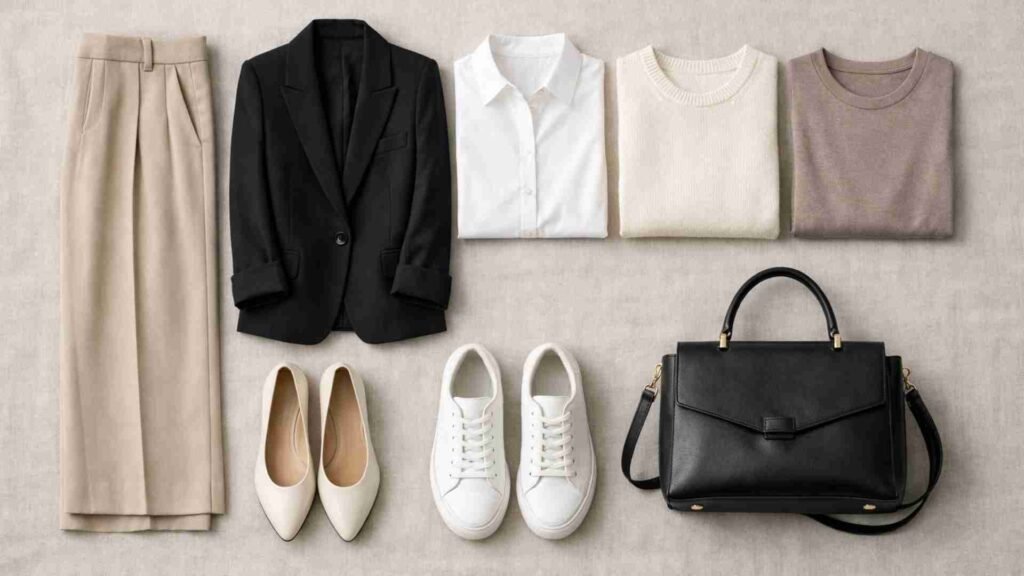
Here’s what a 5-day city trip capsule could look like:
- 2 trousers
- 1 versatile dress
- 3 tops
- 1 blazer
- 1 light jacket
- 2–3 shoes (following the 3-shoe rule)
- 1 structured everyday bag
Total: 11–13 pieces
Outfit combinations: 15–20+ depending on layering.
(Note: Underwear and socks are not included in this count. Roll them tightly and place them into empty corners of your suitcase to maximize space without increasing visual bulk.)
This is how a travel capsule wardrobe prevents overpacking — through integration and strategic planning.
Signs Your Capsule Wardrobe Is Working
✔ Getting dressed takes under 3 minutes
✔ You repeat pieces confidently
✔ You never feel “I have nothing to wear”
✔ Your suitcase closes effortlessly
✔ Every piece integrates
If this is true, your capsule wardrobe system is functioning correctly.
The 5-Step Capsule Reset Before Every Trip
1️⃣ Choose 3 base colors
2️⃣ Build 2 reliable anchor outfits
3️⃣ Add 1 statement piece
4️⃣ Ensure every top works with at least two bottoms
5️⃣ Remove 30% before closing the suitcase
Constraint creates elegance.
Elegance prevents overpacking.
FAQ: Capsule Wardrobe & Overpacking
1️⃣ What are the most common capsule wardrobe mistakes?
The most common capsule wardrobe mistakes include packing for hypothetical situations, ignoring fabric function, duplicating silhouettes, separating day and night outfits, and overpacking shoes.
2️⃣ Why do I still overpack even with a capsule wardrobe?
Most capsule wardrobe mistakes happen when emotional packing or hypothetical planning override structure.
3️⃣ How many pieces should a travel capsule wardrobe include?
For 4–7 days, 10–15 versatile pieces are typically enough.
4️⃣ Can I use color in a capsule wardrobe?
Absolutely. A capsule wardrobe does not mean only beige and grey. The key is ensuring your chosen accent colors integrate with your neutral base pieces.
5️⃣ Are shoes the main reason I overpack?
Often, yes. Shoes are the heaviest and least flexible items in a travel capsule wardrobe. Following the 3-shoe rule prevents unnecessary weight.
Final Thought
Overpacking isn’t a luggage problem.
It’s a clarity problem.
When your travel capsule wardrobe is intentional, integrated, and disciplined, packing becomes effortless.
Not because you own less —
but because you decided better.
Capsule Wardrobe for City Trips: 👉 How to Pack Light and Look Effortless