
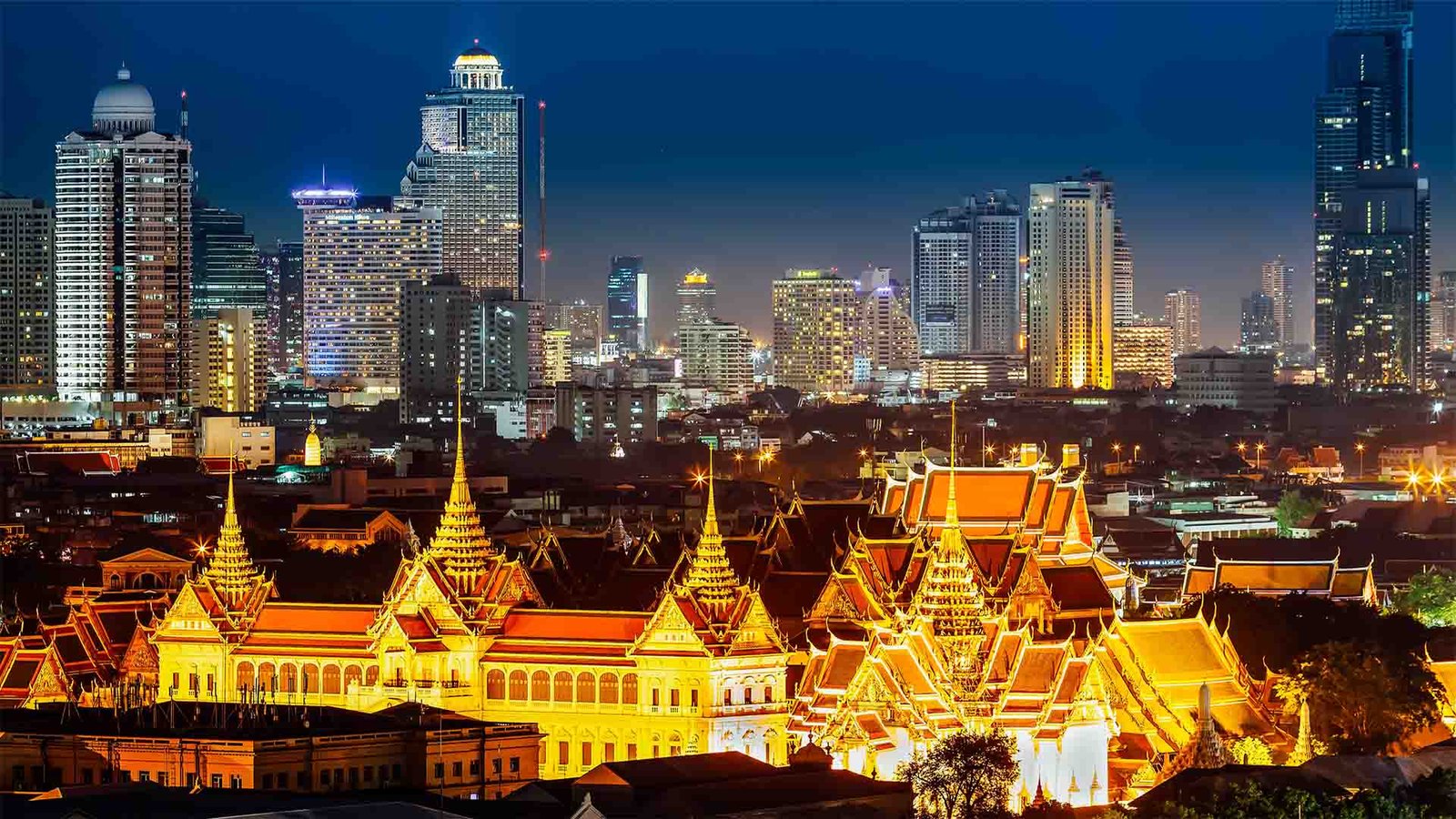
Standing at the very center of Bangkok’s historic district, The Grand Palace Bangkok is the most powerful symbol of Thailand’s monarchy, spirituality, and national identity. Built in 1782 at the founding of Bangkok as the capital, this vast royal complex has shaped the country’s political authority, religious devotion, and architectural legacy for more than two centuries.
More than a tourist attraction, The Grand Palace Bangkok is a living cultural statement. Its gilded spires, sacred courtyards, and ceremonial halls express how Thai society unites kingship and Buddhism into a single worldview — one where power is guided by spiritual responsibility and tradition is preserved through ritual.
1. The Birthplace of Bangkok as a Royal Capital
The story of The Grand Palace begins with King Rama I, founder of the Chakri Dynasty, who established Bangkok as the new capital after the fall of Ayutthaya. Designed to mirror the grandeur and symbolism of earlier royal cities, The Grand Palace Bangkok was intended to legitimize the new capital and reinforce divine kingship through architecture.
For over 150 years, Thai kings resided within the palace walls. Even after the royal residence moved elsewhere, The Grand Palace retained its ceremonial role, hosting coronations, royal funerals, and state occasions. This uninterrupted continuity makes The Grand Palace Bangkok not only a historic monument, but the very place where Bangkok’s identity as a royal capital was born.
2. A Masterpiece of Thai Royal Architecture and Symbolism
Rather than a single structure, The Grand Palace Bangkok is an intricately organized complex divided into symbolic zones, each serving a specific royal and spiritual function.
- Outer Court – former administrative offices and royal guards
- Middle Court – ceremonial halls and former royal residences
- Inner Court – once reserved exclusively for the royal household
- Sacred Temple Grounds – home to Wat Phra Kaew
Every element follows Buddhist cosmology. Golden chedis symbolize Mount Meru, guardian demons protect sacred thresholds, and reflective mosaics represent enlightenment and divine order. Architecture here is not decorative — it is deeply instructional.
3. Home of Wat Phra Kaew and the Emerald Buddha
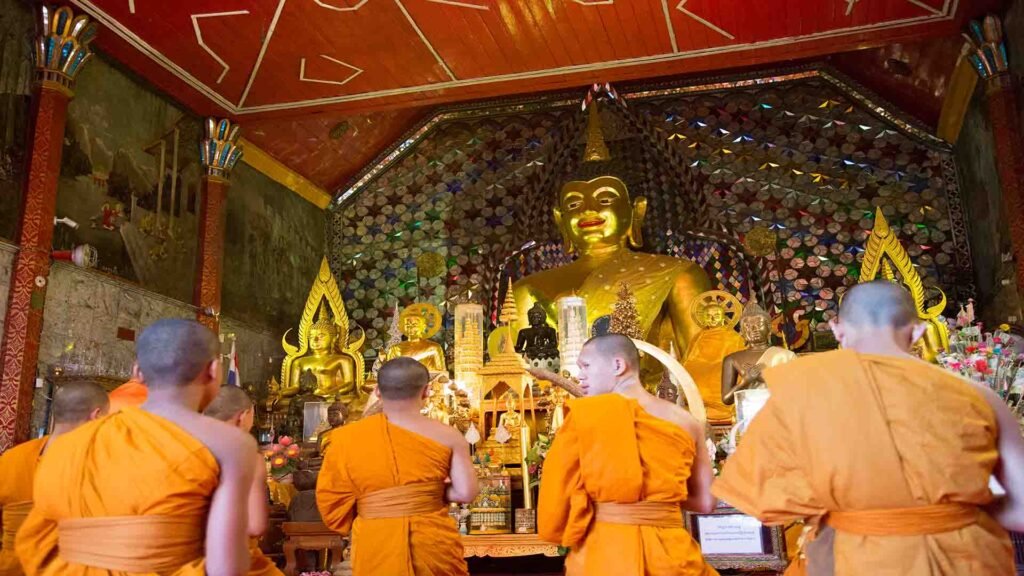
At the spiritual heart of The Grand Palace Bangkok stands Wat Phra Kaew, Thailand’s most sacred Buddhist temple. It houses the Emerald Buddha (Phra Kaew Morakot), a revered jade statue believed to protect the nation.
Unlike other temples in Bangkok, Wat Phra Kaew has no resident monks. It exists solely for royal worship and state ceremonies, reinforcing the sacred bond between Thai kingship and Buddhism. Seasonal robe-changing rituals for the Emerald Buddha are performed by the King himself, underscoring the temple’s unparalleled national significance.
Surrounding cloisters are adorned with murals from the Ramakien, Thailand’s national epic, offering visitors a visual narrative of morality, heroism, and cosmic balance.
4. The Spiritual Foundation of Thai Kingship
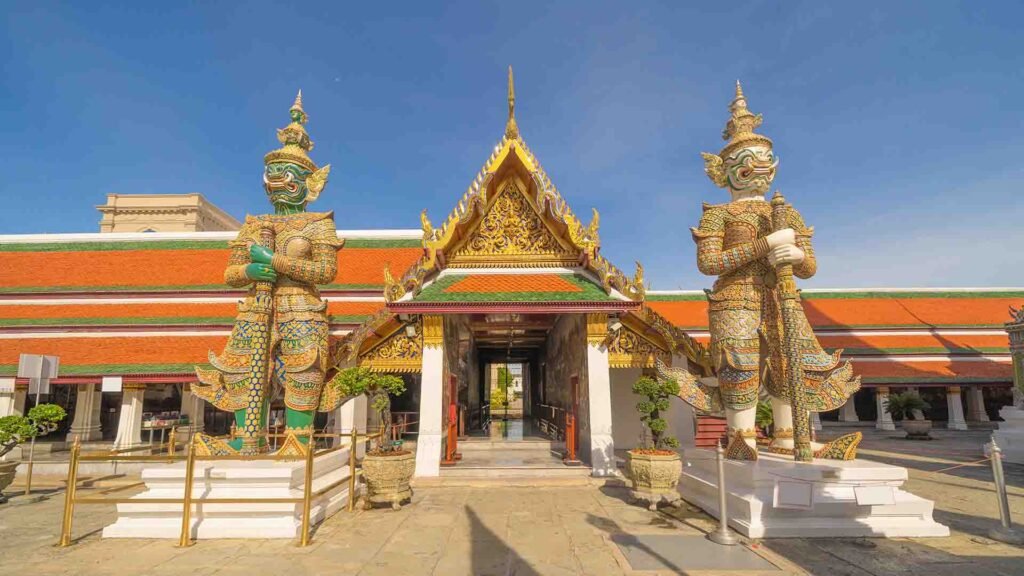
A visit to The Grand Palace offers far more than visual splendor; it provides deep insight into how Thailand understands authority, faith, and harmony. The palace represents a carefully maintained balance — between worldly power and spiritual discipline, royal tradition and cultural continuity, outward beauty and inner meaning. Every architectural detail and ceremonial space reflects this philosophy.
Strict dress codes and formal visitor etiquette are not obstacles but an essential part of the experience. They reinforce the palace’s sacred status and remind visitors that this is a living symbol of national identity, not a static museum. Respect, composure, and awareness are woven into the visit itself, shaping how the palace is seen and understood.
Tickets & Entrance Fees at The Grand Palace
One of the most common practical questions travelers ask concerns entrance tickets to The Grand Palace Bangkok. Admission is designed to provide access not only to the palace grounds but also to the most sacred temple within the complex, Wat Phra Kaew, making the ticket both cultural and spiritual in scope.
- Entrance tickets include access to The Grand Palace and Wat Phra Kaew
- Ticket prices may vary depending on season and official updates
- Tickets are purchased on-site at the main entrance
- Arriving early helps avoid long queues and intense midday heat
Because prices and conditions can change, visitors are advised to confirm details through official sources shortly before their visit.
For official opening hours, ticket updates, dress code rules, and cultural etiquette, visitors can consult the Tourism Authority of Thailand, which provides the most reliable and up-to-date guidance for travelers.
Best Time to Visit The Grand Palace Bangkok
Timing plays a crucial role in experiencing The Grand Palace Bangkok at its best. The scale, symbolism, and visual richness of the complex are most rewarding when crowds are lighter and light conditions are favorable. Planning your visit carefully can significantly enhance both comfort and appreciation.
- Early morning for cooler temperatures and fewer tour groups
- Softer natural light for photography and architectural detail
- Calmer atmosphere that allows for a more reflective experience
Visitors should plan to spend 2–3 hours exploring the complex thoroughly. Morning sunlight enhances the palace’s gold-leafed surfaces, creating luminous reflections that reveal the full depth and craftsmanship of its architecture.
Dress Code & Visitor Etiquette
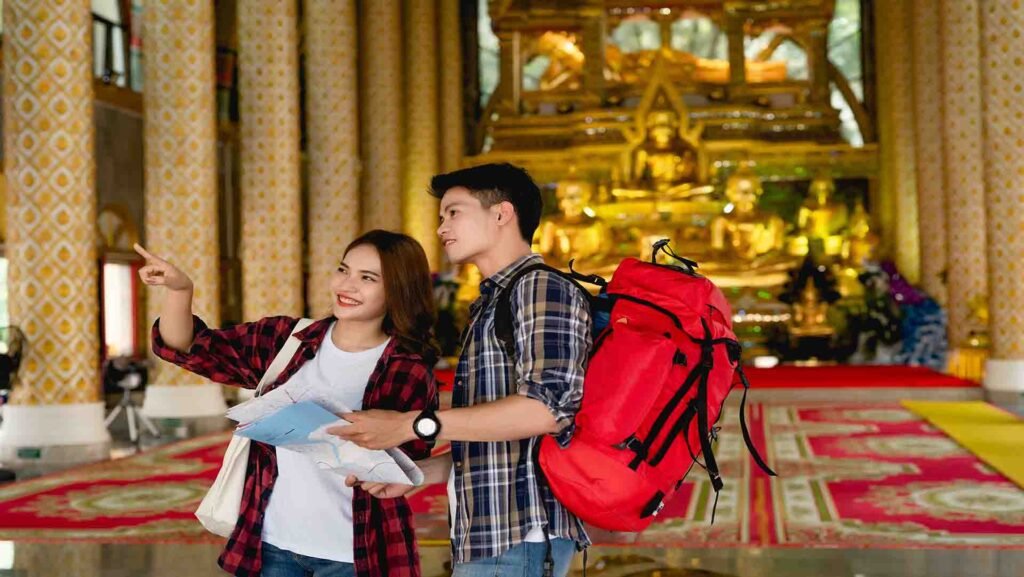
As Thailand’s most sacred royal site, The Grand Palace Bangkok maintains a strict dress code that reflects its spiritual, cultural, and ceremonial importance. These guidelines are not merely formal rules but an essential part of the visitor experience, reinforcing respect for tradition and the palace’s living role in Thai national identity.
To enter the complex, visitors must follow these requirements:
- Shoulders and knees must be fully covered
- Sleeveless tops, short skirts, and revealing clothing are not permitted
- Proper footwear is required at all times
Dress regulations are strictly enforced, not to limit visitors, but to preserve the dignity of the site. By observing proper attire and respectful behavior, visitors engage more meaningfully with the palace — understanding it not as a tourist attraction, but as a sacred space where spirituality, monarchy, and cultural continuity still coexist.
Photography Tips & Best Photo Spots
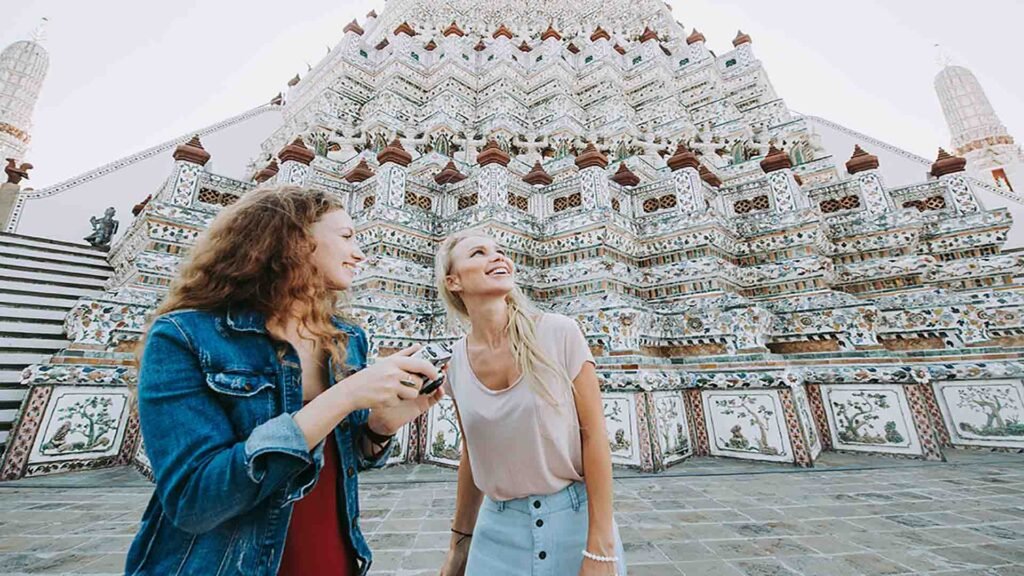
Photography is one of the most rewarding aspects of visiting The Grand Palace Bangkok, thanks to its ornate details, golden surfaces, and intricate mosaics. Light plays a crucial role in capturing the palace at its best, and timing your visit can significantly enhance photo quality.
- Early morning offers softer light, fewer crowds, and clearer views of architectural details
- Outer courtyards and open spaces provide the best angles for wide shots and symmetry
- Gold-leafed surfaces and mosaic walls reflect natural light beautifully, especially before midday
Photography is permitted in most outdoor areas of the complex. However, restrictions apply inside Wat Phra Kaew, where cameras may be limited or prohibited. Visitors should always respect posted signs, sacred spaces, and ongoing ceremonies to ensure photography remains respectful and unobtrusive.
Guided Tours, Independent Visits & Common Tourist Scams
Visitors often consider whether to explore The Grand Palace Bangkok independently or as part of a guided tour. Guided visits provide valuable historical and symbolic context, making them especially helpful for first-time visitors unfamiliar with Thai royal traditions, etiquette, and ceremonial spaces.
Self-guided visits, on the other hand, offer greater flexibility and allow visitors to explore at their own pace. This option is particularly appealing for photography, quiet observation, and those who prefer an unstructured experience. However, independent visitors should be aware of common issues around the palace area.
For visitors exploring without a guide, it is important to keep the following points in mind:
- Ignore claims that the palace is “closed” — this is a common scam
- Rely only on official entrances, signage, and ticket counters
- Avoid unsolicited offers from individuals outside the complex
- Check opening hours through official sources before arrival
The Grand Palace rarely closes during official hours, and legitimate information is always displayed at authorized entry points. Whether visiting with a guide or independently, awareness and preparation ensure a safe, informed, and rewarding experience.
5. The Landmark That Connects Bangkok’s Historic Temples
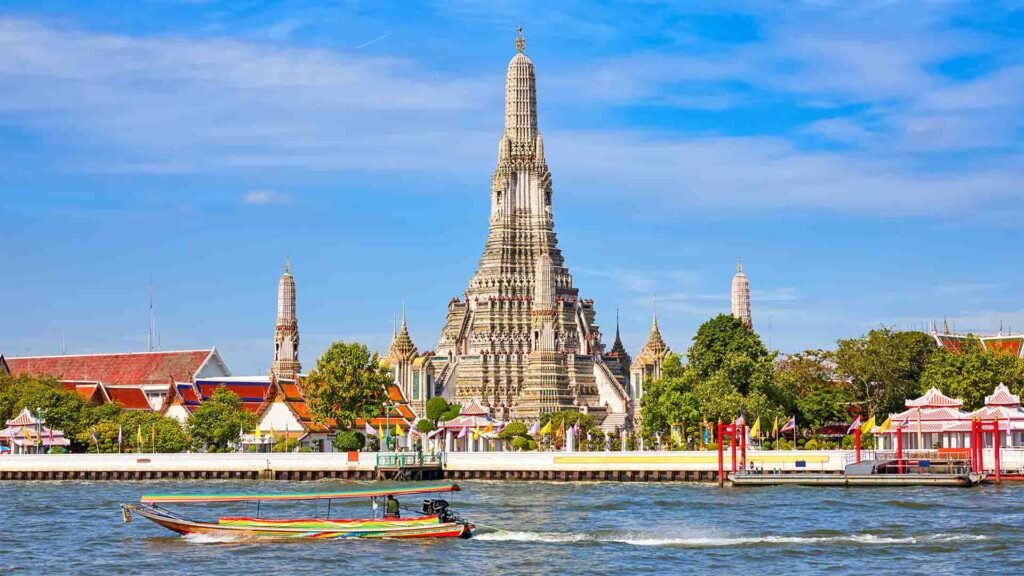
Understanding The Grand Palace becomes clearer when viewed alongside Bangkok’s other major temples, each representing a distinct spiritual and cultural role. Together, they reveal how royal authority, religious tradition, and symbolic meaning shape the city’s historic identity.
- The Grand Palace — royal authority, national symbolism, and ceremonial tradition
- Wat Pho — learning, healing, and the foundations of Thai massage tradition
- Wat Arun Temple — spiritual awakening, renewal, and dawn symbolism
Together, these sites form Bangkok’s spiritual triangle, expressing complementary dimensions of Thai culture — from royal power and sacred knowledge to personal reflection and renewal.
Suggested Half-Day Itinerary Around The Grand Palace
A half-day itinerary offers a well-balanced way to experience The Grand Palace Bangkok and its surrounding landmarks without feeling rushed. This route connects royal history, spiritual contrast, and riverside relaxation into a smooth and meaningful cultural journey.
- Early morning visit to The Grand Palace and Wat Phra Kaew for cooler temperatures and fewer crowds
- Short walk to Wat Pho to experience a contrasting atmosphere of learning and healing
- Lunch by the Chao Phraya River, enjoying views of Bangkok’s historic waterfront
- Optional river ferry or riverside walk to conclude the experience at a relaxed pace
This itinerary brings together Bangkok’s historical narrative in a seamless and time-efficient way.
Frequently Asked Questions About The Grand Palace Bangkok
How long does it take to visit The Grand Palace Bangkok?
Most visitors spend 2–3 hours exploring the complex.
Can you wear sandals?
Closed or secure footwear is recommended.
Is the Emerald Buddha real jade?
Yes, it is carved from a single piece of green jade.
Can Wat Phra Kaew be visited separately?
No, it is accessed exclusively through The Grand Palace ticket.
Final Thoughts
A visit to The Grand Palace Bangkok is not about checking off a famous attraction; it is about encountering the spiritual and royal foundations of Thailand itself.
Experienced slowly and with respect, the palace offers far more than visual splendor. It reveals cultural clarity, historical depth, and a deeper understanding of how beauty, belief, and power continue to coexist within Thai civilization.
Related Temples in Bangkok
Bangkok’s spiritual identity is shaped by a small group of landmark temples, each reflecting a different aspect of Thai history, belief, and cultural tradition. Exploring these sacred sites together offers a deeper and more complete understanding of the city’s religious landscape.
- Wat Phra Kaew: 👉 Thailand’s royal temple and national symbol
- Wat Pho: 👉 Home of the Reclining Buddha and traditional Thai massage
- Wat Arun Temple: 👉 Iconic riverside temple symbolizing renewal and awakening