
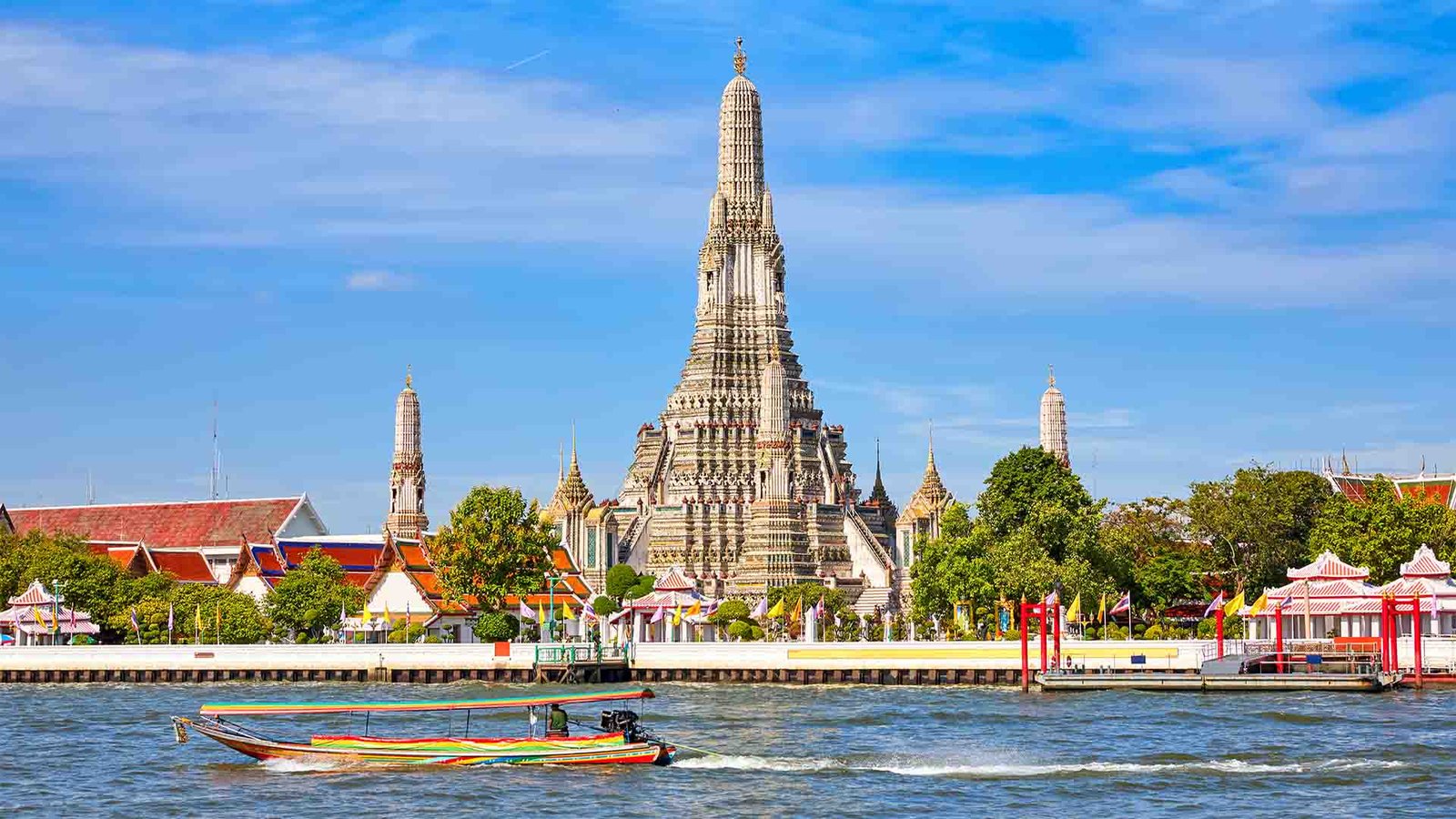
Rising from the western bank of the Chao Phraya River, Wat Arun Temple is one of Bangkok’s most evocative landmarks. Known as Wat Arun Ratchawararam, it symbolizes renewal, awakening, and the balance between light and darkness, offering a more universal message than royal temples like Wat Phra Kaew.
This guide explores Wat Arun Temple beyond its silhouette. Through symbolic architecture and light-reflecting porcelain mosaics, the temple reveals a timeless atmosphere of beauty, reflection, and spiritual renewal.
Historical Background: The Origins of Wat Arun Temple
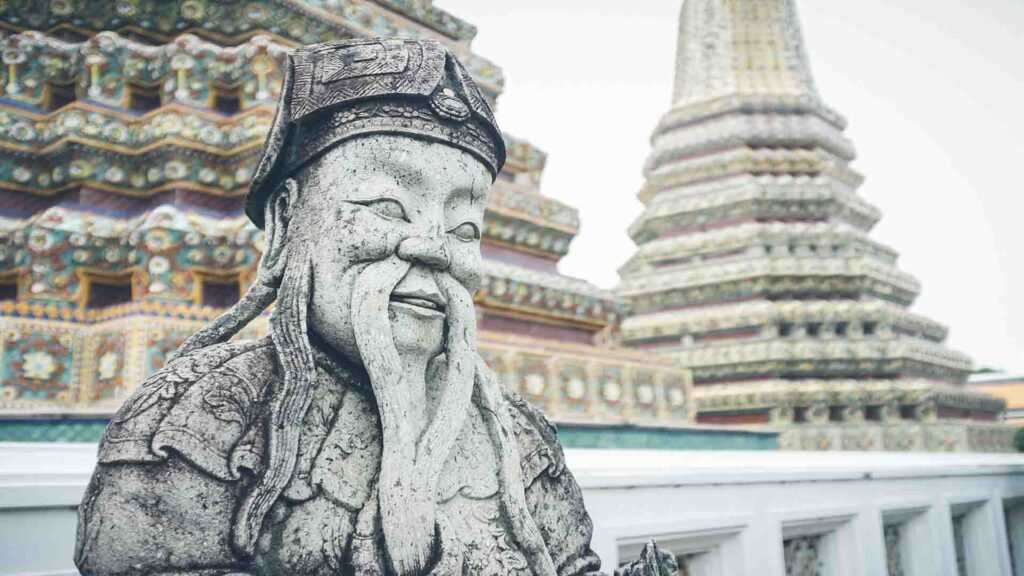
The story of Wat Arun Temple dates back to the late Ayutthaya period, when it was originally known as Wat Makok. Its transformation into one of Thailand’s most revered temples began in 1767, following the fall of Ayutthaya.
According to historical accounts, King Taksin arrived at this riverside site at dawn after a long and symbolic journey. Inspired by the rising sun, he renamed the temple Wat Arun, meaning Temple of Dawn. This moment marked not only the birth of a new capital but also the spiritual rebirth of the Siamese kingdom.
During the reigns of King Rama II and King Rama III, Wat Arun Temple was elevated to royal status and extensively expanded. The construction of the monumental central prang solidified its role as a cosmological and spiritual centerpiece of Bangkok.
Architectural Masterpiece: Sacred Geometry & Porcelain Art
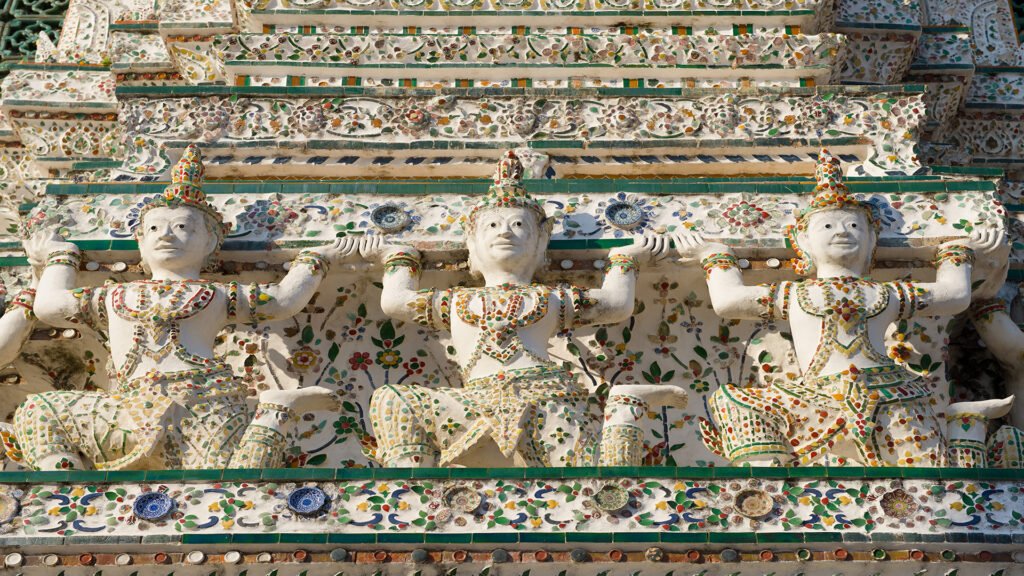
The architectural identity of Wat Arun Temple is unique in Thailand and instantly recognizable worldwide. Its soaring central prang, porcelain mosaics, and symbolic vertical form distinguish it from other Thai temples, reflecting Buddhist cosmology and the spiritual essence of the Temple of Dawn.
The Central Prang — Axis of the Universe
Standing approximately 70 meters tall, the central prang symbolizes Mount Meru, the sacred center of the universe in Buddhist and Hindu cosmology. Its vertical ascent represents the spiritual journey from the earthly realm toward enlightenment.
Porcelain Mosaics & Cultural Exchange
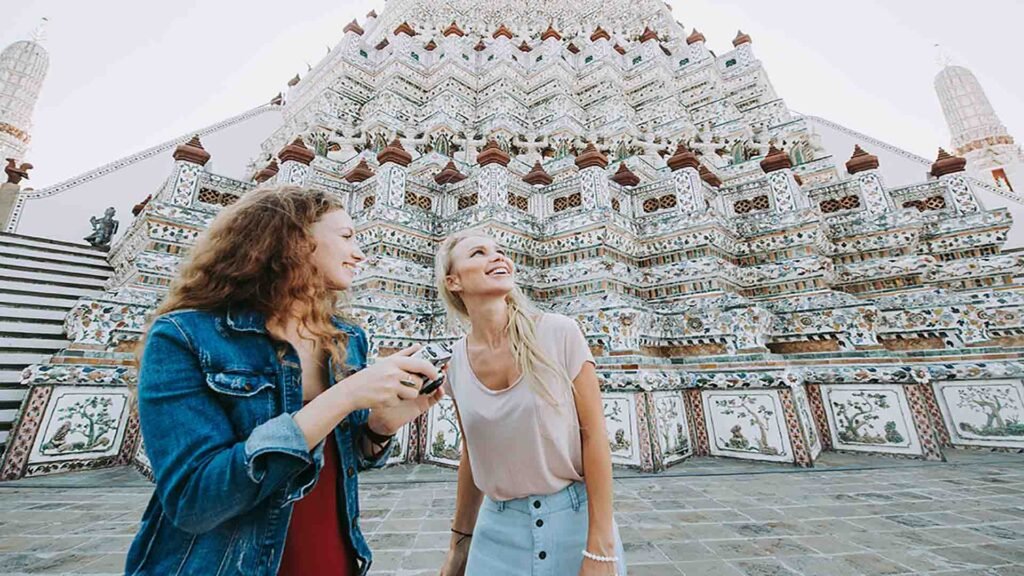
One of the most remarkable features of Wat Arun Temple is its exterior decoration. Thousands of porcelain fragments, seashells, and ceramic pieces were originally imported from China as ship ballast during the 18th and 19th centuries. These materials were later repurposed into intricate floral and geometric mosaics, turning global trade into sacred art.
Four Satellite Prangs
Surrounding the main tower are four smaller prangs, each symbolizing the cardinal directions and cosmic balance. Together, they form a sacred mandala — a physical expression of harmony, order, and spiritual alignment.
Spiritual Symbolism: Why Wat Arun Is the Temple of Dawn
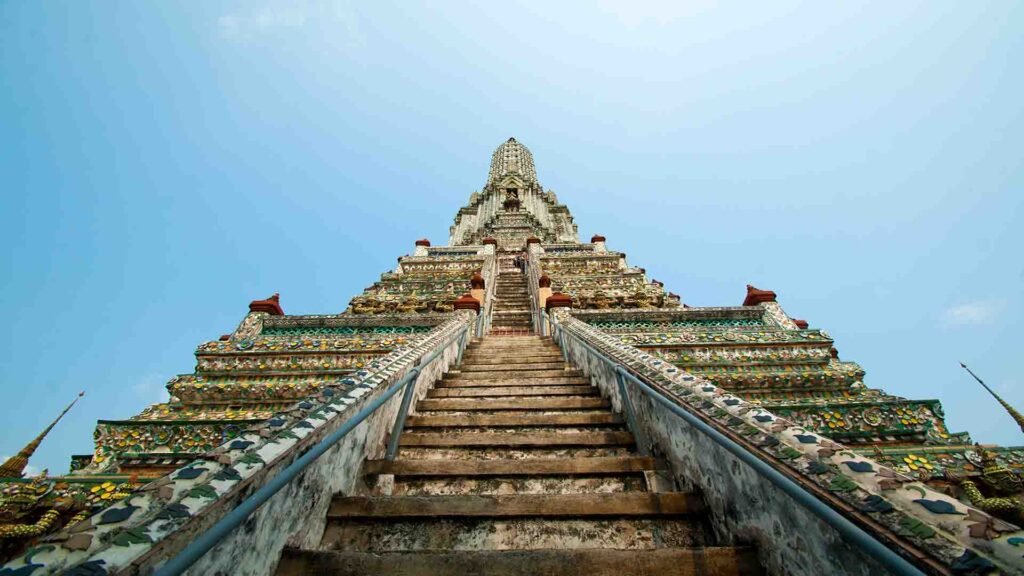
Unlike many temples associated with protection or royal ceremonies, Wat Arun Temple carries a deeply philosophical meaning rooted in awakening and transformation. Closely linked to the symbolism of dawn, the temple represents renewal, inner clarity, and the journey from darkness toward wisdom, making it a powerful expression of personal and spiritual enlightenment in Thai Buddhism.
- Dawn represents awakening and renewal
- Light symbolizes wisdom dispelling ignorance
- The eastward orientation reflects enlightenment
Climbing the steep steps of the prang is symbolic of spiritual effort — a reminder that enlightenment requires discipline, humility, and perseverance.
Religious Life & Sacred Function Today
Although famous as a tourist destination, Wat Arun Temple remains an active place of worship.
Ordination Hall (Ubosot)
The main ordination hall houses a revered seated Buddha image and is still used for monastic ceremonies. Murals and symbolic artwork inside depict Buddhist teachings focused on moral discipline and compassion.
Living Monastic Presence
Monks reside within the temple grounds, maintaining rituals, chanting practices, and educational traditions. Visitors are encouraged to observe respectfully, understanding that Wat Arun is a living spiritual space, not merely a historical monument.
Wat Arun Temple Along the Chao Phraya River
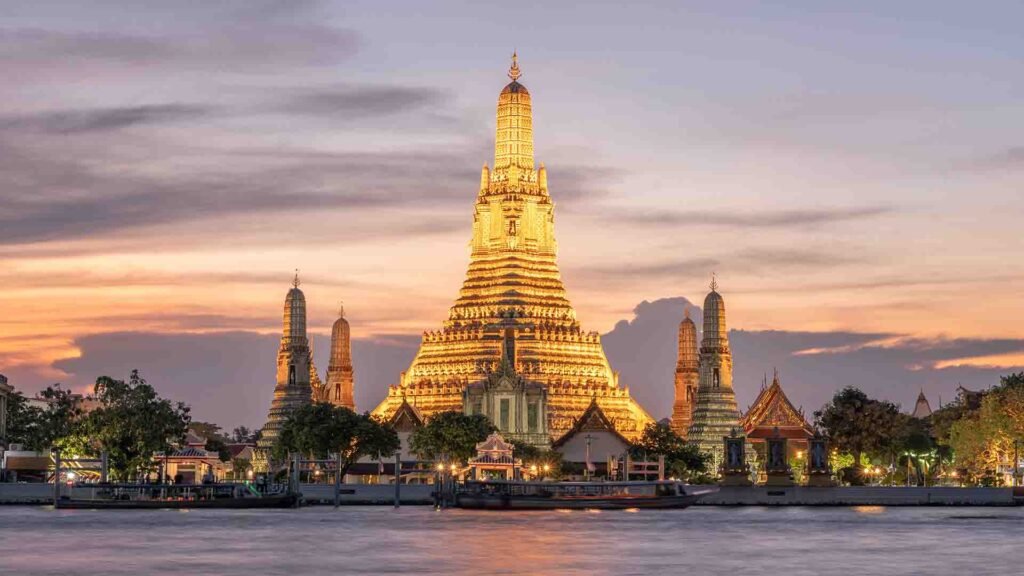
The riverside location of Wat Arun Temple is central to its identity and symbolic power. For centuries, the Chao Phraya River has been Bangkok’s lifeline, shaping trade routes, cultural exchange, and spiritual life. Positioned along this flowing artery, Wat Arun reflects the city’s deep connection between water, movement, and the rhythm of renewal that defines Bangkok’s history.
When Light Awakens Wat Arun’s Porcelain Surfaces:
- Soft hues at sunrise
- Golden reflections at sunset
- Serene illumination at night
This constant transformation reinforces the temple’s symbolism of impermanence and renewal — key Buddhist principles.
Visiting Wat Arun Temple: Practical & Cultural Guidance
Best Time to Visit Wat Arun Temple
- Early morning: Offers a calm, meditative atmosphere with fewer visitors, allowing the spiritual essence of Wat Arun Temple to be felt more deeply as soft daylight highlights its architectural details.
- Late afternoon: Brings cooler temperatures and scenic riverside views, as changing light along the Chao Phraya River enhances the temple’s porcelain surfaces and leads into sunset.
Dress Code & Visitor Etiquette — Respecting Sacred Space
As an active place of worship, Wat Arun Temple requires visitors to dress and behave respectfully:
- Covered shoulders and knees are essential
- Avoid sleeveless tops, short skirts, or revealing clothing
- Maintain quiet, respectful movement within sacred areas
Visitors wearing inappropriate attire may be denied entry or asked to rent suitable garments at the entrance to ensure cultural and religious respect.
How to Reach Wat Arun Temple — Arriving by River
Most visitors reach Wat Arun Temple by ferry across the Chao Phraya River, a short but memorable journey that echoes Bangkok’s historic reliance on waterways. This river crossing not only provides scenic views of the temple’s iconic prang but also reinforces its historical connection to trade, travel, and spiritual exchange along the riverbanks.
Wat Arun Temple and Bangkok’s Historic Temple Triangle
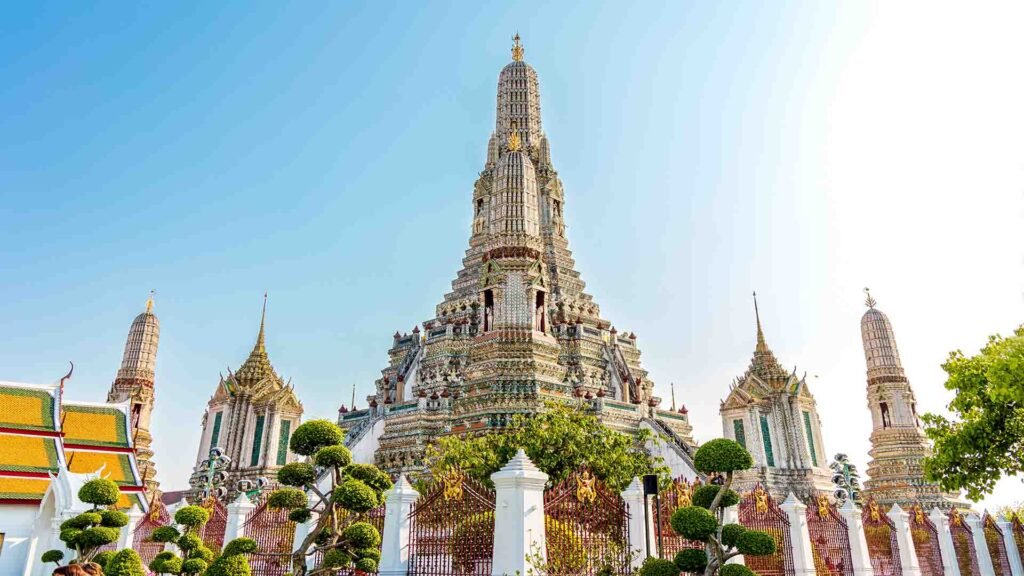
A visit to Wat Arun Temple becomes even more meaningful when experienced as part of Bangkok’s historic temple triangle along the Chao Phraya River. Its location allows travelers to connect three of Thailand’s most important sacred sites in a single cultural journey.
Wat Arun Temple is directly connected to the following historical attractions:
- Wat Phra Kaew, as the spiritual and ceremonial center of royal authority and national identity
- Wat Pho, representing knowledge, healing traditions, and the living practice of Buddhism
- The Grand Palace, symbolizing political power, monarchy, and state ritual
- Rattanakosin Old Town, the original urban framework where Bangkok’s religious and civic life was first established
Together, these sites form a unified historical and spiritual landscape along the Chao Phraya River. Within this context, Wat Arun Temple defines Bangkok’s identity through renewal, cosmology, and transition — standing as the symbolic threshold between royal tradition, spiritual wisdom, and the city’s river-based origins.
Final Reflections: Why Wat Arun Temple Is Essential to Bangkok
A visit to Wat Arun Temple is not simply about seeing one of Bangkok’s most famous landmarks; it is about understanding Thailand’s deep relationship with light, time, spirituality, and renewal. As the Temple of Dawn, Wat Arun Temple invites visitors to slow down, reflect, and experience the quiet symbolism of beginnings — a message that lingers long after leaving the riverbanks of Bangkok.
For official travel guidance, opening hours, and cultural etiquette related to Wat Arun Temple, visitors can consult the Tourism Authority of Thailand, which offers up-to-date and reliable information for travelers exploring Bangkok’s historic riverside temples.
Read Next :
Wat Phra Kaew Temple: 👉 Thailand’s royal temple and national symbol.
Wat Pho Temple: 👉 Home of the Reclining Buddha and Thai massage heritage.