
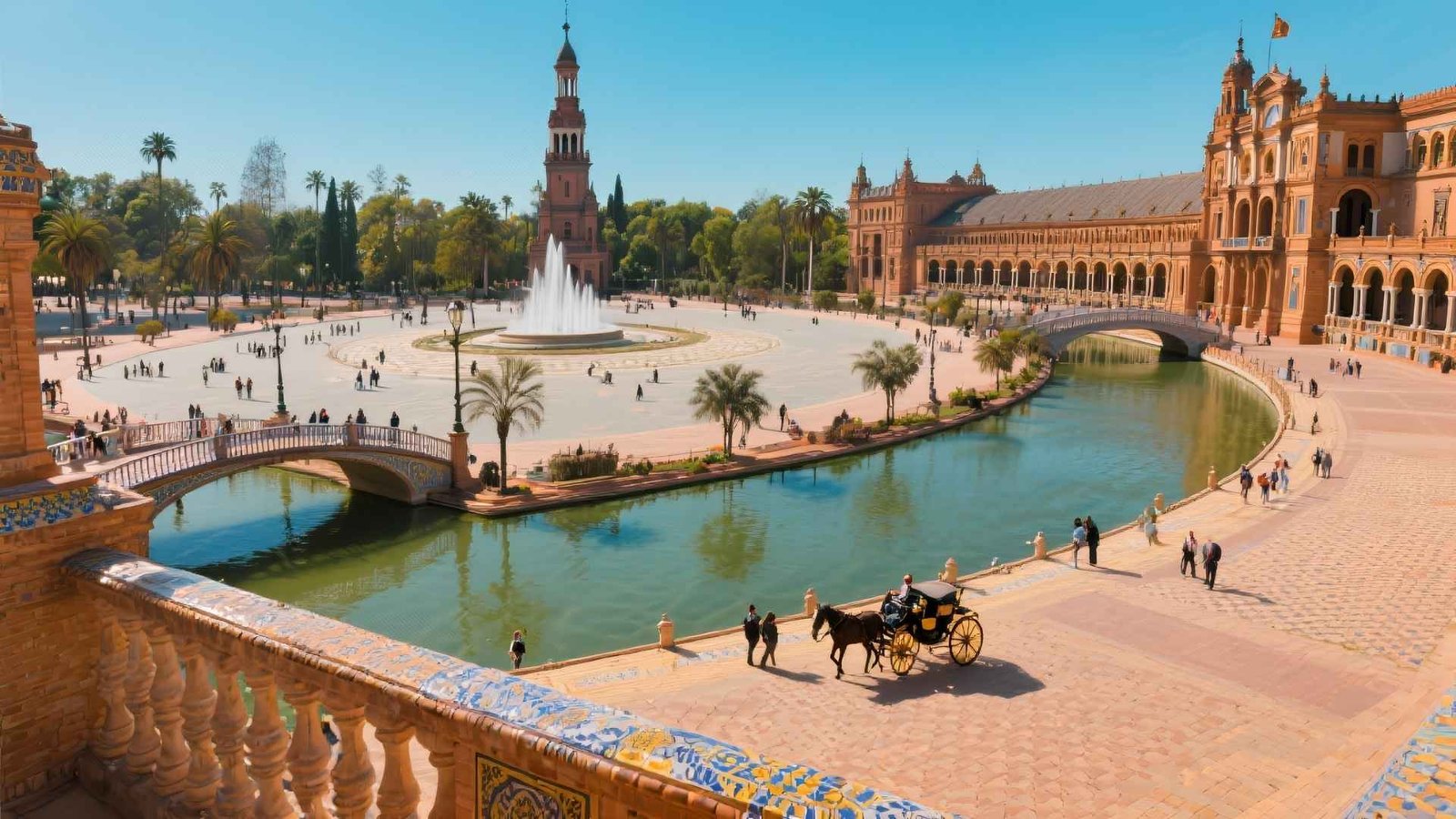
Golden sunlight on orange trees, the sound of a distant guitar, and the scent of jasmine drifting through narrow cobbled streets — this is Seville, the city that defines the soul of southern Spain.
Here, history and emotion intertwine: Moorish palaces tell stories of centuries past, flamenco dancers express the rhythm of life, and friendly locals welcome you with heartfelt smiles. Whether you’re wandering through the Alcázar Gardens, sipping sherry by the Guadalquivir River, or watching the sunset at Plaza de España, Seville captures your heart from the first moment.
Below, you’ll find everything you need to plan your journey — from travel logistics to local experiences, each linked to an in-depth guide that helps you explore Seville like a true Andalusian.
1. Passport & Visa Requirements

Before your Andalusian adventure begins, make sure your travel documents are in order.
Spain is part of the Schengen Zone, meaning visitors from the EU, UK, US, Canada, Australia, and many others can enjoy short stays without a visa. For travelers from other regions, a Schengen visa application may be required — best handled at your nearest Spanish consulate.
Pro Tip: Make sure your passport is valid for at least six months beyond your arrival date.
Read the complete guide: 👉 Passport & Visa Requirements for Seville
2. Seville Airport Arrival (SVQ)

San Pablo Airport (SVQ) offers a smooth introduction to Seville’s warm hospitality. The terminal is compact and efficient, making arrivals quick and easy.
After passport control, you’ll find ATMs, SIM card vendors, and local taxi stands ready to take you to the city center — just 15 minutes away. If you prefer public transport, hop on the EA Bus Line running every 20–30 minutes.
Insider Tip: Grab a coffee at “Horno San Buenaventura” inside the arrivals area — it’s a local favorite bakery chain.
Read more: Seville Airport Guide. 👉 What to Expect on Arrival
3. Transportation: Getting Around Seville

Once in the city, you’ll quickly discover that Seville is made for walking — especially through its historic center and riverside promenades.
For longer trips, public transportation is excellent:
- Metro Line 1 connects key neighborhoods like Nervión and Los Remedios.
- Trams and electric bikes are perfect for eco-friendly exploration.
- Taxis and ride-hailing apps like Cabify operate citywide, with clear pricing and English-language support.
Pro Tip: Consider buying a “Tarjeta Multi” rechargeable transport card for easy metro and tram access.
Navigate the city easily like a local. 👉 Explore: Getting Around Seville →
4. Where to Stay: Neighborhoods & Hotels
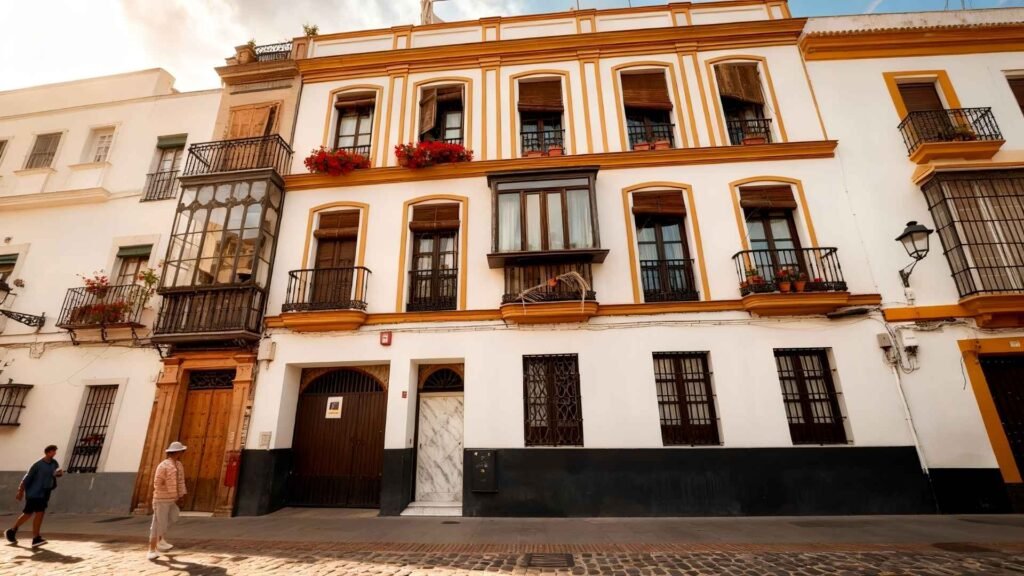
Seville offers a range of stays — from boutique hotels inside historic mansions to riverside apartments with panoramic views.
- Santa Cruz: The most atmospheric district, near the Cathedral and Alcázar.
- Triana: Across the river, famous for flamenco, ceramics, and authentic local charm.
- Nervión: Modern, upscale, and well-connected — ideal for business and families.
- Alameda de Hércules: Trendy, creative, filled with nightlife and street cafés.
Luxury travelers will adore Hotel Alfonso XIII, while mid-range visitors love Las Casas de la Judería and Hotel Amadeus.
Stay in style across Seville. 👉 See details: Best Places to Stay in Seville →
5. Must-See Attractions
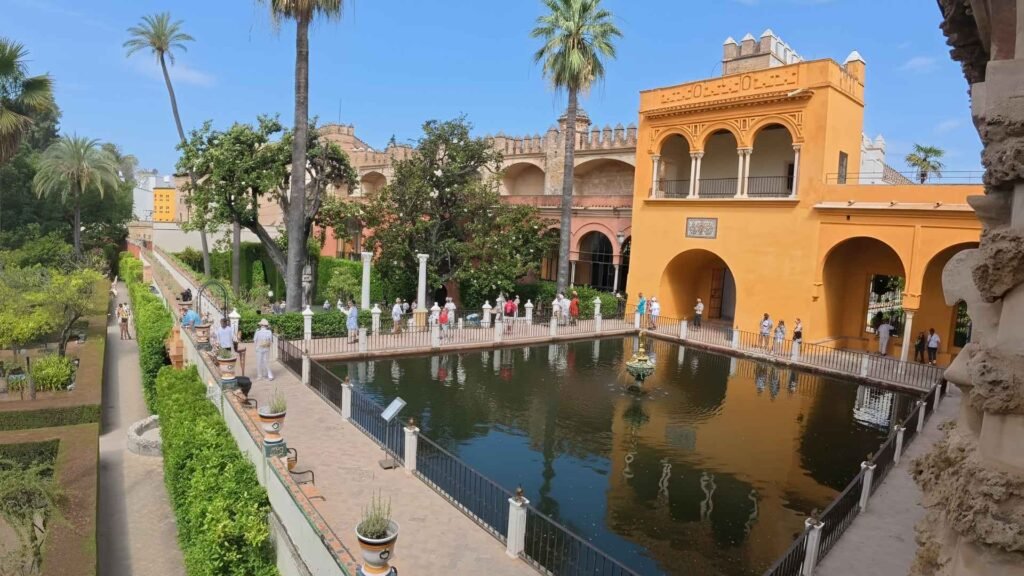
🏛️ Historical & Cultural Landmarks
Discover Seville’s royal and religious heritage through its timeless monuments — where history, art, and emotion intertwine.
- Plaza de España – a cinematic marvel built for the 1929 World’s Fair.
- The Royal Alcázar of Seville – A Moorish palace of dazzling tilework and lush gardens.
- Seville Cathedral & La Giralda Tower – The world’s largest Gothic cathedral.
- Casa de Pilatos – A hidden gem blending Renaissance and Mudéjar beauty.
Explore Seville’s timeless heritage. 👉 Explore historical landmarks →
🌇 Modern Icons & Experiences
Seville’s modern skyline celebrates creativity and light — where innovation meets Andalusian elegance.
- Metropol Parasol – Las Setas – futuristic wooden structure with panoramic city views.
- Torre Sevilla – A sleek skyscraper offering rooftop cocktails and sunset vistas.
- CaixaForum Sevilla – A contemporary art and design hub by the river.
Discover authentic Andalusian crafts. 👉 Explore Seville’s traditional crafts →
🎭 Festivals & Cultural Events
Seville’s soul is celebrated year-round through color, music, and tradition — each festival a story of Andalusian passion.
- Flamenco in Triana – Feel the heartbeat of Spain in intimate tablao shows.
- Feria de Abril – Horses, dresses, and dance — Seville’s grandest celebration.
- Semana Santa (Holy Week) – Processions of art, devotion, and light.
Experience Seville’s lively traditions. 👉 See Seville’s festivals & cultural events →
6. Andalusian Classics: Where Heritage Meets the Table
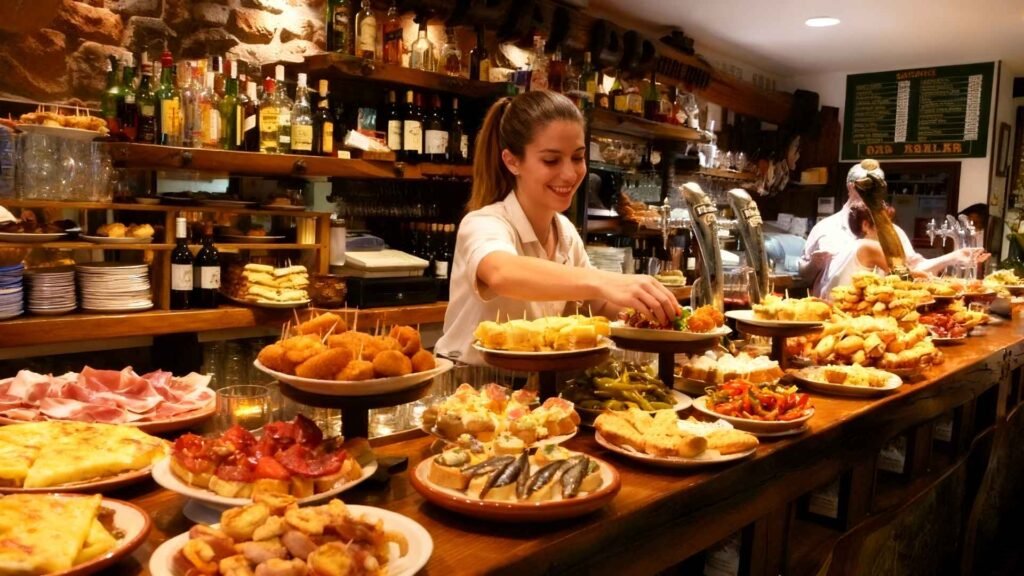
Seville’s cuisine is a living reflection of its history — shaped by Moorish spices, Roman traditions, and Mediterranean warmth. Each dish tells a story of heritage and harmony, blending flavor with culture.
Must-Try Dishes:
- Rabo de Toro — Slow-cooked oxtail stew, tender and rich, rooted in Seville’s bullfighting past.
- Solomillo al Whisky — Pork tenderloin in a garlic-whiskey sauce, bold and unmistakably Sevillian.
- Paella Sevillana — A local twist on Spain’s classic, infused with saffron, seafood, and Andalusian flair.
- Espinacas con Garbanzos — Spinach and chickpeas simmered with cumin and paprika — humble, hearty, and Moorish in spirit.
Best Places to Try Them:
- El Rinconcillo — Seville’s oldest tavern (since 1670), famous for Espinacas con Garbanzos and Salmorejo.
- Bodega Santa Cruz (Las Columnas) — A lively local favorite steps from the Cathedral, best for Solomillo
- La Cueva — Cozy, family-run restaurant serving classic Rabo de Toro and hearty Espinacas con Garbanzos.
Taste Seville’s local flavors. 👉 Explore Where to Eat Andalusian Classics →
7. Shopping: From Boutiques to Markets
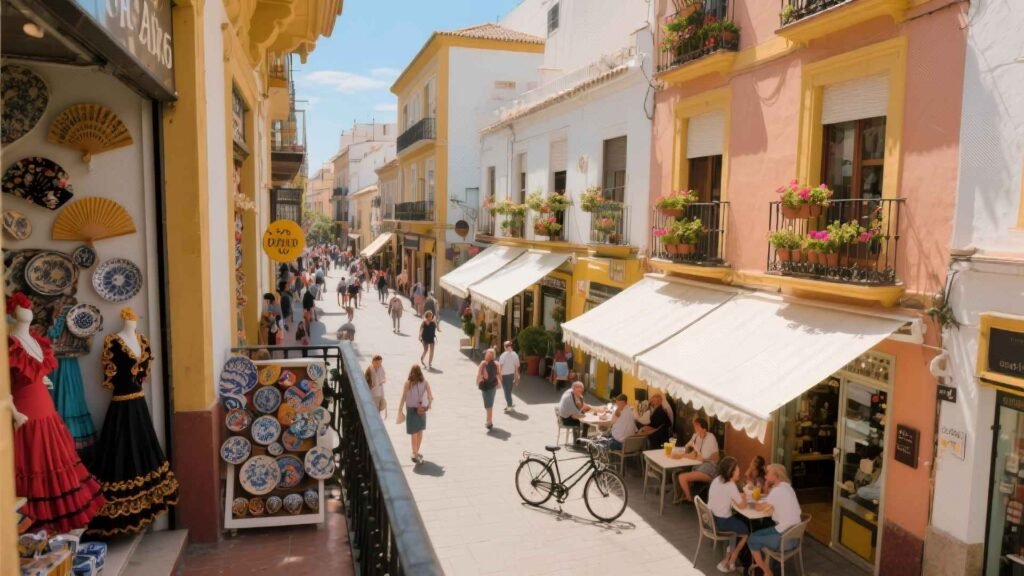
Shopping in Seville is more than buying — it’s taking a story home. Each boutique reflects the city’s soul, blending tradition and modernity through hand-painted ceramics, elegant fans, soft leather bags, and contemporary Spanish design. As you wander its narrow streets, the colors, scents, and sounds spilling from every shop feel as warm and alive as Seville itself.
🎨 Traditional Crafts & Souvenirs
Discover the artistry of Seville through its timeless crafts — from hand-painted ceramics in Triana to delicate lace and hand fans that capture centuries of heritage.
- 🏺 Cerámica de Triana: The soul of Andalusian pottery.
- 🌸 Abanicos (Hand Fans): A piece of Seville elegance, still crafted by hand.
- 🧴 Leather Goods & Fragrances: From local tanneries to boutique perfumeries inspired by orange blossoms.
Discover Andalusian crafts. 👉 Explore Seville’s traditional crafts →
💎 Luxury & Fashion Streets
For those seeking elegance, Seville’s fashion triangle — Calle Sierpes, Calle Tetuán, and Avenida de la Constitución — offers a blend of local design and global brands.
- 🛍️ Calle Sierpes: Chic boutiques, jewelry stores, and Andalusian tailors.
- 👗 Calle Tetuán: International fashion houses meet Spanish craftsmanship.
- 🏙️ Nervión Plaza: A modern shopping mall with designer labels and rooftop cafés.
Shop Seville’s elegant streets. 👉 See the best shopping streets in Seville →
8. When to Visit Seville
Seville’s beauty transforms with every season — each bringing a different emotion and rhythm to the city.
🌸 Spring (March–May): The most magical time to visit. Orange blossoms fill the air, and the city bursts with energy during Semana Santa (Holy Week) and Feria de Abril, one of Spain’s most colorful festivals. Expect perfect weather for sightseeing and open-air dining.
☀️ Summer (June–August): Days are hot, but Seville never slows down. Locals gather for late-night tapas, rooftop bars, and cultural events under the stars. This is also when hotel prices are lower — a plus for budget travelers.
🍂 Autumn (September–November): Warm days, golden light, and fewer crowds. The parks and riverside walkways are especially beautiful at sunset. Perfect for photography and romantic city walks.
❄️ Winter (December–February): A quieter and more intimate Seville — mild weather, cozy cafés, and festive Christmas markets. Great for gastronomy lovers and those seeking a peaceful cultural escape.
💡 Practical Tips for Travelers
Seville is one of Spain’s most traveler-friendly cities — safe, walkable, and full of local warmth. Here are a few essentials to make your trip effortless:
- 💶 Currency: Euro (€) — credit cards are accepted almost everywhere, but small cash helps at local markets.
- 🕰 Time Zone: GMT+1 (CET); daylight saving time applies from March to October.
- 📱 Language: Spanish, but English is commonly spoken in hotels, restaurants, and tourist areas.
- 💧 Tap Water: Safe to drink — Seville’s water quality is among the best in southern Spain.
- 🔋 Plugs: Type F (two round pins). Carry a universal adapter if needed.
- 🚶 Dress Code: Casual yet stylish — locals dress elegantly even for everyday outings.
- ☀️ Siesta Culture: Most shops close between 2–5 PM. Use this time for lunch or a riverside break.
Pro Tip: For a smoother stay, download the Sevici app (for bike rentals) and the Moovit app for public transport navigation.